GPS Tracker WhatsApp Alert Failure in Indian Fleet Operations
GPS Tracker WhatsApp Alert Failure in Indian Fleet Operations
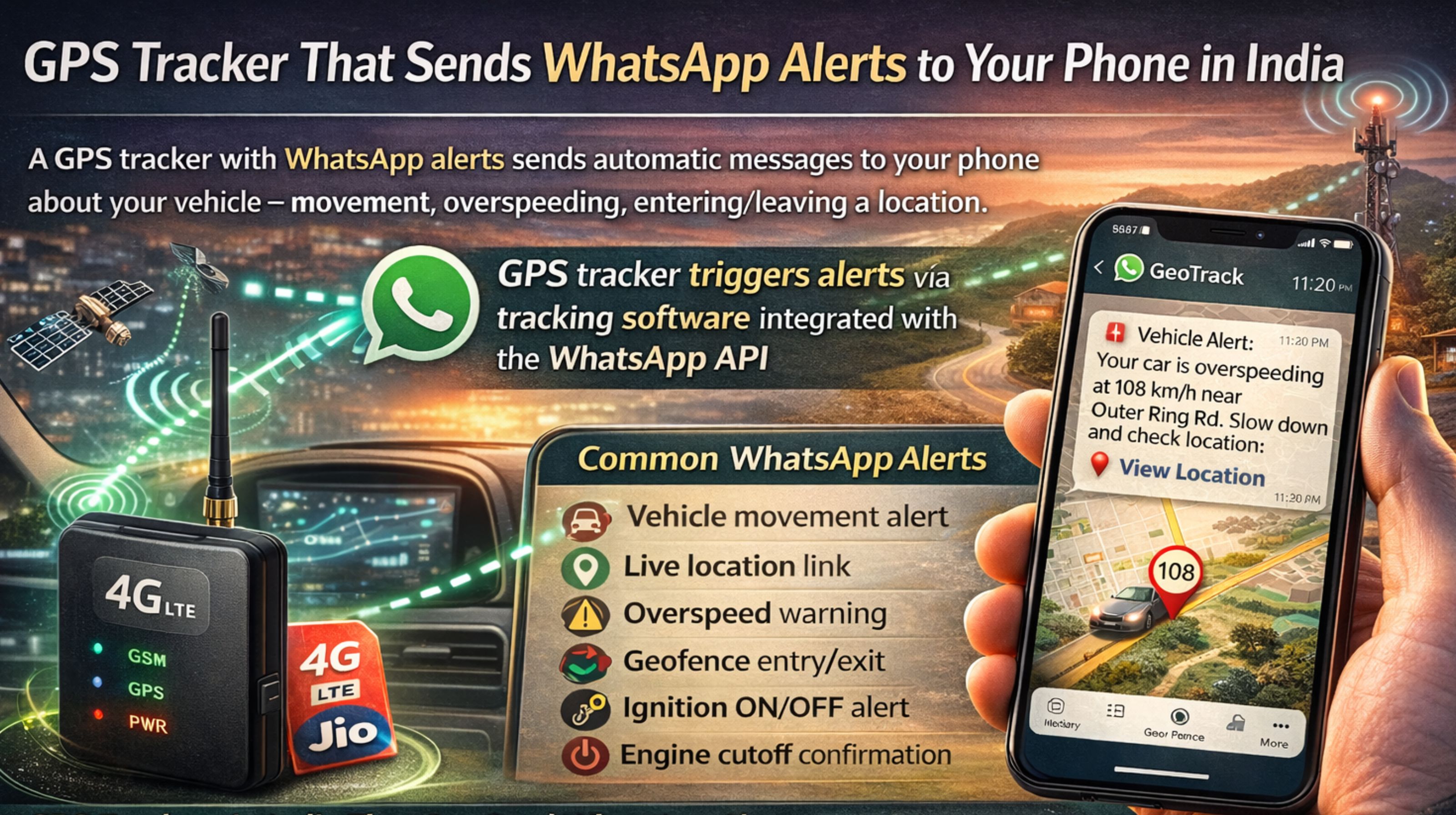
So your GPS tracker's WhatsApp alert for a driver's phone in India just... doesn't show up. It's frustrating, but nine times out of ten, it's a network routing delay. Not the device itself. And that leaves you completely in the dark about an unauthorized stop or a harsh braking event—the exact things you need to know about right away.
What WhatsApp Alert Failure Means for Your Fleet
In live tracking, a missed WhatsApp alert isn't just a missed message. It means a critical event—a geofence breach, an after-hours ignition—never triggered a notification to your phone. That creates this silent gap in your security and compliance, right where you're supposed to be reacting in real-time.
The Reality of Scale and Network Load in India
When you're actually operating at scale, especially during those peak traffic hours in metros, cellular networks get swamped. That congestion can delay or just drop the data packet heading to the SMS-to-WhatsApp gateway. The result? Alerts arrive hours late, or not at all. We've seen it happen—it can completely invalidate an audit trail for scheduled stops.
Common Mistakes That Escalate Alert Failure
The biggest mistake is pointing the finger at the GPS hardware. The real failure point is usually that third-party API gateway routing the alert. Trying to fix it by swapping SIM cards or reinstalling apps? That just papers over the underlying fragility in the data pipeline. A proper geofencing alerts system is built specifically to handle this kind of thing.
Decision: Reconfigure the Alert Pipeline or Redesign
So, what's the choice? You need to reconfigure your notification system to use a dedicated, multi-channel alert platform. The line in the sand is when more than 5% of your critical events have notification delays. Once you hit that point, internal tweaks won't cut it. You need a system-level redesign, built on a reliable fleet management software backbone, or you risk falling out of compliance.
FAQ
q: Why is my GPS tracker not sending WhatsApp alerts in India?
a: It's usually a routing failure in the SMS-to-WhatsApp gateway—carrier filtering or API throttling. The tracker itself probably still has its signal.
q: Can delayed WhatsApp alerts create compliance issues?
a> Absolutely. For transport compliance, you need proof you notified a driver about over-speeding, for instance, in a timely way. Delayed alerts create a mismatch in your audit logs that can straight-up lead to violations.
q: Does adding more trackers worsen WhatsApp alert reliability?
a: At a large scale, it can. Every device hitting the same notification gateway can trigger rate limits. Then alerts just queue up and fail silently, which is a core problem in big fleet setups.
q: When should I stop trying to fix WhatsApp alerts and change systems?
a: When the alert latency starts affecting safety-critical responses, or it's consistently messing up your audits. That's your signal to move to a dedicated telematics platform, where a gps controller manages alerts through more stable, multi-path channels.


Comments
Post a Comment