GPS Tracker Stolen Car Remote Stop Failure in India
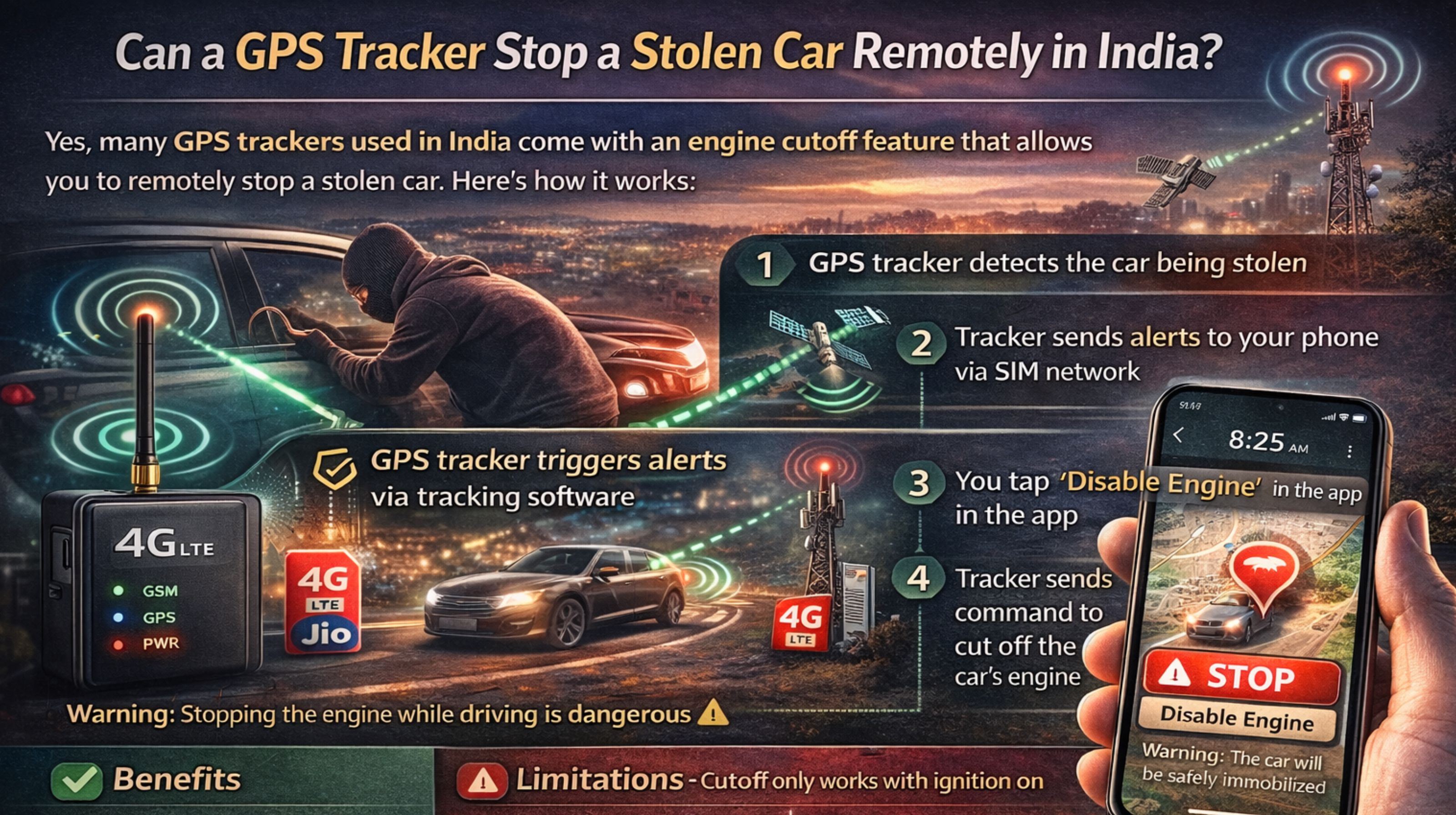
GPS Tracker Stolen Car Remote Stop Failure in India
Here's the reality in India: a GPS tracker legally cannot stop a stolen car remotely. That's a critical compliance gap, and it means fleet security has to shift focus—away from immobilization and toward real-time tracking and coordinating a rapid response.
What Remote Immobilization Means for Fleet Security
So, remote immobilization. In theory, it's a feature where your fleet management software sends a signal to cut fuel or ignition. But in practice? Signal jitter in dense cities can delay that command by seconds. That's often enough time for a thief to get the vehicle out of a safe stopping zone, which kind of defeats the purpose.
Reality of Tracking a Stolen Vehicle Under Load
When a vehicle is actually stolen, the biggest problem is often signal loss. The car goes into an underground lot or a rural dead zone, and you're suddenly relying on historical breadcrumb data—the last place the tracker reported from. That reliance on stale data is a common failure point that really stretches out recovery timelines.
Wrong Assumptions and Legal Failure Patterns
There's a major misunderstanding here. People assume all trackers have the hardware to immobilize a car. Most consumer-grade units are just passive data loggers. And even the commercial units that do have relay outputs run into strict legal barriers. Public safety and liability concerns make remote intervention a no-go, which creates this critical compliance gap.
Decision: Enhanced Tracking vs. Immobilization Attempts
The choice becomes pretty clear. You need to reconfigure your security around enhanced real-time tracking and geofence alerts. Trying to internally enable remote stopping isn't just insufficient—it's illegal. You should leverage a gps controller platform for what it's good at: rapid alerting and precise location data to help the authorities, not for direct intervention.
FAQ
q: Can any GPS tracker stop a car in India?
a: No. Legal restrictions are one thing, but most devices also lack the required hardware integration. Trying to force it just opens up liability and safety risks.
q: What happens if my tracker loses signal during a theft?
a: You're basically working with the last known location and movement history. Recovery then depends on the signal coming back, which is exactly why devices with backup batteries and multiple network SIMs are so critical for real-time vehicle tracking resilience.
q: How do fleet managers handle theft without remote stop?
a: They pivot to instant geofence breach alerts, sharing live location feeds with police via API integrations, and using detailed trip reports to figure out direction and movement patterns.
q: When should I consider a different security approach?
a: If your operations are in high-risk zones, you've probably already passed the decision boundary. It's time to redesign security around layered tracking, driver panic buttons, and integrated alert systems, rather than chasing illegal immobilization features.


Comments
Post a Comment