GPS Tracker SIM Balance Failure and Fleet Visibility Loss
GPS Tracker SIM Balance Failure and Fleet Visibility Loss
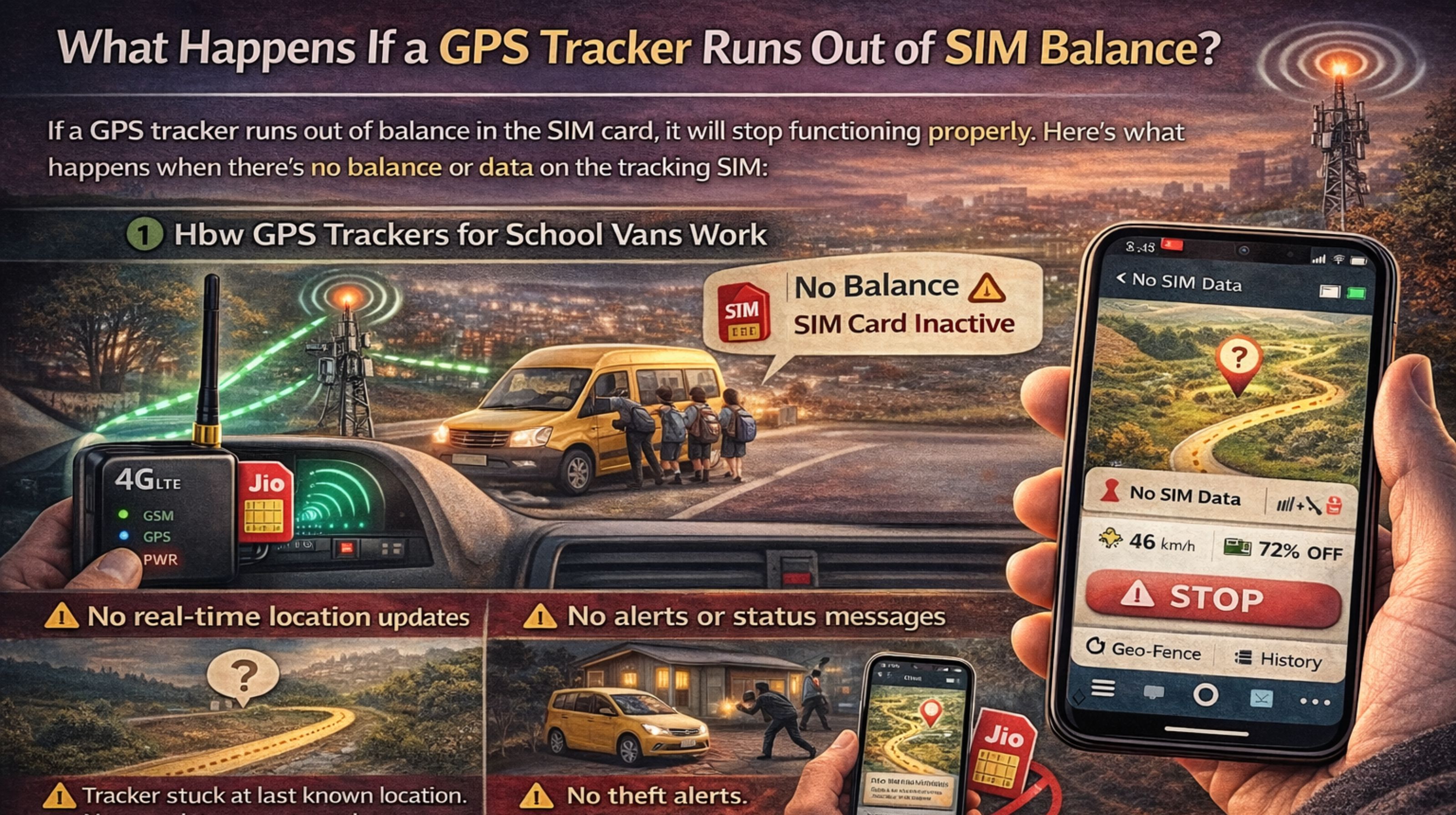
When a GPS tracker's SIM card runs out of balance, it loses its cellular data connection. That means it stops sending anything to your fleet management platform. It's not just a delay—it's a total blackout. Live location, engine diagnostics, alerts... all gone. The asset basically becomes a ghost in your system.
What a No-Balance SIM Means for Live Fleet Tracking
The tracker itself keeps working. It's still collecting GPS fixes and sensor data. But with no way to send it, that data just gets stored locally until the memory buffer fills up and starts overwriting the old stuff. On your map, you'll see the vehicle's last known location, frozen. No new updates, no speed readings, no geofence alerts. It creates this dangerous lag where you might think a truck is parked when it's actually moving, or assume an engine is off when it's running.
Reality Check Under Real Fleet Scale and Load
At a larger scale, one unpaid SIM can cause a chain reaction of problems. Dispatchers using stale data send trucks to the wrong places. Compliance reports for hours of service show gaps, which is a red flag for audits. From what I've seen, the first warning sign usually isn't a system alert about the SIM. It's a delayed or completely missed geofencing alert for a scheduled pickup.
Common Mistakes and Escalating Compliance Risks
A big mistake is immediately assuming the tracker hardware is broken, leading to unnecessary replacements. The real failure is usually in the process—like manually topping up dozens of SIMs, or using consumer data plans with hard caps that get used up halfway through the month. That oversight turns into a major problem when you can't find a vehicle and you're facing an audit, with no location history to show.
Decision Help: Reconfigure Alerts or Redesign Data Provisioning
The obvious first step is to set up your platform to alert you when communication is lost, not just when the battery is low. But if your team keeps missing SIM top-ups, you've got a bigger issue. At that point, you need to rethink your whole data setup. That means moving to enterprise-grade M2M (Machine-to-Machine) SIMs with pooled, managed data, or using a platform where the connectivity is bundled in. That removes the balance risk completely. For that kind of setup, having solid fleet management software with built-in connectivity management is non-negotiable.
FAQ
q: Will a GPS tracker work without SIM card balance?
a: No. It can't send any real-time data—location or otherwise—to your tracking platform without an active, paid-up data connection.
q: How can I tell if my tracker's SIM has no balance?
a: The main clue is that data updates on your map and reports just stop. Your platform might show a "communication lost" status, but not all systems give a specific warning for low balance.
q: What happens to the location data when the SIM has no balance?
a: Most trackers have a small buffer in memory. They'll store recent GPS data for a bit, but it usually gets overwritten pretty quickly. That data is often inaccessible until the connection is back, so you end up with permanent gaps in your history.
q: Can I still get historical data after topping up the balance?
a: Usually not. The data from when the SIM was dead is typically lost. Some devices with specific API integration can backhaul that data, but that's rare for standard fleet trackers.
q: Does a no-balance SIM drain the tracker battery faster?
a: Often, yes. The modem keeps trying to connect to the network over and over, which uses more power than normal periodic transmission does.
q: Can the tracker alert the driver locally if the SIM has no balance?
a: It depends on the device. Basic ones probably won't. More advanced models can sometimes be set up to sound a local buzzer or change an output to let the driver know something's wrong.
q: What's the difference between a prepaid and M2M SIM for tracking?
a: Prepaid SIMs need manual top-ups and can run out. M2M (Machine-to-Machine) SIMs are built for business IoT. They usually have pooled data for all your devices, automated management, and won't shut off a single device—which is why a professional gps controller platform uses them.
q: When should I replace hardware versus fixing the SIM issue?
a: If the device is powered on and your platform shows its IMEI (but says it's offline), it's almost always a SIM or network problem. Only swap the hardware if the device won't power on at all, or if the SIM balance drains suspiciously fast every time, which could point to a faulty modem.


Comments
Post a Comment