GPS Tracker Battery Drain in India: Real Fleet Failures and Voltage Fixes
GPS Tracker Battery Drain in India: Real Fleet Failures and Voltage Fixes
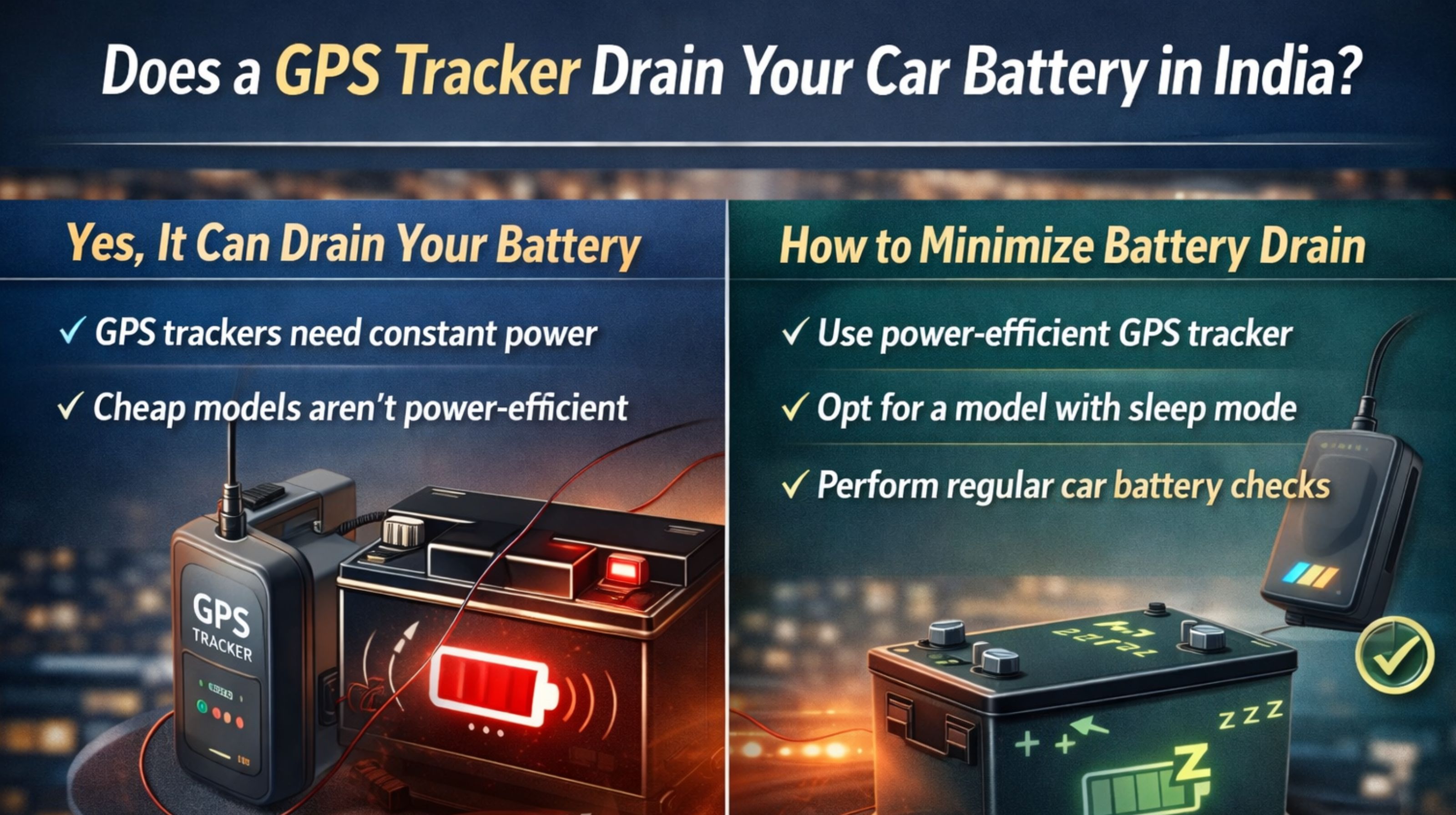
In India's fleet operations, GPS tracker battery drain isn't a myth—it's a daily operational failure. You see it as vehicles failing to start in the morning, especially after overnight parking in high heat or following a day of short, stop-start routes. Honestly, the core issue is rarely the tracker's stated specs on paper. It's the messy interaction between unstable vehicle voltage, that relentless ambient heat, and what's often subpar installation wiring. That combination creates a parasitic load the battery just can't sustain.
What Battery Drain Actually Means for Your Live Fleet
So, battery drain here means the tracker keeps drawing power even with the ignition off, slowly depleting the battery below the cranking threshold. A classic real-world sign? A driver reports a "dead vehicle" after maybe 36-48 hours parked, but the tracker's last reported location shows it was still sending updates. That confirms it was active and draining power the whole time. This directly hits real-time vehicle tracking reliability—a dead battery means zero data, full stop.
The Reality Under India's Heat and Driving Conditions
Under real Indian conditions—peak summer heat, those frequent short trips that don't fully recharge batteries, common voltage swings from aging alternators—the problem just gets worse. Here's a non-obvious detail: the tracker's own internal regulator. In low-voltage scenarios (say, below 12V), it might actually draw *more* current just to keep itself running, which accelerates the drain. A common fleet manager mistake is assuming a "good battery" is enough, without accounting for the cumulative toll of heat on battery chemistry and the tracker's own power management firmware.
Wrong Assumptions That Lead to Total Vehicle Failure
The most costly misunderstanding is just blaming the tracker unit itself and swapping devices without fixing the root cause. The failure pattern often involves a cheap, unshielded wiring harness tapped into a constantly live circuit, instead of a properly switched ignition line. Another big risk is ignoring the audit trail; a drained battery creates a data gap that can break compliance reports for hours of service or proof of location. When you step back, the real failure is systemic: power management treated as an afterthought.
Decision Boundary: When to Fix Wiring vs. Replace the System
The clear choice comes down to this: if drain happens on specific older vehicles with known electrical gremlins, then a professional rewire to a switched circuit plus a battery health check is your fix. But there's a boundary where internal fixes stop working. That's when drain happens across a modern fleet with what should be a proper installation. That signals a fundamental mismatch—the tracker's deep-sleep mode just isn't cut out for your operational reality. That's a problem needing a hardware redesign or switching to a unit actually engineered for low-voltage, high-heat environments. In those scenarios, you really need to consult a specialist, like a gps controller integrator, to properly diagnose the power profile.
FAQ
q: How do I know if my GPS tracker is draining my car battery?
a: Test by fully charging the battery, disconnecting the tracker, and measuring the voltage drop after 24-48 hours parked. A drop greater than 0.5-1.0 volts likely points to the tracker circuit, assuming you've ruled out other parasitic loads.
q: Can a hardwired GPS tracker kill a battery in India's summer?
a: Yes, absolutely. Heat increases the battery's internal discharge rate and can cause tracker components to draw more power. Combine that with a pre-existing weak battery or faulty voltage regulation, and summer becomes the peak season for these failures.
q: Do all GPS trackers have a sleep mode to prevent battery drain?
a: No, they don't. Many basic or older models lack a true deep-sleep mode. They maintain a constant polling connection to the network, which is a primary cause of drain. Always check the spec sheet for something like "ultra-low power sleep mode."
q: When should I stop trying to fix drain and get a new tracker?
a: When professional rewiring and a new battery don't solve repeated drain on multiple vehicles, it's a sign the tracker's fundamental power design is incompatible. That's your decision boundary—time to replace it with a modern, low-power device built for harsh electrical environments.


Comments
Post a Comment