GPS software with automated compliance reporting for transport operators
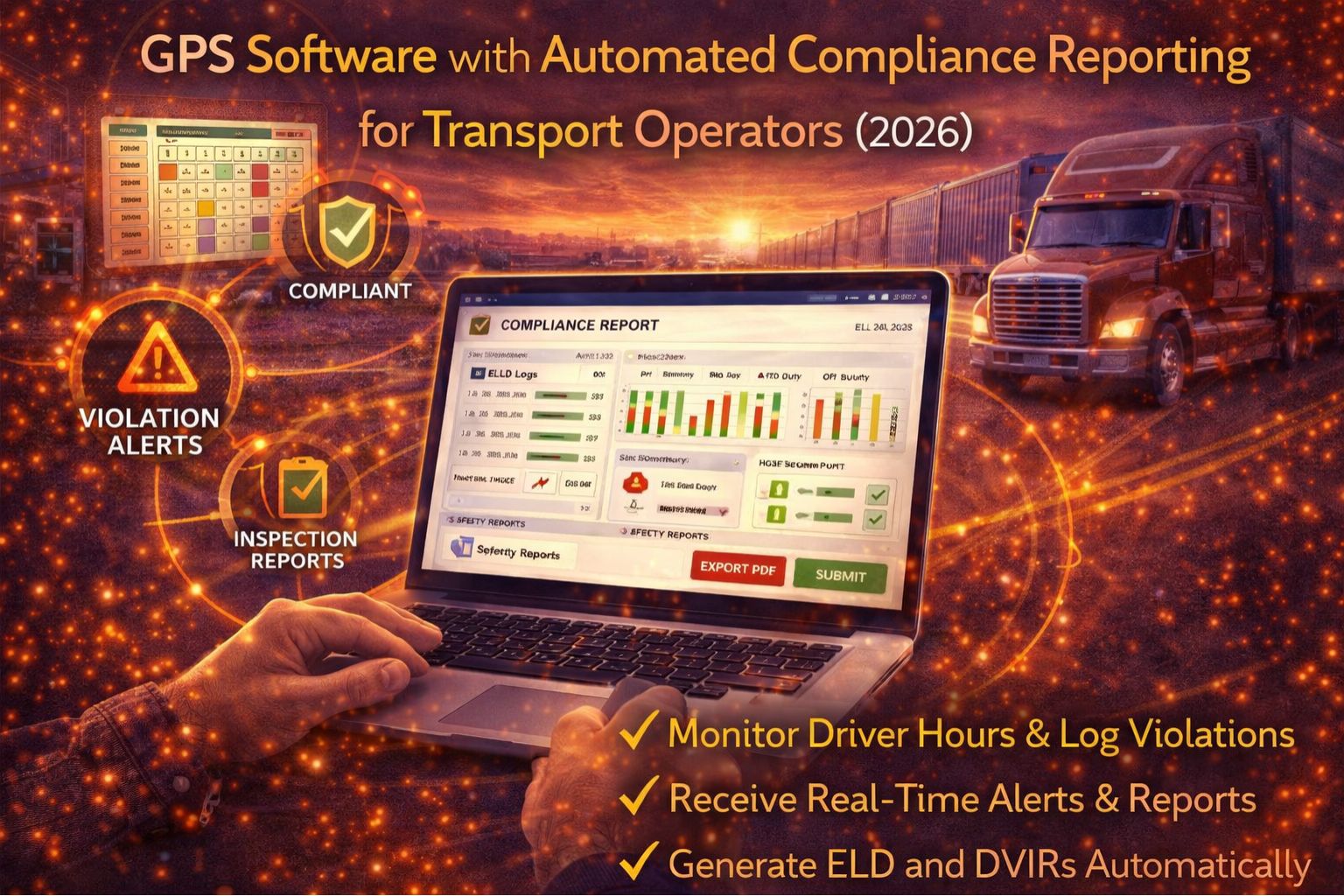
GPS software with automated compliance reporting for transport operators
For transport operators, the promise of automated compliance reporting in GPS software is supposed to be a direct replacement for the manual, error-prone process of compiling driver logs and inspection reports. It’s the system that *should* flag a driver approaching their limit before dispatch sends them out, and automatically generate the audit trail. The reality, though, is that the gap between “automated” and “accurate” is exactly where operators end up getting fined.
What automated compliance reporting really means for your fleet
Automated compliance reporting isn’t just a PDF generator. It’s a continuous data pipeline that pulls from the vehicle’s engine control unit for engine hours, integrates with the driver’s digital logbook via API integrations, and cross-references routes against actual driving times. A real-world example is the system catching a “yard move”—those short, low-speed movements within a depot that shouldn’t count against driving hours. Manual logs often miss those, leading to false violations, but the right software has to classify it correctly.
The scale problem with real-time rule adherence
At scale, the tricky detail is timestamp synchronization. A delay of even 30 seconds between the telematics device clock and the compliance software server can create a discrepancy you can't reconcile in an audit. Or, when you have 50 vehicles all transmitting, network congestion at the carrier level can cause a batch of HOS updates to arrive out of sequence. Suddenly it looks like a driver was in two places at once or drove beyond their limit, triggering false alerts that someone has to manually untangle.
Common mistakes that turn automation into audit risk
The most common misunderstanding is treating it as “set and forget.” Operators implement the software but don't set up a real workflow for handling the exceptions it generates. Like when a driver uses their personal car for a work trip—a “grey fleet” incident—that falls outside the tracked fleet. The software can’t report on what it doesn’t track, so those gaps become blind spots. Another critical one is not validating geofences. An incorrectly drawn geofence at a loading bay can cause logs to switch to “driving” while the truck is still being loaded, which just eats into legally available drive time.
When to tune, reconfigure, or replace your reporting system
The decision line is pretty clear: if your team spends more than a few hours a week manually correcting automated logs or explaining discrepancies to drivers, you’ve moved past a tuning issue. You can *tune* alert thresholds for minor false positives. You have to *reconfigure* if the rules engine can’t handle your state’s specific rest break regulations. And you need to *redesign* your data integration if ELD data isn’t flowing cleanly into your reporting. When the core architecture can’t maintain a single, immutable source of truth for time and location across all events, replacement is the only path to audit-proof operations. That’s where evaluating a dedicated platform like gps controller shifts from a software check to an operational necessity.
FAQ
Question: How does automated compliance reporting work with existing ELDs?
Answer: It should pull data directly from the ELD via a certified integration, turning raw driving data into formatted reports for the DOT or FMCSA. The critical check is making sure the integration is bidirectional, so if a driver makes a certified edit in their ELD interface, it actually shows up in the final report.
Question: Can this software prevent violations before they happen?
Answer: It can, but only if it’s set up for proactive alerts. The better systems use geofencing alerts and predictive HOS math to warn a dispatcher that a driver will hit their limit 30 minutes out, allowing for a reroute. Without those proactive rules, it’s really just a historical record of what went wrong.
Question: What’s the biggest risk with automated reporting?
Answer: Data integrity failure. If the GPS signal drops in a tunnel or the cellular connection goes, the software has to fill that gap correctly—maybe by assuming the vehicle stayed on its route—or mark it as unverified. If it fills the gap wrong, the logs won’t hold up to a regulator’s scrutiny. Then your automation tool becomes liability evidence.
Question: Is this software enough for full transport operator compliance?
Answer: No, it’s a core component but not a silver bullet. Full compliance needs this software to be part of a bigger system that includes driver training, documented procedures for handling exceptions, and regular checks of the reports it generates. The software gives you the data trail, but your operator processes are what make it defensible.


Comments
Post a Comment