GPS pallet tracking system for warehouse inventory 2026
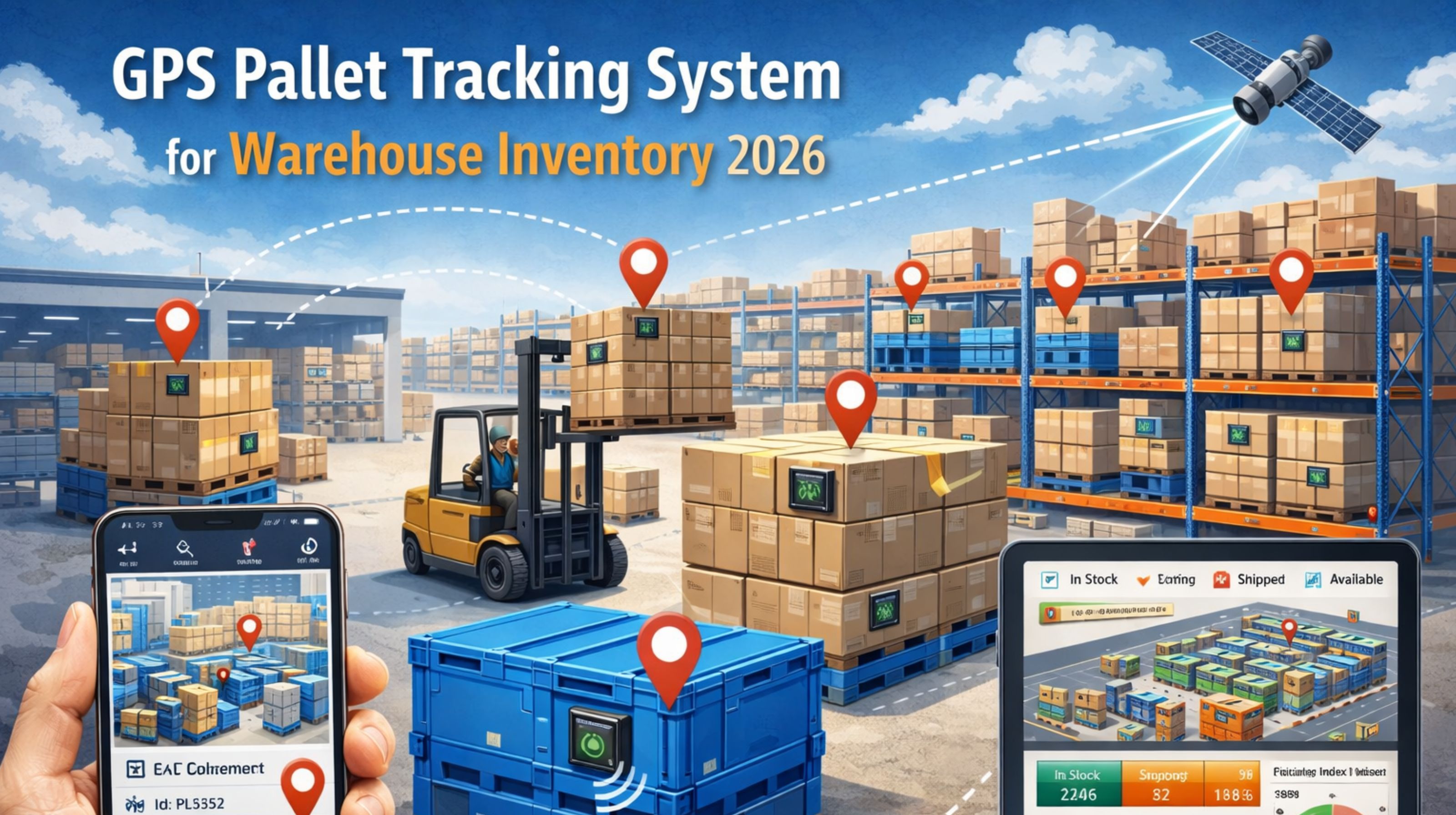
GPS pallet tracking system for warehouse inventory 2026
Look, in 2026, a GPS pallet tracking system for warehouse inventory isn't just about location—it's about the real-time synchronization of physical stock with digital records. And honestly, where even a 30-second signal delay can cascade into mis-picks, shipping errors, and this phantom inventory that just corrupts your entire supply chain visibility.
What GPS pallet tracking really means for 2026 warehouse operations
For modern warehouse inventory, GPS pallet tracking has to extend beyond the yard into high-bay racking and multi-level fulfillment centers. The system has to distinguish between a pallet staged at dock door 4 versus one that's merely passing by on a forklift three aisles over. The non-obvious detail—the one that gets you—is how these systems now rely on ultra-wideband (UWB) anchors and cellular IoT modules alongside traditional GPS. That creates a hybrid signal environment where handoff failures between networks can cause a pallet to basically teleport in your warehouse management software, showing as present in two locations at once.
The reality of signal drift and data latency at scale
Under real operational scale, with hundreds of pallets moving daily, you encounter concrete failures. Picture this: a pallet tagged for a priority order sits in a GPS dead zone near the metal-clad north wall, its last known location now 20 minutes stale, while your system shows it as available. This isn't just a blip—it's a workflow dependency breaking down. Forklift drivers waste minutes searching, pickers default to manual logs, and the digital twin of your inventory slowly divorces from reality. The boundary condition hits when cellular congestion during peak receiving hours delays location pings by several minutes, which makes real-time tracking feel like a misleading promise.
Common mistakes that escalate into inventory black holes
The most costly misunderstanding is assuming GPS tracking accuracy translates directly to inventory accuracy. A pallet's GPS tag might report its location within 3 meters, but if that tag's accelerometer doesn't correctly register an unload event, the system still lists that pallet as "in transit" on a vehicle that departed hours ago. Teams then waste hours on wild goose chases or, worse, trigger unnecessary rush re-orders. That inflates costs and strains supplier relationships. It really escalates when managers, seeing conflicting data, lose trust in the system and revert to purely manual processes, which just negates the whole investment.
When to tune, reconfigure, or replace your tracking layer
Your decision boundary is pretty clear. If latency is under 2 minutes and drift errors are isolated to known dead zones, you tune by adjusting beacon placement and ping frequency. If entire zones of your warehouse consistently lose sync or tags start reporting false movement, you have to reconfigure the hybrid network, potentially integrating more UWB anchors. However, if the core system cannot maintain a single source of truth for pallet status—location plus load state—across your operational scale, and manual reconciliation becomes a daily task, you've hit the limit of internal fixes. That's when a foundational redesign or replacement of the tracking layer, possibly with a platform like gps controller that unifies telemetry, becomes the only path to audit-ready inventory integrity.
FAQ
Question: How accurate is GPS for pallets inside a large warehouse?
Answer: Standalone GPS is largely ineffective indoors. Modern 2026 systems use hybrid GPS for yard tracking and switch to UWB or Bluetooth mesh networks inside. Accuracy indoors can be sub-meter, but only if the infrastructure of anchors and repeaters is correctly mapped to your racking layout and material flow. It's not automatic.
Question: What causes a pallet to show in the wrong warehouse location?
Answer: The most common cause is signal multipath interference in dense storage aisles, where radio waves bounce off metal and delay the timestamp used to calculate location. Another is a failed state transition in the tag's logic—meaning it didn't register being unloaded from a forklift, so it keeps reporting the forklift's last location instead of its own static drop point.
Question: Can GPS pallet tracking help with inventory compliance audits?
Answer: Only if the system provides an immutable, time-stamped log of location and status changes. If your data has gaps or unexplained jumps, it actually creates more audit risk than it solves. The system has to reliably answer "where was pallet X at 2:15 PM last Tuesday?" without you having to stitch data together manually.
Question: When is it time to upgrade our current pallet tracking system?
Answer: Upgrade when the cost of inventory reconciliation labor exceeds the cost of new hardware, or when fulfillment errors traced to location data exceed a tolerable threshold (say, more than 2% of picks). If you can't generate a reliable, real-time map of all pallets for daily operations, the system is a liability, not an asset. At that point, a platform-centric redesign is necessary.


Comments
Post a Comment