GPS Jamming Protection for Ship Navigation and Fleet Safety Risks
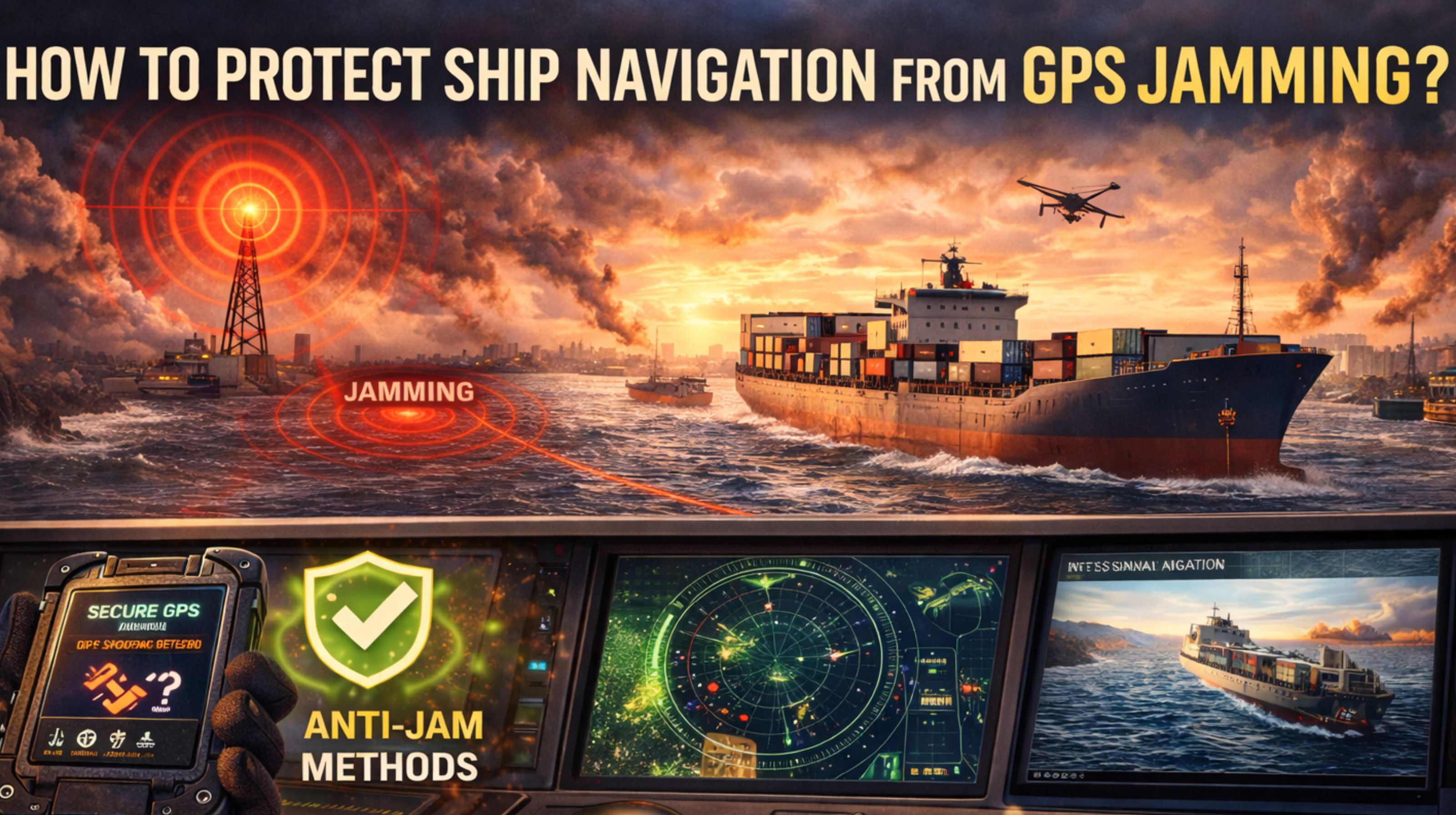
GPS Jamming Protection for Ship Navigation and Fleet Safety Risks
Protecting ship navigation from GPS jamming... well, it's less about finding a single magic device and more about managing a whole cascade of failures across your fleet's operational data. The immediate risk isn't just a lost dot on a map. It's that silent drift into compliance violations, and those delayed, conflicting alerts that leave controllers completely blind.
What GPS Jamming Means for Live Fleet Tracking
In maritime operations, jamming doesn't just block a signal—it corrupts the entire data chain. A vessel might actually report a plausible but totally false position, while your geofencing alerts system stays silent because it's receiving that bad data. Honestly, the first sign is often just a mismatch in the audit log. Something like a reported engine idle in a location that the AIS data completely contradicts. That's what reveals the vulnerability.
Reality Check Under Real Maritime Scale and Load
When a single cargo ship gets jammed near a congested port, the problem scales fast. Controllers see delayed position pings, but the real failure is in all the dependent workflows. Route optimization engines start recalculating based on stale or just plain wrong data. Then ETA predictions for port operations become useless, creating this domino effect of scheduling chaos and fuel waste. And the frustrating part? It often isn't immediately traced back to the spoofed signal.
Common Failure Patterns and Wrong Assumptions
The biggest mistake is assuming your primary GPS receiver is your only point of failure. In reality, jamming exposes all your dependencies on that single data source—for everything from logbook automation to crew safety systems. People often think increased signal strength solves it, but high-power jamming just overwhelms the receiver. The real problem escalates when teams waste weeks tuning hardware that lacks the fundamental anti-jamming architecture it needs.
Decision Help: Tune, Redesign, or Replace Your Approach
The clear boundary is when internal fixes—things like software filters or repositioning antennas—fail to maintain a verified position during known interference events. If jamming causes consistent data integrity flags in your custom reports, you've moved from a tuning problem to needing a system redesign. This is where integrating multi-source verification—like GLONASS, inertial data, or even celestial backups—becomes non-negotiable. A robust GPS controller platform has to manage this fusion without drowning operators in alert fatigue.
FAQ
q How can I tell if my ship's GPS is being jammed?
a Look for data inconsistencies. A steady position while speed logs show movement, a sudden loss of satellite count without an environmental cause, or conflicts between your primary GPS and a secondary AIS position feed. A good system should be flagging these mismatches for you.
q What's the biggest compliance risk from GPS jamming?
a It's inaccurate electronic logbook (ELD) records and deviation from mandated shipping lanes without a logged alert. Port state control inspections can flag these discrepancies as violations, which leads straight to fines or detention.
q Can jamming protection be added to existing fleet devices?
a Up to a point, yes. You can add external hardened antennas or filters. But if the receiver chipset itself is vulnerable to spoofing, no add-on is going to fix that core signal integrity problem. That's a common hardware limitation you run into.
q When is it time to replace our navigation system entirely?
a It's time when the cost of repeated voyage anomalies, constant manual position verification, and compliance near-misses finally exceeds the investment in a system designed for resilient positioning. The decision often locks in when your GPS controller can no longer guarantee a trustworthy data audit trail under threat.


Comments
Post a Comment