GPS Fleet Tracking Software Pricing Comparison Failure in 2026
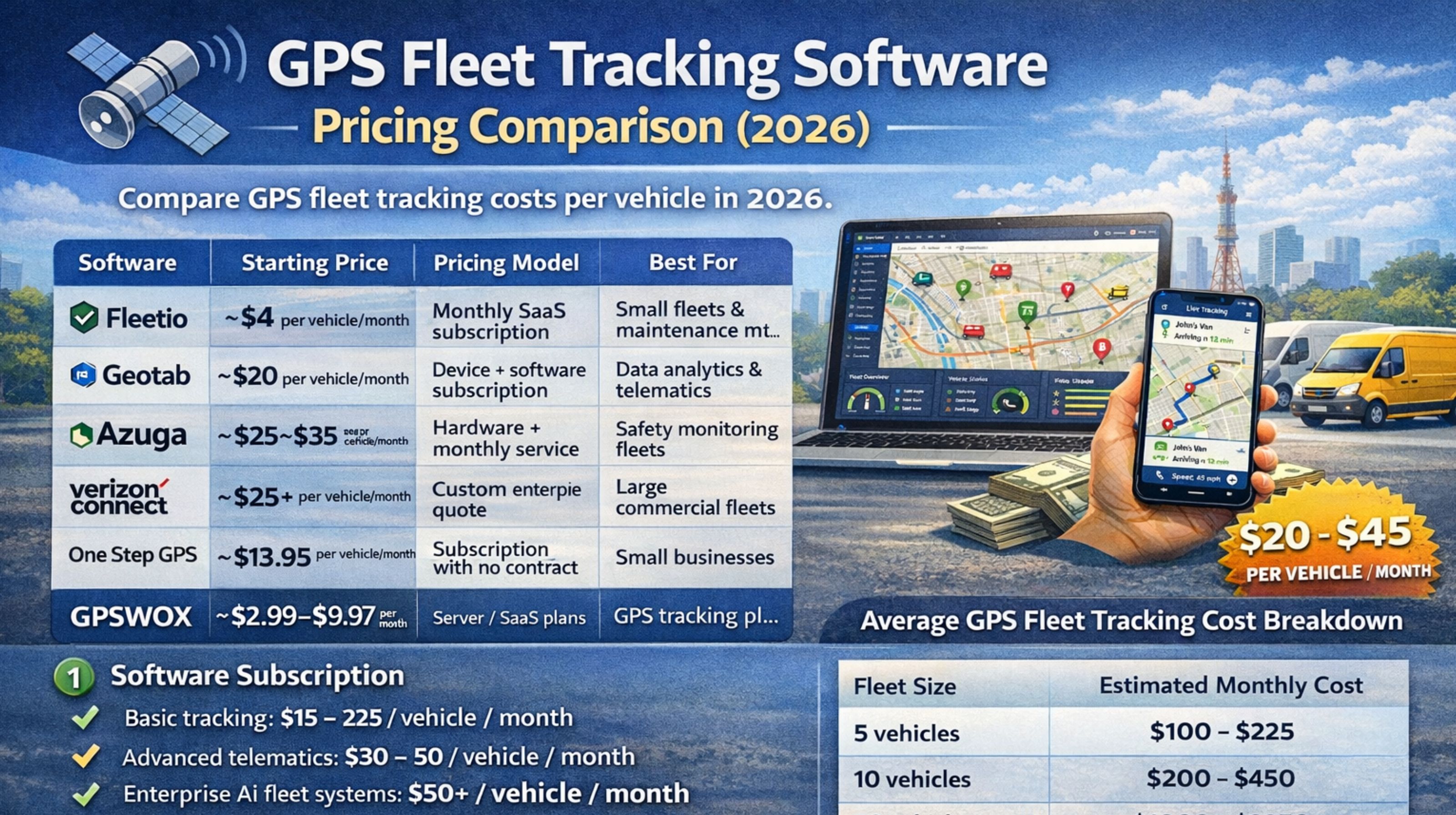
GPS Fleet Tracking Software Pricing Comparison Failure in 2026
Here's the thing about comparing GPS fleet tracking software pricing in 2026: it's less about the features checklist and more about avoiding the compliance and data gaps that literally leave vehicles stranded during an audit. The real cost? It's measured in those missing location pings and the engine hour reports that don't match up, the ones that fail a DOT inspection on the spot.
What Pricing Comparison Actually Means for Fleet Tracking
In live operations, a pricing comparison isn't some clean spreadsheet exercise—it's really a forecast of signal reliability when you're under load. We've watched fleets go for a cheaper per-vehicle rate, only to find out the platform throttles location updates during peak dispatch. That creates invisible gaps in real-time vehicle tracking, the exact data your maintenance and safety teams are depending on.
The Reality of Scaling on a 2026 Pricing Model
When you scale with real vehicles, the hidden constraint is usually something like API call limits or data retention windows, stuff buried in the fine print for the enterprise tier. A fleet of 50 mixed assets might run just fine on a mid-tier plan... until you add 10 refrigerated trailers that need constant temperature polling. Suddenly you hit a data ingestion cap, and your geofence exit alerts are delayed by 20 minutes.
Common Pricing Mistakes That Create Operational Risk
The most costly assumption? Thinking "unlimited users" means unlimited real-time access for everyone. What happens in practice is you run into concurrent user limits—dispatchers get locked out during shift changes, or generating a custom report fails because the system classifies it as a separate "analytics user." That misunderstanding directly forces people into manual, error-prone logging just to get by.
Decision Help: When to Redesign Your Tracking Stack
The line is pretty clear: it's when your internal workarounds become a daily workflow. I'm talking about manual CSV exports to fill reporting gaps, or managers using their personal phones to locate assets because the system is throttled. At that point, trying to tune a mismatched platform isn't enough. You need a redesign around a core fleet management software with transparent data pipelines. This is where you have to evaluate something like a gps controller's architecture for raw data access—that becomes critical, not just the per-unit cost.
FAQ
q What is the biggest hidden cost in GPS fleet tracking software?
a Honestly, it's data incompleteness. Cheaper plans often rely on "event-based" reporting, which misses everything between ignition on and off. That creates gaps in idle time calculation and route history, and that's exactly what fails during a fuel tax or compliance audit.
q How does per-device pricing fail for mixed fleets?
a It fails because you're charged the same rate for a basic vehicle unit and a high-frequency asset tracker. But the data load from an asset tracker polling every minute can be a hundred times greater. That leads to throttling or forces a tier upgrade that completely wrecks whatever price comparison you started with.
q At what fleet size does pricing comparison break down?
a It tends to break down around 75 to 100 assets. That's when network latency and database query performance become the real cost drivers. Platforms that seem affordable for 50 units might suddenly require a prohibitively expensive "premium infrastructure" add-on just to keep update latency under 60 seconds at scale—a detail you almost never see in the headline pricing.
q When should you stop comparing and start redesigning?
a You should stop comparing when your team has to keep a separate shadow spreadsheet just to reconcile the software's fuel reports with your actual card transactions. That's a sign of a core data fidelity issue. No pricing tier is going to fix that. You need to make a platform decision based on data integrity, not cost per unit.


Comments
Post a Comment