GPS fleet tracker with BeiDou fallback for Middle East operations
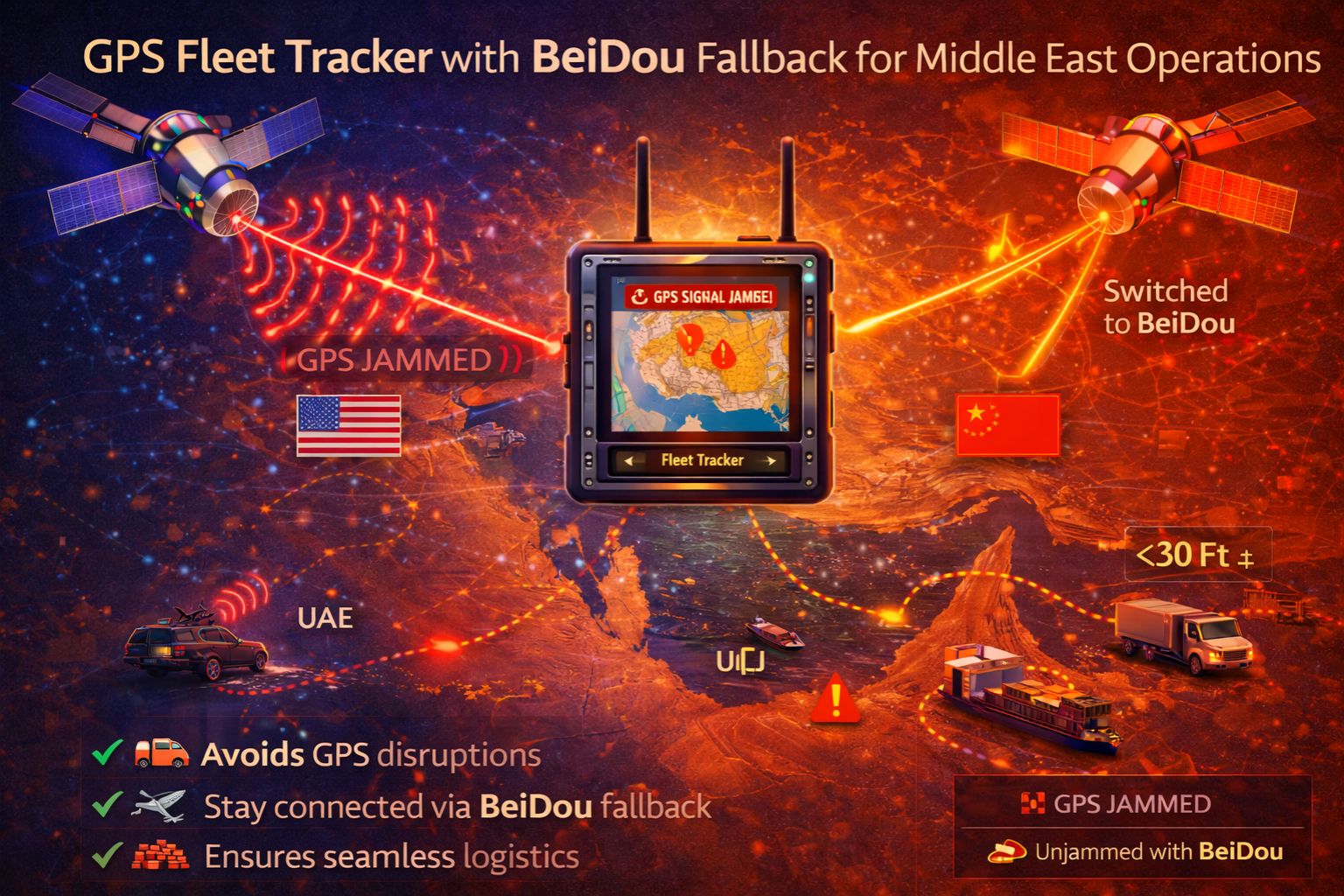
GPS fleet tracker with BeiDou fallback for Middle East operations
If your fleet's location data in the Middle East is relying only on GPS, then honestly, you're just one regional signal problem away from losing sight of your assets and blowing delivery deadlines. A GPS fleet tracker with BeiDou fallback isn't some optional upgrade; it's what you need to keep tracking working in the Gulf's tricky signal environment, where GPS jamming can create phantom vehicles and delay geofence alerts—which then spirals into a real mess for dispatch.
What BeiDou fallback actually means for your live tracking map
Practically speaking, BeiDou fallback means your device doesn't just sit there when GPS drops. It grabs position from China's BeiDou satellites, which frankly have better coverage over there. The tricky part everyone misses is the handoff logic. A badly set-up device can "ping-pong" between systems, causing the location to jump around. That can trigger false speeding alerts or create duplicate stops in your fleet management software. You know it's happening when you see a truck on the map seemingly jump 200 meters back and forth on a desert highway, which confuses the automated reports and your dispatchers.
The reality of single-constellation dependency at scale
At real operational scale, a GPS-only fleet faces correlated failures. When there's a regional GPS problem—from weather or deliberate interference—every single asset goes dark at the same time. It's not a gradual fade; it's a complete blackout. Live tracking stops, route optimization freezes, and your compliance logs go blank. The real trouble starts when your whole ops center can't verify on-time performance or prove driver hours. That creates an audit trail gap you can't fix with manual notes.
Common mistakes in evaluating dual-constellation trackers
The biggest, most expensive mistake is thinking any device that says "BeiDou support" gives you seamless fallback. A lot of them just log BeiDou data passively while still using GPS as the main source, so the switch doesn't happen automatically when GPS fails. Another common error is not testing the fallback in specific spots, like the urban canyons in Dubai or certain industrial zones in Saudi Arabia, where signal bounce affects constellations differently. Companies often jump to buying new hardware without even checking if their current system's API integrations can handle the alternative constellation's data format.
When to tune, reconfigure, or replace your tracking solution
Your decision point is pretty clear. If your current GPS-only trackers are causing repeated compliance gaps or missed deliveries in the region, internal tweaks won't cut it. You need to replace the hardware. If you have newer hardware but you're seeing location jitter or slow handoffs, you can probably reconfigure the device's priority settings in your telematics platform. But if the problem is just spotty signal loss in certain areas, you might get by tuning geofence sensitivity and alert timing. You've crossed the line when signal reliability starts hitting customer SLAs or safety reporting. That's when a dedicated GPS fleet tracker with solid BeiDou fallback, like the ones managed through gps controller platforms, becomes the only real option.
FAQ
Question: How does BeiDou improve GPS tracking in the Middle East?
Answer: BeiDou satellites have stronger signals and better orbital angles over the Middle East than GPS. That means more reliable positioning in cities, deserts, and when there's regional GPS interference, so your fleet map actually stays live.
Question: Can a GPS tracker with BeiDou fallback prevent all signal loss?
Answer: No, it can't prevent all loss—like in deep underground parking or during extreme, coordinated jamming. But it turns widespread blackouts into rare, isolated problems.
Question: Will my existing fleet software work with BeiDou position data?
Answer: Most modern platforms handle it automatically, but older systems or custom setups might only understand GPS formats. That can cause position errors or missing data. You really need to check with your provider.
Answer: The decision point is when signal-related failures start affecting your contracts, safety reports, or daily dispatch. If you're constantly having to explain missing data, it's time to upgrade. A robust system, like one configured through gps controller, gives you the redundancy you need for critical operations.


Comments
Post a Comment