GPS fleet software with WMS ERP TMS integration 2026
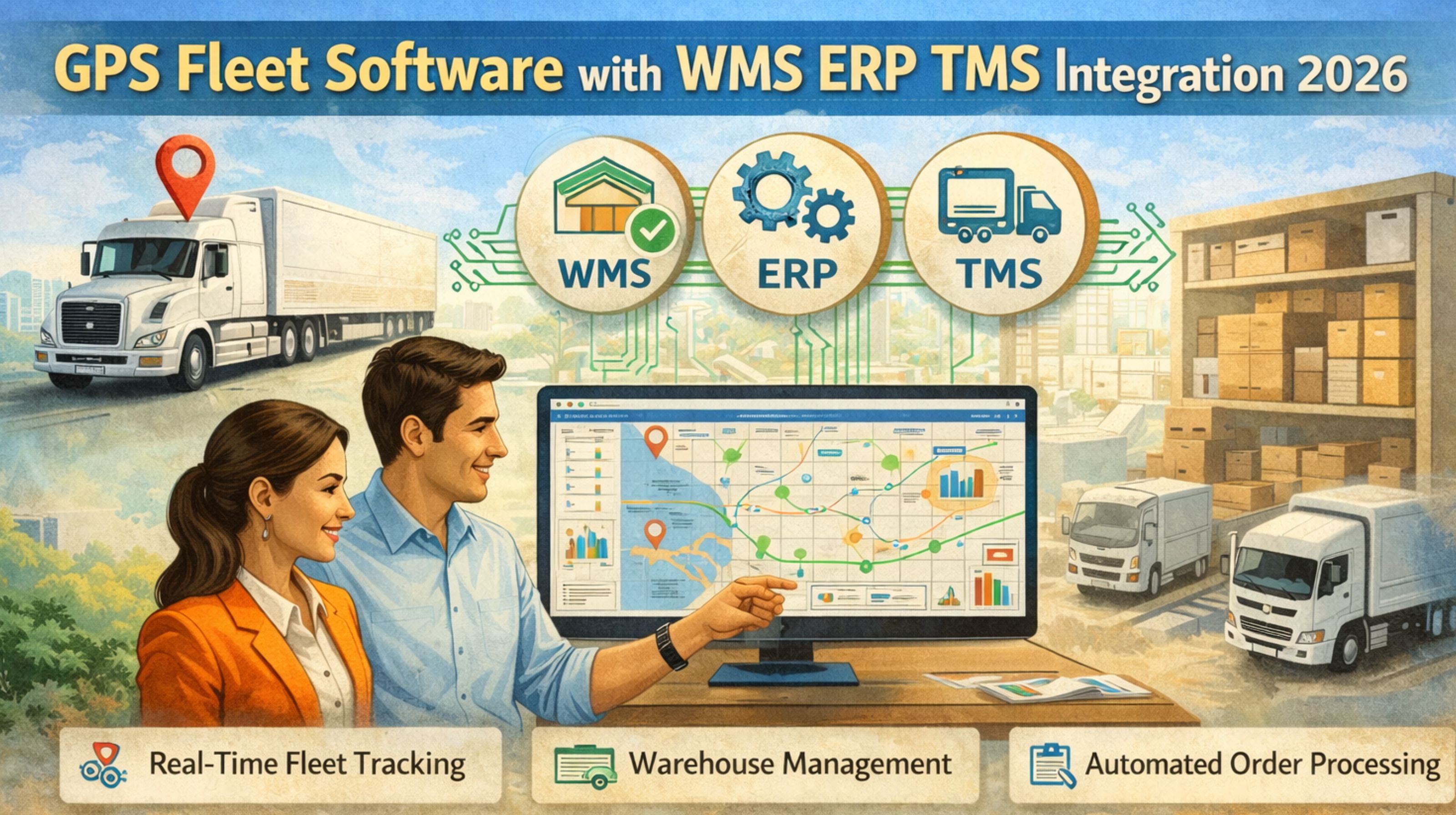
GPS fleet software with WMS ERP TMS integration 2026
The real promise of GPS fleet software in 2026 isn't just those little vehicle dots on a map. It's about building that single source of truth, one that actually connects warehouse management (WMS), enterprise resource planning (ERP), and transportation management (TMS) data in real-time. When these things run in silos, you see the fallout firsthand: a truck gets marked "loaded" in the TMS, but the WMS still shows the pallet sitting on the dock. That one hiccup starts a chain of billing errors and inventory shrinkage that your finance team can spend weeks trying to untangle.
What Integrated Logistics Actually Means for Fleet Data
So, integration here means your GPS fleet platform has to act like the central nervous system. Think about a geofence arrival at a warehouse dock automatically triggering a status update in the WMS. That update then pushes a proof-of-delivery document back to the driver's app and finally closes the loop in the ERP's accounts receivable. The non-obvious part? The timestamp synchronization. Honestly, a delay of even 30 seconds between these systems can cause an automated invoice to generate for a delivery the warehouse still thinks is "in transit." And then you're dealing with customer disputes.
The Reality of Disconnected Systems at Scale
When you're operating at scale, these gaps become systemic. Drivers end up waiting at gates because dispatch doesn't have real-time yard visibility from the WMS. Fuel tax reporting (IFTA) turns into a manual nightmare because the mileage data from your GPS software won't automatically reconcile with state lines and fuel purchases logged in the ERP. A common trap is thinking basic API connections are enough. But without proper bi-directional data validation and error-handling workflows, a single failed field update can break the entire order-to-cash cycle. Then it escalates into a full-blown customer service and accounting firefight.
The Costly Mistake of Treating Integration as an Afterthought
The biggest risk is assuming your current GPS platform can just be "bolted on" to legacy WMS or ERP systems without redesigning the data flows from the ground up. Too many teams discover this boundary condition during peak season: their integration works fine for 100 daily transactions but completely collapses under 1,000, freezing or duplicating order statuses. This usually stems from not architecting for real-time telemetry handshakes that include proper fail-safes and audit trails. Without that, you're left with no way to trace where the data chain actually broke.
Deciding Between a Tune, Reconfigure, or Replace Strategy
Your decision really comes down to a clear boundary. If your team is spending more than, say, 15 hours a week manually reconciling data between your GPS, WMS, and TMS, then internal fixes just aren't cutting it. The choice becomes either replacing your fragmented point solutions with a unified platform built for interconnected logistics, or committing to a costly and complex middleware project. The right fleet management software for 2026 won't just pull location data; it will natively speak the language of warehouse inventory, financial ledgers, and transport orders. It makes the gps controller the true orchestrator of your operational truth.
FAQ
Question: What is the biggest benefit of integrating GPS software with WMS and ERP?
Answer: Honestly, the biggest win is killing off manual data entry and reconciliation. That directly slashes administrative overhead, cuts down on billing errors, and gives you true end-to-end visibility from the moment an order is placed right through to final proof of delivery.
Question: Can old ERP systems integrate with modern GPS fleet platforms?
Answer: They can, but it often requires significant custom middleware work. The real challenge isn't making the connection—it's ensuring a real-time, two-way data sync that actually handles errors and maintains integrity between those outdated systems and the modern ones.
Question: How does TMS integration improve with real-time GPS data?
Answer: Real-time GPS data lets the TMS dynamically adjust routes based on live traffic, predict arrival times accurately for dock scheduling in the WMS, and automatically capture delays for exception management. It basically moves planning from being static to being genuinely adaptive.
Answer: You know you need a full-platform replacement when the cost and sheer complexity of building and maintaining custom integrations starts to exceed the cost of new software. And especially when those data silos are actively causing compliance risks, customer service failures, or measurable financial leakage.


Comments
Post a Comment