GPS fleet software with open API for custom integration 2026
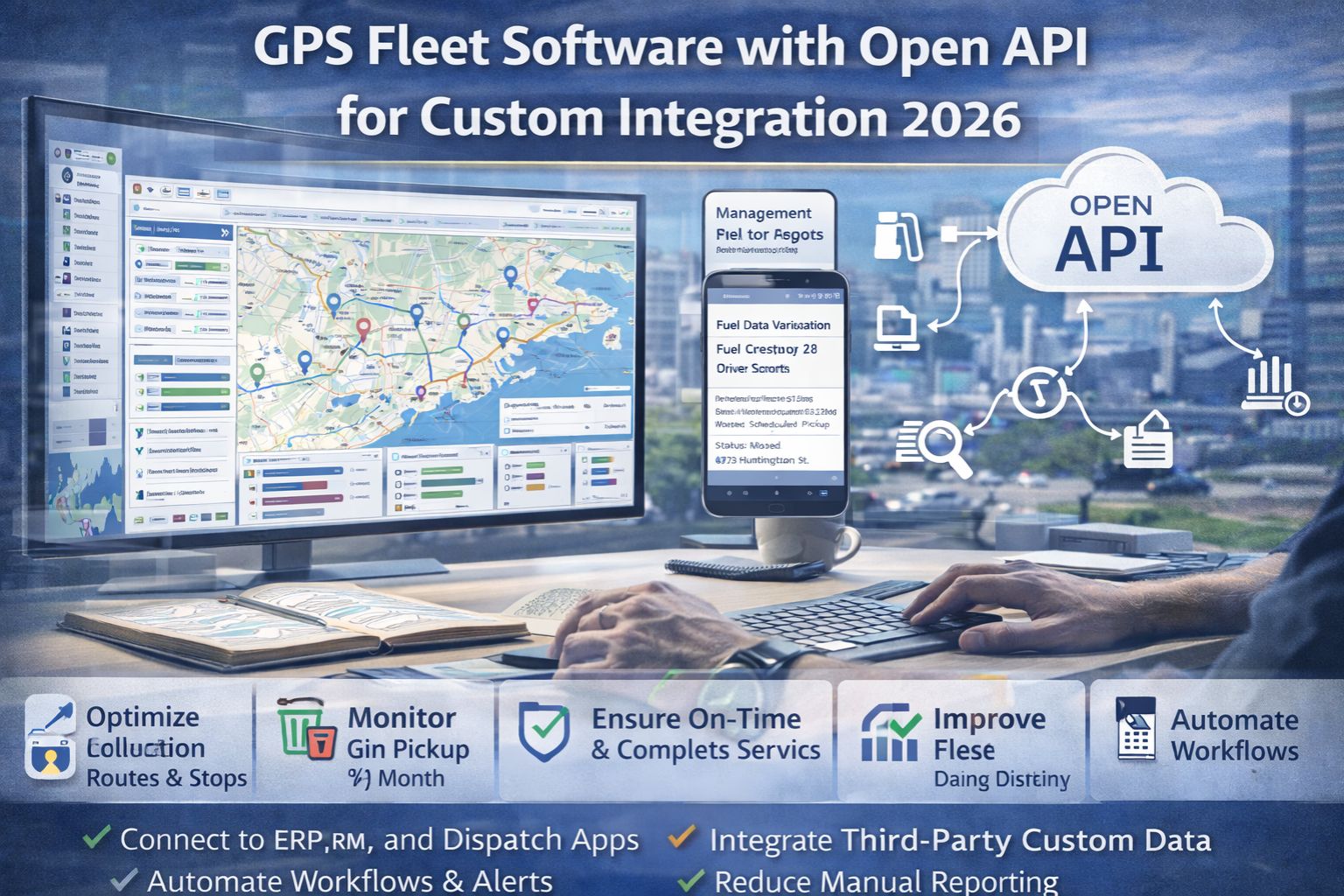
GPS fleet software with open API for custom integration 2026
Choosing GPS fleet software with an open API for custom integration in 2026... well, it's less about adding shiny features and more about stopping operational data drift. You know, that slow creep where your maintenance schedules, driver payroll, and customer ETAs just... fall out of sync with reality. It happens because the telematics data gets stuck, unable to flow into your other business systems.
What an open API really means for your fleet data flow
So, an open API here is a complete, well-documented set of protocols. It lets your own team or a developer you trust pull live location, engine diagnostics, and driver behavior data programmatically, and even push commands back to the fleet—without ever logging into the vendor's portal. The thing people often miss? It's the rate limiting and webhook stability. Some APIs will throttle requests right during your peak hours, and suddenly your custom dispatch board misses critical updates exactly when everything's hitting the fan.
The reality of scaling with a "closed" or limited integration suite
When you're operating at real scale, you'll hit a wall where those pre-built integrations just stop. A classic failure pattern is when your ERP needs a custom field from the telematics box—say, PTO engagement hours for a specialized rig—but the vendor's standard integration only pumps out basic engine data. You're left with manual data entry, which brings errors and delays, and suddenly there's a compliance gap in your asset reports. I've literally seen fleets running two separate systems side-by-side: one for tracking, another for operations, because the data couldn't be bridged.
The critical mistake: underestimating future data dependencies
The most expensive misunderstanding is thinking your integration needs won't change. A manager might pick software with a few handy pre-built connectors today, not realizing that next year's new compliance rule will require mashing up telematics data with ELD records and fuel tax reports into one single audit trail. If the API can't give you the raw, timestamped event logs, you simply can't build that unified view. That assumption leads to pricey, reactive middleware projects or a full platform swap later on.
Your 2026 decision: reconfigure your stack or replace the platform
Your choice is pretty clear: reconfigure your current software stack using a robust API, or replace the whole platform. The line is straightforward. If your current vendor's API can't provide real-time, two-way data access for your core workflows—like dynamically updating route optimization based on live traffic from another source—then internal fixes won't cut it. At that point, you need a platform built to be extended, where tools like GPS Controller are designed as a data hub, not just another dashboard.
FAQ
Question: What is the main risk of GPS fleet software without a true open API?
Answer: The big risk is vendor lock-in and data silos. Your operational decisions end up waiting on the vendor's roadmap for new reports or integrations, which stops you from adapting quickly to new business rules or compliance demands.
Question: How can I test if an API is robust enough for custom integration?
Answer: Don't just read the docs. Actually build a simple test. Try pulling a live vehicle location and pushing a geofence coordinate back to the system in a tight, 5-second loop. If you run into weird authentication hoops, inconsistent data formats, or random latency spikes, that API probably isn't ready for your real-world needs.
Question: Can't I just use pre-built integrations to avoid custom API work?
Answer: Pre-built integrations work... until your process changes. They're basically the vendor's best guess at a common workflow. If your business has unique rules—like different idle thresholds for different vehicle classes—a pre-built integration won't have that granularity. You'll be forced into workarounds that eventually break.
Question: When is it time to replace software instead of building more custom integrations?
Answer: It's time to replace when the cost and headache of maintaining a fragile web of custom scripts and middleware exceeds, say, 30% of the software's annual license fee. Or when the data lag from your integrations starts causing real business pain, like missed SLAs. A modern platform with a solid API integration framework should handle this complexity, not add to it.


Comments
Post a Comment