GPS fleet software with customer ETA notification automation 2026
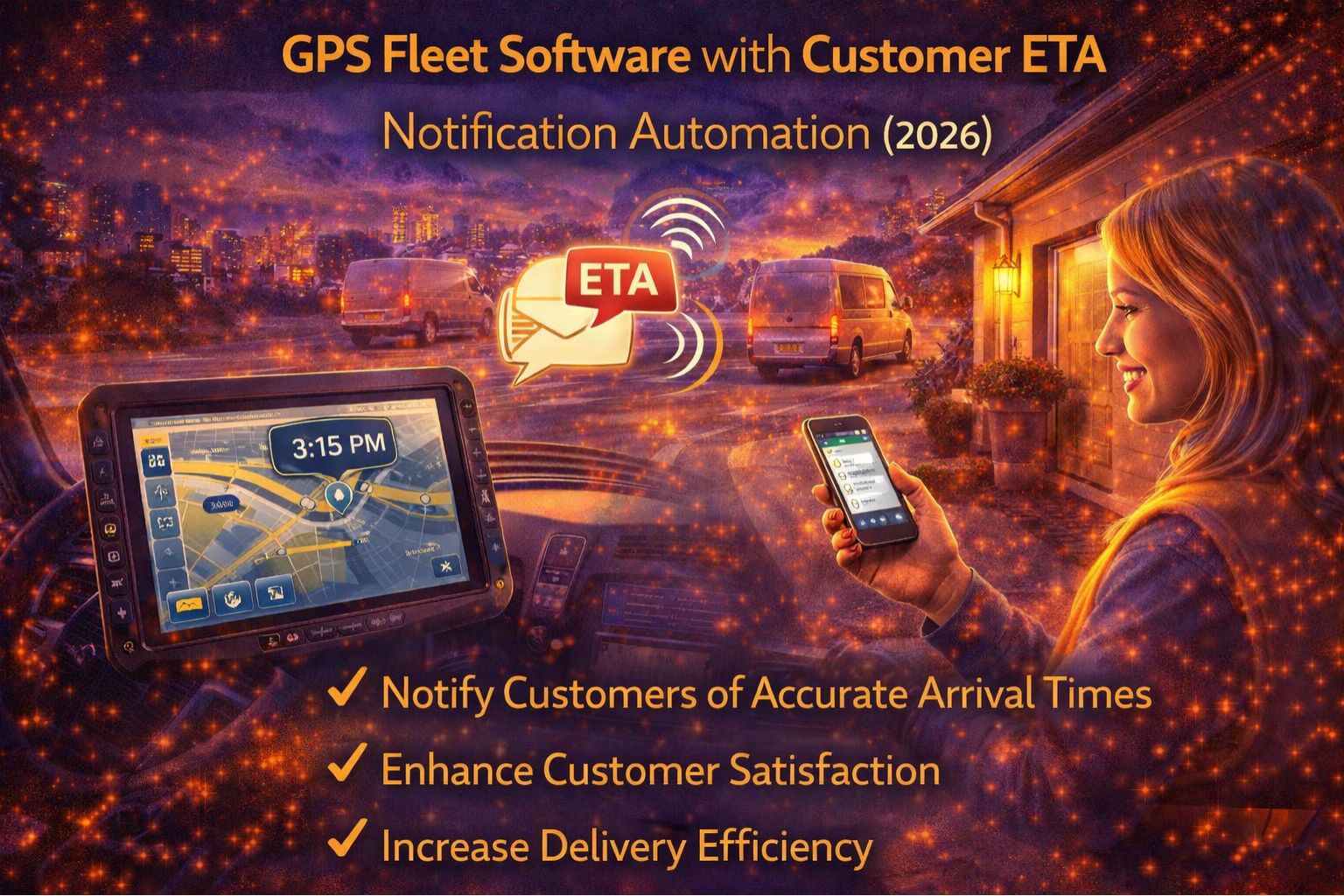
GPS fleet software with customer ETA notification automation 2026
Look, by 2026, automated customer ETA notifications from your GPS fleet software are basically a given. But here's the catch—that very automation turns into your main problem when the live GPS data can't keep up. You end up sending customers arrival times based on where the truck *was*, not where it *is*, because the positional data's gone stale.
What ETA automation really means for your dispatchers
We need to be clear about the workflow shift. Sure, it takes the manual call or text off your team's plate. But what it really does is tie your company's reputation directly to how accurate and timely that GPS feed is. I was talking to a dispatcher in Phoenix, and their biggest issue wasn't even setting up the geofences. It was having to call a retail client and explain why the system sent an "arriving now" text while the truck was still sitting in traffic three miles back. All because of signal jitter and some processing lag.
The reality of scale and stale data feeds
When you're actually operating, the problem isn't just one late truck. It's how network latency piles up across your whole fleet. The software might check a location every 30 seconds, but if the cellular network's clogged or a device buffer is full, that data point could be minutes old by the time your server gets it, crunches the ETA, and shoots out the alert. You're basically automating a promise using information that's already wrong. And that breeds customer complaints way faster than any old-fashioned manual mistake.
The critical mistake: trusting the automation blindly
This is the most common—and expensive—misstep. Treating ETA automation like some "set it and forget it" magic. Teams get the integration with their fleet management software running and just assume it's flawless. Then they stop paying attention. They don't configure delay thresholds properly, they never check the notification logs for patterns, and they have no manual override plan for those high-stakes deliveries where a wrong ETA could cost them the whole contract.
When to tune, reconfigure, or replace the system
This is where you have to draw the line. You can *tune* things—maybe add bigger notification buffers or adjust geofence sizes. You have to *reconfigure* or even redesign the workflow if you find the lag is built into the GPS device's reporting or the cloud API's processing time. And sometimes, you just need to *replace* parts of the system. When the entire pipeline, from the satellite signal to the customer's phone, adds more delay than your service agreement allows, internal tweaks won't cut it. The latency is baked into your current platform's architecture. That's when looking at a platform that gives you more control over the data pipeline, like gps controller, stops being about shiny features and starts being a technical must-have.
FAQ
Question: How accurate are automated ETA notifications from GPS software?
Answer: Honestly, their accuracy lives and dies by how fresh the location data is. If the GPS signal gets delayed in a city or the cellular data lags, the ETA is being calculated from old coordinates. You're looking at notifications that can be off by several minutes, easy.
Question: What causes the biggest delays in ETA automation?
Answer: The holdups are usually in the data chain. Getting the GPS signal (especially coming out of a tunnel), the device processing it, sending it over the cellular network, and then the software's own processing loop before it sends the alert. People often don't realize how much plain old network congestion slows everything down.
Question: Can ETA delays create compliance or audit problems?
Answer: Absolutely. For time-sensitive stuff—think medical supplies or regulated goods—you'll have automated logs saying an "arrival" notice went out at 10:05 AM, but the vehicle GPS shows it actually got there at 10:12. That discrepancy can fail an audit or break a contract, and suddenly the liability is on your operation.
Answer: You know it's time for a bigger change when the latency is bigger than the error margin your customers will tolerate. If fiddling with update intervals and adding buffer zones still leaves your automated ETA more than 2-3 minutes off from reality, the issue is probably in the core telematics hardware or software itself. That's when you need a platform-level rethink to close that trust gap with your customers.


Comments
Post a Comment