GPS fleet software with built in dispatch and job scheduling
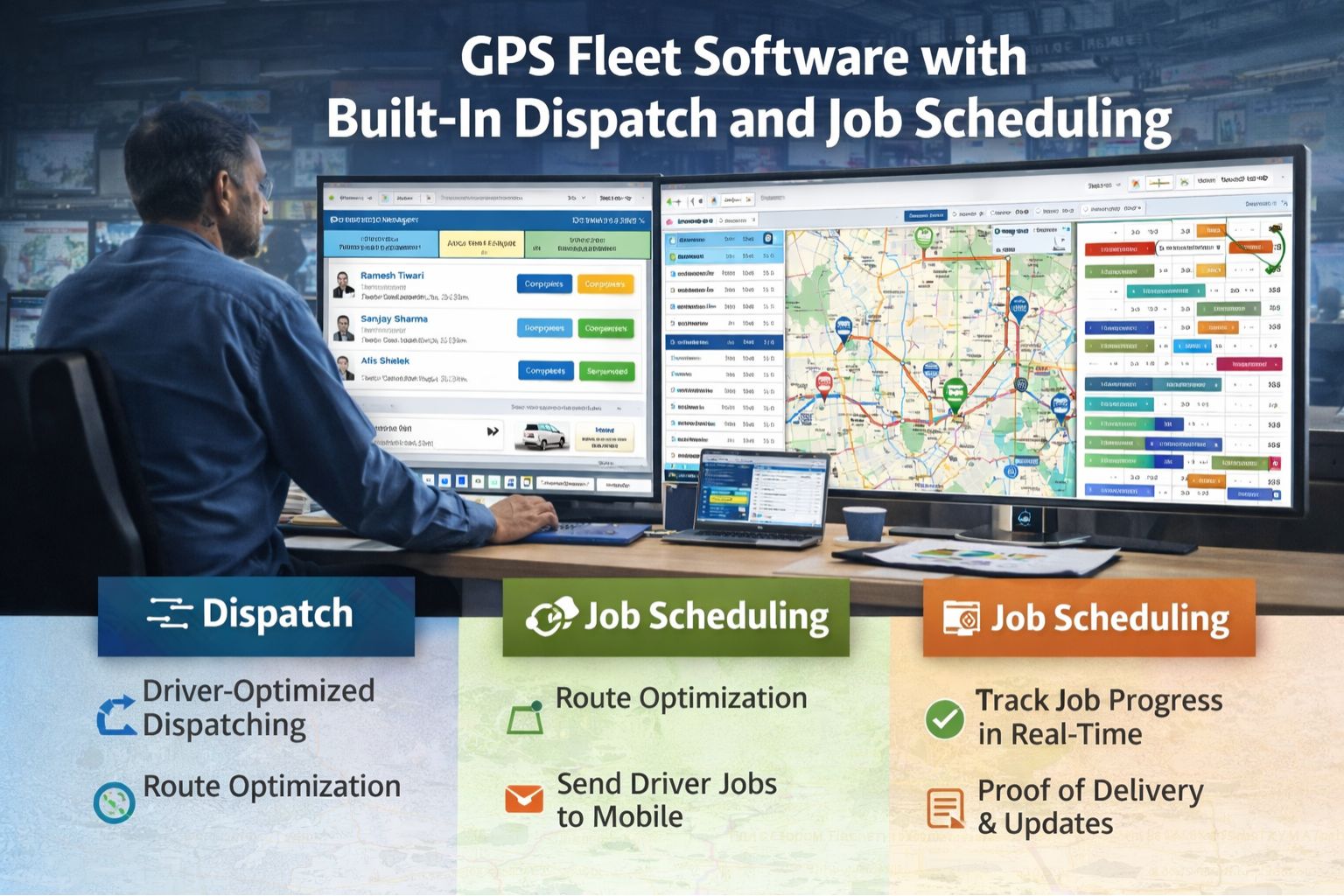
GPS fleet software with built in dispatch and job scheduling
So you've got GPS fleet software that integrates dispatch and job scheduling. The idea is solid, but here's the thing: a single point of signal latency doesn't just delay a location update—it breaks the entire operational chain. The system *assumes* real-time location data to sequence jobs and calculate ETAs. In practice, though, you'll see drivers marked as "en route" while they're already on-site because a geofence alert was delayed by 90 seconds. That's when the domino effect starts. The next job gets held up, dispatchers scramble to fix things manually, and what was sold as automated efficiency just becomes a source of constant correction.
What integrated dispatch really means when the GPS blinks
On paper, integrated dispatch means the software uses live vehicle location to auto-assign the nearest driver. The non-obvious detail everyone misses is the total dependency on a constant, low-latency data stream from the vehicle's telematics unit. And that stream travels over cellular networks. In dense urban corridors or during network handoffs, that stream stutters. You don't get a clear "signal lost" alert in the dispatch console; you just get a silently inaccurate asset map. So the dispatcher sees a truck as available three blocks away, but it's actually stuck in traffic two miles back. You only discover the reality when the customer calls asking where their service is.
The operational reality at scale
At a smaller scale, you might manage the delays. But with 50+ vehicles, these micro-delays compound into daily chaos. The software's scheduling algorithm, which is supposed to optimize routes, runs on outdated positional data. I've seen fleets where the system scheduled a 10 AM job based on a 9:45 location ping, but the driver was already committed to a 9:50 job they'd physically started minutes ago—the software just hadn't registered the arrival. That's how you get double-bookings and missed time windows. Eventually, drivers start ignoring the dispatch system because they can't trust its timing. The real kicker? Network congestion. During peak business hours when you need precision most, cellular data prioritization can throttle your telematics feed, rendering the whole "real-time" schedule fictional.
The critical mistake: assuming the software self-corrects
This is the most common, and costly, misunderstanding. People believe the integrated system has enough logic to auto-correct for these gaps. Managers think, "It'll just recalculate the route if the driver is behind." But the software can't recalculate what it doesn't see. If the vehicle's GPS signal is delayed—maybe from urban canyon effects or a weak IoT device antenna—the dispatch module is operating on a ghost image. This leads to the inevitable escalation: frustrated dispatchers manually override the system. They create a parallel, unsynchronized paper schedule, which voids all the reporting and compliance automation. Suddenly, your advanced software is just a very expensive digital map.
When to tune, reconfigure, or replace your platform
This puts you in a decision lock. You can try to tune settings for alert thresholds, or reconfigure the network. Maybe add dedicated IoT access points. Or you might have to redesign the entire workflow. The clear boundary is repeat, predictable failure during your critical dispatch windows. If drivers consistently face scheduling conflicts due to lagging data during your peak service hours, then internal fixes are probably insufficient. At that point, the issue isn't configuration. It's a fundamental mismatch between the software's need for constant data and your operational environment's network reality. When evaluating a platform like gps controller, you're not just looking for features. You're evaluating its data ingestion resilience—how it handles signal loss without breaking the dispatch queue entirely.
FAQ
Question: How does GPS delay actually break automated job scheduling?
Answer: It breaks it because the automated scheduling relies on precise, *current* location to calculate travel time. A delay of even two minutes means the system is scheduling based on where the vehicle *was*, not where it *is*. That leads directly to unrealistic arrival times and overbooking.
Question: Can better GPS hardware fix dispatch software problems?
Answer: Only partially. A high-sensitivity receiver helps with getting a satellite lock, sure. But the major bottleneck is often the cellular data network that transmits that location back to the software. Upgrading devices might not solve the latency you get during network congestion.
Question: What's the compliance risk with delayed dispatch data?
Answer: It's a big one. If you're logging job start and end times for service-level agreements or regulatory reports, and those timestamps come from delayed geofence triggers, then your entire compliance log is inaccurate. That creates serious audit exposure and can even invalidate billing that's based on time-on-site.
Question: At what point should we look for new fleet software?
Answer: Look when your team is routinely working around the system. If they're using manual spreadsheets and radio calls because the integrated dispatch can't be trusted for daily routing, then the software has failed its core function. That's a fundamental workflow problem, not a minor bug you can patch.


Comments
Post a Comment