GPS Driver Scorecard Software Failing to Improve Road Safety in 2026
GPS Driver Scorecard Software Failing to Improve Road Safety in 2026
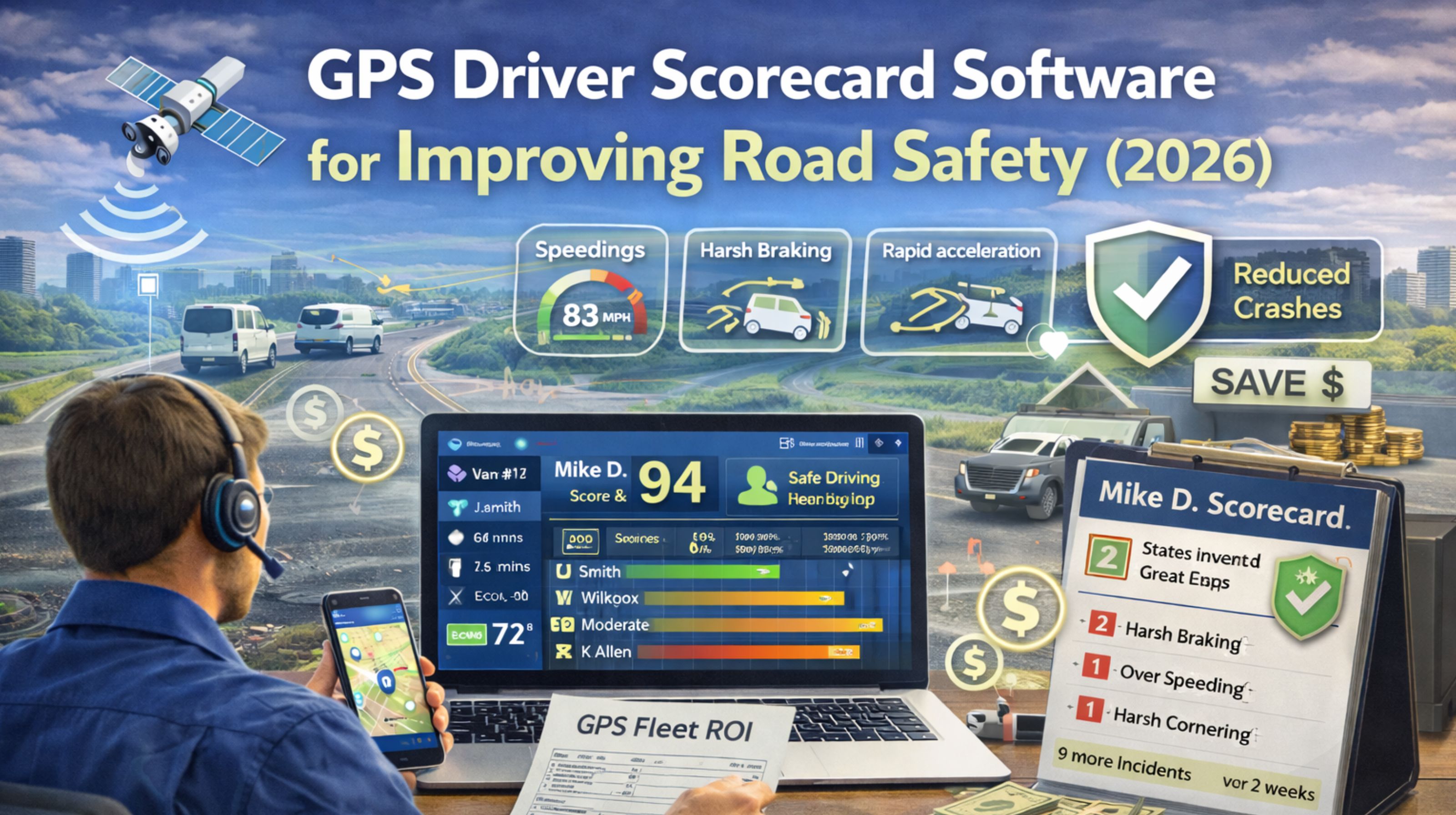
So your driver scorecard is all green, but your accident rates are still climbing. The software probably isn't lying to you—it's just failing. It's missing the real-world friction that actually causes incidents. A common failure point is data lag: harsh braking events from the telematics might show up a full 30 seconds after the GPS location ping, completely decoupling the 'where' from the 'what happened'. You end up with a fleet manager looking at a safe score for a route, completely unaware of the near-miss that happened three blocks earlier. That's a dangerous false-positive in your safety reporting. This kind of mismatch is your first clue that your fleet management software is just processing data points, not actually understanding driver behavior.
What a Failing Driver Scorecard Looks Like in Live Fleet Tracking
Watch for "score drift." It's when a driver's safety rating somehow *improves* during known high-risk hours, like in early morning fog. That happens because the algorithm often weights simple mileage over the quality of maneuvers. In reality, the GPS signal is fine, but the critical data from the vehicle's own sensors—the stuff that detects swerves or abrupt lane changes—is getting sampled too slowly or written off as background "noise." You'll even see perfect scores for routes through active construction zones. The system tracks smooth speed compliance just fine, but it ignores all the constant micro-corrections the driver is making to avoid debris. And that constant adjustment? That's the actual fatiguing behavior that leads to mistakes later on.
The Reality Check Under Real Fleet Scale and Load
When you scale up, the failure mode changes. It's less about collecting data and more about a total correlation collapse. With, say, 200+ vehicles, the software backend often starts averaging scores across driver groups just to handle the server load. It blends the performance of a cautious veteran with an aggressive new hire. What you get is a "median safe score" that looks like it's improving, while your tail-risk drivers—the ones actually spiking your insurance premiums—become statistically invisible. The system is technically working, just aggregating data. But the custom reports and analytics dashboard ends up presenting this calm, averaged picture that completely hides the escalating risk festering in specific corners of your fleet.
Common Mistakes and Wrong Assumptions That Escalate Risk
The biggest mistake is assuming a low "harsh event" count automatically means safe driving. Savvy drivers learn to brake earlier and softer just to avoid triggering the scorecard's algorithm. But they'll maintain high speeds between signals, which increases overall kinetic energy and stopping distance—a major risk factor most software doesn't even calculate. And then managers reward these drivers, which just incentivizes the wrong behavior. Plus, focusing solely on individual driver scores misses platoon effects. One aggressive driver can force three cautious drivers behind them to brake erratically, generating poor scores for the wrong people and masking the real root of the safety decay.
Decision Help: Tune, Reconfigure, or Replace Your Safety System
The line is pretty clear. If your scorecard can't integrate real-time traffic flow data, live weather APIs, and true per-second vehicle bus diagnostics (like steering angle and torque), then you're just tuning a dead system. You can reconfigure alerts and weights all day, but if the core logic can't correlate a sudden steering input with, say, a pedestrian detection in the same geofence at the same time, your fixes are only superficial. When internal tuning fails to reduce preventable incidents after two full audit cycles, the system architecture itself is insufficient. That's the point where you need a platform-level redesign or a full replacement—moving from a simple scoring dashboard to a contextual safety intelligence system. It's a shift several leading fleets are being forced to make with their gps controller infrastructure in 2026.
FAQ
q: What is the biggest red flag that my driver scorecard data is wrong?
a: A consistently "good" safety score for a specific vehicle during periods of high driver turnover or on routes with known hazards. That's a classic sign the software is just measuring basic compliance (like speed limit adherence) instead of proactive, defensive driving behavior. It creates a dangerous data gap where you think you're safe but you're not.
q: Can bad scorecard software increase my fleet's liability risk?
a: Absolutely, and significantly. Imagine an audit or litigation discovers your safety program relied on inaccurate scoring that failed to flag a high-risk driver. That demonstrates negligence. Your own software's reports become evidence that you had the data but failed to interpret it correctly, which massively widens the compliance gap.
q: How many vehicles does it take for these scoring errors to become a major problem?
a: The problems start creeping in around 50 vehicles, when manual oversight becomes impossible. But systemic failure usually kicks in between 150-200 assets. At that scale, data averaging, delayed processing, and a lack of individual context create a kind of "fog of war." Your aggregate scores look fine on a dashboard, while specific, dangerous patterns get buried in the statistics.
q: When should I replace my driver scorecard software instead of trying to fix it?
a: Replace it when your internal fixes—things like adjusting event thresholds or adding new report parameters—fail to change driver behavior or reduce incidents after two quarterly safety reviews. If the core system can't ingest and correlate real-time contextual data (weather, traffic, detailed telematics), then you're just patching a fundamentally limited tool. That's the common realization pushing fleets toward more integrated gps controller platforms now.


Comments
Post a Comment