GPS Controller Works When GPS Is Jammed — BeiDou Backup Explained 2026
GPS Controller Works When GPS Is Jammed — BeiDou Backup Explained 2026
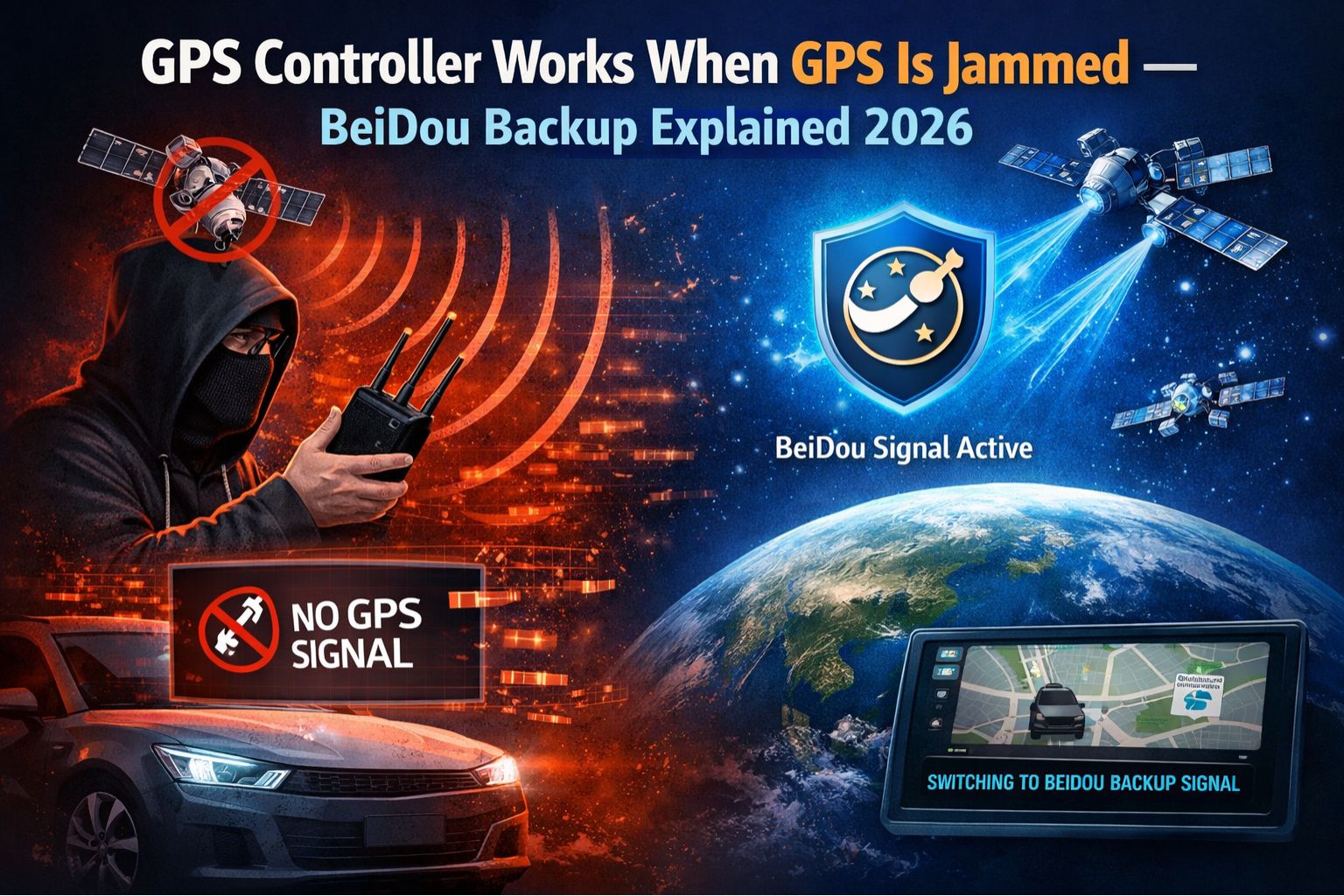
Look, when GPS signals get jammed or spoofed, it's a real problem. A modern GPS Controller with BeiDou backup can keep your fleet tracked by switching over to China's satellite system. It stops that total blackout of vehicle location and telemetry data—the kind that completely cripples your dispatch and safety logs.
What BeiDou Backup Actually Means for Your Fleet
This isn't just ticking an extra box on a satellite list. It's a live, automatic failover. In the real world, when GPS jamming hits—which is weirdly common near ports, borders, or sensitive sites—the controller doesn't just flash "No Signal." It grabs BeiDou satellites. You might see a slight, maybe 5-10 meter jitter on the map as positional uncertainty increases a bit, but it's critical. Meanwhile, all your other engine and sensor data keeps streaming right into your fleet management software without a hiccup.
The Reality of Jamming and Why Single-Constellation Fails
At scale, jamming isn't usually a total blackout. It creates these zones of degraded or just... wrong signal. A GPS-only tracker stuck in one will report stale positions, delayed geofence exits, or worse, locations that seem believable but are completely false, corrupting your whole route history. We've seen cases where fleets missed idling events because a jammed unit just reported its last known coordinates for hours, throwing off fuel and compliance reports. Dual-constellation hardware uses both systems at once, so losing one is instantly obvious and something you can actually work around.
The Mistake: Assuming Backup is Just a Redundant Signal
Here's the common trap: thinking BeiDou is just a carbon copy of GPS. The failure happens when fleets turn the feature on but don't reconfigure their geofences and alert rules for the different signal behavior. BeiDou can have slightly different timing or coordinate reporting in some areas. If your geofence alert logic isn't tuned for that, you might get delayed "exit" alerts, or miss them completely. That creates a compliance gap right where you thought you were covered—a critical flaw, especially for geofencing alerts tied to billing or safety.
Your Decision: Tune, Reconfigure, or Replace
The line is pretty clear. If your current hardware is GPS-only, replacing it is the only way to get real anti-jamming resilience. If you already have dual-constellation hardware, you can't just set it and forget it. You have to actively tune the system—adjusting alert sensitivity and checking location reports in known weak-signal areas. Internal software fixes won't help if the core device is missing that second chipset. For controllers already using both GPS and BeiDou, the job shifts to software configuration and testing to make sure the backup actually works without you noticing.
FAQ
Question: How does a GPS Controller switch to BeiDou?
Answer: The controller's firmware is constantly checking the signal integrity from all the satellites it can see. When the GPS signal strength drops below a reliable level or looks like it's being jammed, it automatically starts relying more on the BeiDou constellation data to calculate position. This usually happens within seconds.
Question: Is BeiDou as accurate as GPS for fleet tracking?
Answer: In the Asia-Pacific region, it's often actually more accurate. For most fleet tracking needs globally, like following a route or logging location history, the accuracy is comparable. The real difference is availability—having a signal at all when GPS is knocked out.
Question: Can signal jamming still cause problems with BeiDou backup?
Answer: Yes, it can. If a jamming device targets the frequencies both systems use (like the L1 band), it can hit both. But the better dual-constellation controllers can also use BeiDou's B1C signal, which gives you some resistance against simpler, broad-spectrum jammers.
Answer: It really comes down to your operational risk. If your routes never go near jamming zones, it's a nice-to-have feature. If you operate near high-risk areas, or you absolutely cannot afford a tracking blackout for compliance reasons, then it's essential. The cost of not having it is losing all visibility right when you need it most. That's why modern fleet platforms are building this capability in directly.


Comments
Post a Comment