GPS Controller with satellite fallback for rural dead zone fleet 2026
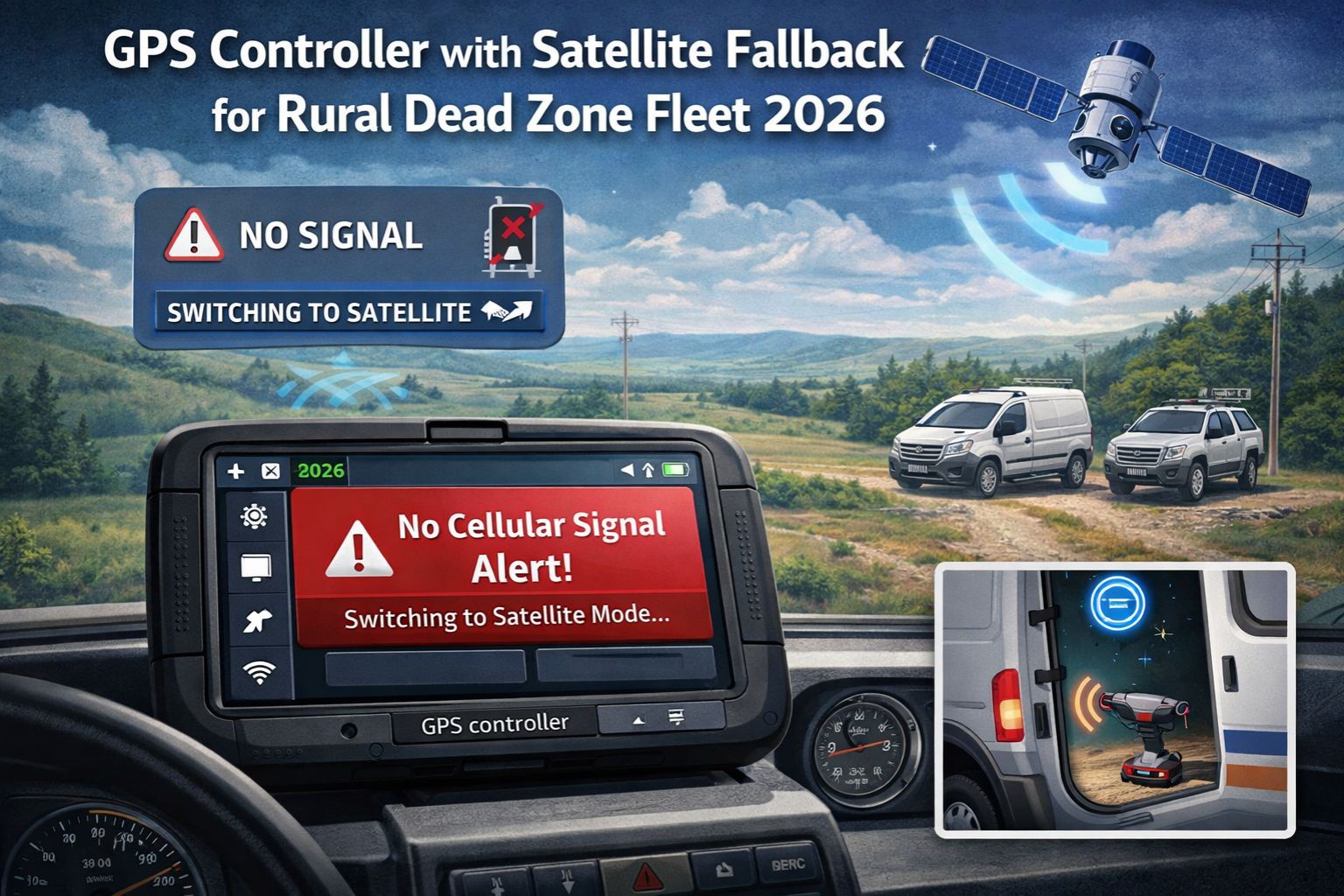
GPS Controller with satellite fallback for rural dead zone fleet 2026
When your fleet's route hits a cellular dead zone, the standard GPS Controller tracking just goes silent. It's not just a gap in data—it's a total blackout for driver logs, temperature reports, and real-time location. What you thought was a known route suddenly becomes a liability. By 2026, bridging these gaps isn't optional. Satellite fallback has to be the mandatory failsafe for continuous real-time vehicle tracking, or your audit trails have holes.
What satellite fallback actually means for your rural fleet
Satellite fallback isn't just a backup signal. Think of it as an automatic, redundant channel that kicks in the second cellular drops. So a driver heading into a mountain pass or a remote road doesn't just vanish from your map. The device switches to sending critical breadcrumbs—location, ignition status, timestamp—over satellite. It keeps the chain of custody for sensitive loads alive and maintains a heartbeat to your fleet management software. The key, less obvious part is the data compression. To handle cost and bandwidth, it only transmits the most vital telemetry, not the full data stream.
The reality of dead zone blackouts at scale
At scale, a single dead zone on a major route isn't about one truck. It can blindside dispatch for a whole scheduled convoy, creating cascading inefficiencies. You'll get geofence alerts hours late. Idle time calculations get thrown off because the 'engine off' event was logged miles down the road. A temperature excursion report for pharmaceuticals might arrive long after the cargo is already compromised. The real boundary condition is cost. Satellite data is pricier, so the system has to be smart—configured to send only essential compliance and exception data. Sending everything would lead to astronomical costs.
The critical mistake: assuming infrequent dead zones are low risk
The biggest misunderstanding is treating satellite fallback as insurance for 'rare' events. The risk isn't about frequency; it's about consequence. That one-hour dead zone twice a month? It could be the exact stretch where a driver might fudge hours-of-service rules, or where a fridge unit fails without a report until the trailer is out of the zone. By the time cellular reconnects and data syncs, your evidence for a DOT audit is incomplete, and the financial loss from spoiled cargo is already locked in. Assuming low frequency equals low impact is what turns a manageable tech upgrade into a major compliance failure.
Decision help: reconfigure your existing system or redesign with satellite?
Your decision is pretty clear. If your fleet only occasionally skirts the edges of cellular coverage, you can probably reconfigure your existing GPS Controller setup—optimize data caching and burst transmission for when signal returns. But if your core routes have predictable, long dead zones—think mining, energy, agriculture, or remote long-haul corridors—then internal fixes won't cut it. You have to redesign your telematics stack. That means hardware with integrated satellite modems and a fleet management software platform built to handle and bill for dual-network data. Replacing legacy devices becomes unavoidable when the cost of one compliance violation or lost load outweighs the investment in a resilient gps controller system.
FAQ
Question: How does satellite fallback work with my current GPS tracking?
Answer: You need specific hardware that has both a cellular and a satellite modem. The device senses when the cellular signal drops and automatically switches to sending essential data (like location and critical events) over satellite. It switches back once cellular is available again.
Question: Is satellite data for fleet tracking very expensive?
Answer: It's more expensive per kilobyte than cellular data. That's why the systems are set up for efficiency—they only send critical compliance and exception alerts during fallback, not the full stream of engine diagnostics or constant location pings. It's all about controlling the cost.
Question: Will my drivers know when the truck is using satellite fallback?
Answer: Usually, no. The switchover happens automatically and is seamless for the driver. There's no alert or action needed from them, which helps prevent any behavior changes or manipulation during the blackout period.
Answer: The main benefit is it eliminates compliance and operational blackouts. You get continuous logging for hours-of-service (to meet ELD mandates), uninterrupted monitoring for sensitive cargo, and real-time location visibility. That's crucial for safety and dispatch when you're operating in remote areas.


Comments
Post a Comment