GPS Controller vs Samsara vs Geotab: Honest Price Comparison 2026
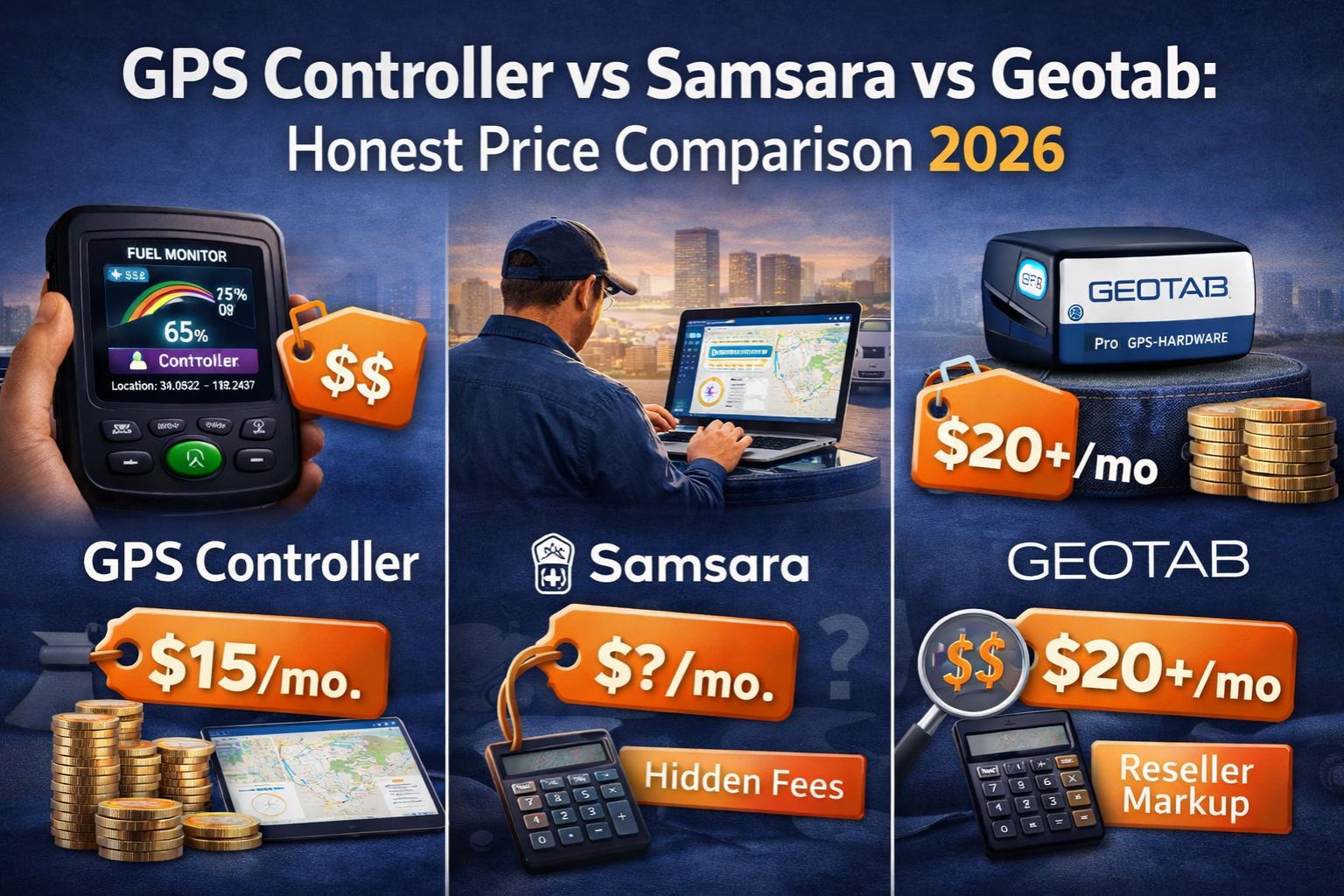
GPS Controller vs Samsara vs Geotab: Honest Price Comparison 2026
So you're looking at GPS Controller, Samsara, and Geotab price tags for 2026. It's tempting to just compare the monthly per-vehicle fee, but honestly, that's where they want you to look. The real question is which cost structure will quietly eat into your budget when you grow past 50 trucks or suddenly need a specific compliance report. The sticker price is almost a decoy for the actual financial commitment.
Clarity: What You're Actually Buying
Let's be clear: you're not buying a moving map. You're buying a data pipeline. GPS Controller tends to price around active tracking and core alerts. Samsara and Geotab? They bundle things like advanced analytics, driver safety scores, and API access into their higher-tier plans. The first trap is finding yourself paying for, say, AI camera analytics or predictive maintenance modules your shop can't even use, just because they came packaged with the basic geofencing you actually needed.
Reality Check: The Scale Where Pricing Diverges
At around 25 vehicles, the monthly numbers might seem pretty close. Push past 75 assets, though, and the underlying architectures really start to matter. Samsara's model—with its integrated hardware and cloud—can mean higher per-unit costs, but it simplifies support. Geotab's open platform might keep hardware costs down, but you'll often need third-party integrations to get a complete solution, which adds hidden consultancy fees. I spoke with a fleet manager who found their "low" per-unit Geotab quote didn't include the necessary custom reporting module, leading to a 40% budget overrun at renewal. That's the kind of surprise that hurts.
Mistake: The "Unlimited Data" Illusion
This is a common, and costly, misunderstanding. Assuming all data is equal is a mistake. One platform's "unlimited trips" might only store detailed data for 30 days. After that, you're paying extra for deep historical storage, which you'll need for that six-month DOT audit. Another might charge you per API call when you connect your fleet management software for dispatch. The failure pattern is choosing based on the per-vehicle fee while completely missing the data egress and retention costs that hit you during an audit or insurance claim.
Decision Help: Tune, Reconfigure, or Replace
Here's a way to think about it. If your needs are stable, your reporting is pretty standard, and you're under 50 vehicles, you can probably just tune and negotiate with your current provider. But if you're scaling fast, need deep custom workflows, or are facing new compliance rules, you likely need to reconfigure your entire stack—and that often means switching platforms. An internal fix won't cut it when the core architecture of your chosen platform (whether it's closed vs. open, or bundled vs. modular) is fighting your daily operational reality. This is actually where it makes financial sense to evaluate a more focused platform like GPS Controller for core telemetry, before you get locked into a full enterprise suite you might not fully use.
FAQ
Question: What is the typical starting price per vehicle per month for these platforms in 2026?
Answer: Published starting prices vary, but for core tracking and alerts, you're usually looking at $20 to $40 per vehicle per month. The catch is that "starting" price rarely includes the specific compliance reporting or integration points most fleets end up needing. So the true entry cost is often 25% to 50% higher from the get-go.
Question: Which platform has the most hidden fees or surprise costs at scale?
Answer: It's less about one platform being universally bad and more about misalignment. Geotab's open ecosystem can lead to unexpected integration and consulting fees. Samsara's bundled tiers can mean you're paying for advanced features you never use. The real hidden cost is always the one tied to your specific need—whether it's data retention, API calls, or custom alert logic—that falls just outside the standard package.
Question: For a fleet of 100+ vehicles, which pricing model tends to be most cost-effective?
Answer: Once you're at 100+ vehicles, the total cost is really dictated by the architecture. A modular, open platform (like Geotab's ecosystem) *can* be cheaper, but only if you have in-house tech people to manage all the integrations. A vertically integrated suite (like Samsara) can be more predictable and cost-effective, but only if you're actually using most of what's in the bundle and don't have a big IT team. Picking the wrong model for your specific operation can easily waste six figures a year in pure inefficiency.
Question: When should a fleet manager consider switching platforms based on cost?
Answer: Don't think about switching just because the monthly bill is high. Think about it when the cost-per-actionable-insight is too high. If you're paying for an entire enterprise suite but only using basic tracking, or if you're constantly paying for custom workarounds on a platform that's too limited, then the architecture is wrong for you. The trigger should be when your annual platform cost actually exceeds the hard savings (in fuel, overtime, compliance fines) it's proven to generate.


Comments
Post a Comment