GPS Controller V2X vehicle to everything connectivity integration 2026
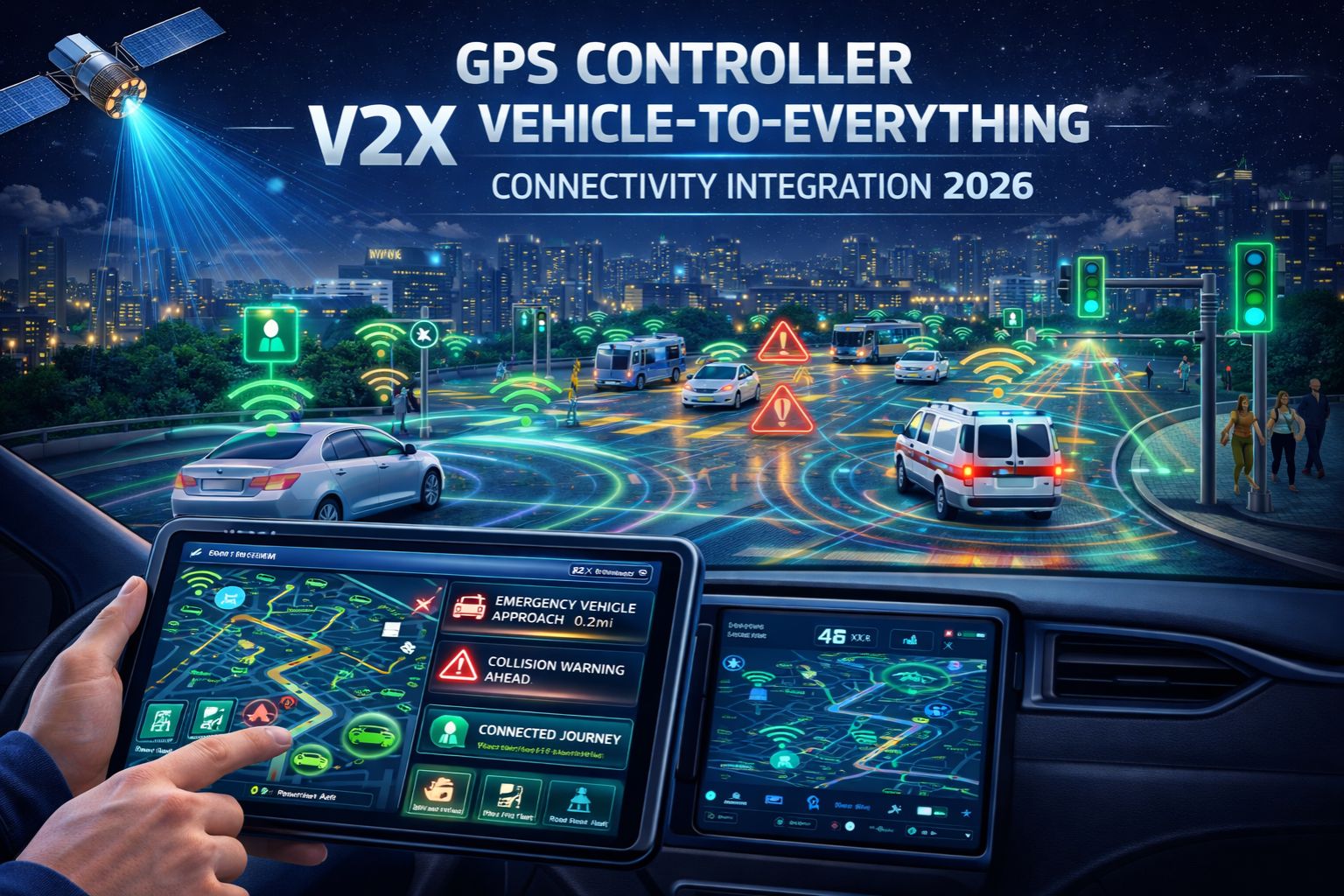
GPS Controller V2X vehicle to everything connectivity integration 2026
The 2026 push to integrate V2X connectivity into GPS Controller platforms is a fundamental shift, but let's be clear—it's moving from passive satellite tracking to an active, networked system. This directly goes after the GPS signal delay that causes fleet tracking to fail, because vehicles can start talking directly to infrastructure, other vehicles, and the cloud, bypassing the old latency bottlenecks. The goal is to swap delayed guesses for real-time awareness, sure. But the integration path? It's packed with hardware, network, and data-handling complexities that can actually undermine your whole fleet operation if you get it wrong.
What V2X Integration Actually Means for Your Fleet
For a fleet manager, V2X integration means your trucks stop being silent dots on a map and start talking. Instead of waiting for a laggy GPS fix in a city canyon or bad weather, vehicles broadcast their precise location, speed, and intent using DSRC or C-V2X. That data feeds right into your fleet management software, creating a live mesh network. Here's the non-obvious catch: the dual-modem requirement. Most vehicles will need both a traditional cellular modem and a separate V2X radio, which honestly doubles the potential points of failure and creates a whole new headache for reconciling data streams.
The Reality of Scaling V2X Across a Mixed Fleet
At scale, the promise of zero-latency tracking hits a harsh reality. Rolling out V2X across a mixed fleet—new trucks, retrofits, legacy assets—creates a fragmented data environment. New trucks with native V2X give you rich data; retrofitted units might have inconsistent broadcast power; and your old assets are just silent, creating blind spots. You'll likely see "data echo," where the V2X system reports a position a split-second before the GPS data arrives, triggering conflicting alerts in your geofencing software. That's not a glitch. It's a fundamental mismatch in timing sources you have to resolve algorithmically, or your dispatchers will stop trusting the system entirely.
Critical Mistakes in V2X Deployment Strategy
The biggest mistake is treating V2X as a simple GPS swap. Companies think enabling V2X will magically fix all location delays, so they deprioritize their core GPS tracking infrastructure. That's a fatal error. V2X coverage is spotty—it needs other equipped vehicles and roadside units to work. In rural areas or on empty highways, V2X signals might just not be there, forcing a fallback to standard GPS. And if you've let that GPS system degrade, it'll be even less reliable now. Another thing people miss is the compliance log burden. V2X generates way more timestamped event data—braking, signaling, warnings—that has to be stored and audited. It can overwhelm systems built for simpler IoT asset monitoring logs.
Deciding Between V2X Tuning, Reconfiguration, or Replacement
The decision line is pretty clear. If your fleet mostly runs in dense urban corridors or on smart highways with good V2X infrastructure, you're in the "tune and reconfigure" zone. Focus on optimizing the algorithms that blend V2X data with GPS and sensor feeds. But if your operations cover long-haul routes, remote areas, or mostly use non-V2X-capable assets, you're in "redesign" territory. Internal fixes won't cut it. You need a redesigned telematics architecture that treats V2X as a supplemental, high-value signal, not the primary source. Replacing your whole tracking platform only becomes necessary when your current vendor's system can't handle the dual-stream, high-frequency data without adding crippling latency itself—which would turn the promised solution into the source of even worse tracking failures.
FAQ
Question: What is the main benefit of V2X for fleet tracking in 2026?
Answer: The main benefit is slashing location data latency. V2X lets vehicles communicate directly, giving you real-time position and intent data that bypasses the delays you get with standard GPS signal acquisition and cellular backhaul. That's crucial for safety and dynamic routing.
Question: Can I add V2X connectivity to my older fleet vehicles?
Answer: Yes, with aftermarket telematics devices that have a V2X radio. But the retrofit isn't simple. It needs careful installation, network certification, and a lot of integration testing with your current platform to make sure this new data stream doesn't conflict with or corrupt your existing GPS data.
Question: Does V2X make GPS tracking obsolete?
Answer: Not at all. They're complementary. GPS gives you global, absolute positioning. V2X offers low-latency, relative local awareness. A robust system uses both. If you rely only on V2X, you're blind anywhere without the supporting infrastructure or other connected vehicles around.
Answer: For a complex integration that needs reliable data fusion, platforms like GPS Controller are building the architecture to manage these dual data streams. The point is to make sure the enhanced connectivity actually improves operational visibility, not just makes everything more complicated.


Comments
Post a Comment