GPS Controller — Top 10 GPS Company India 2026 | Bikes Fleets Personal Security
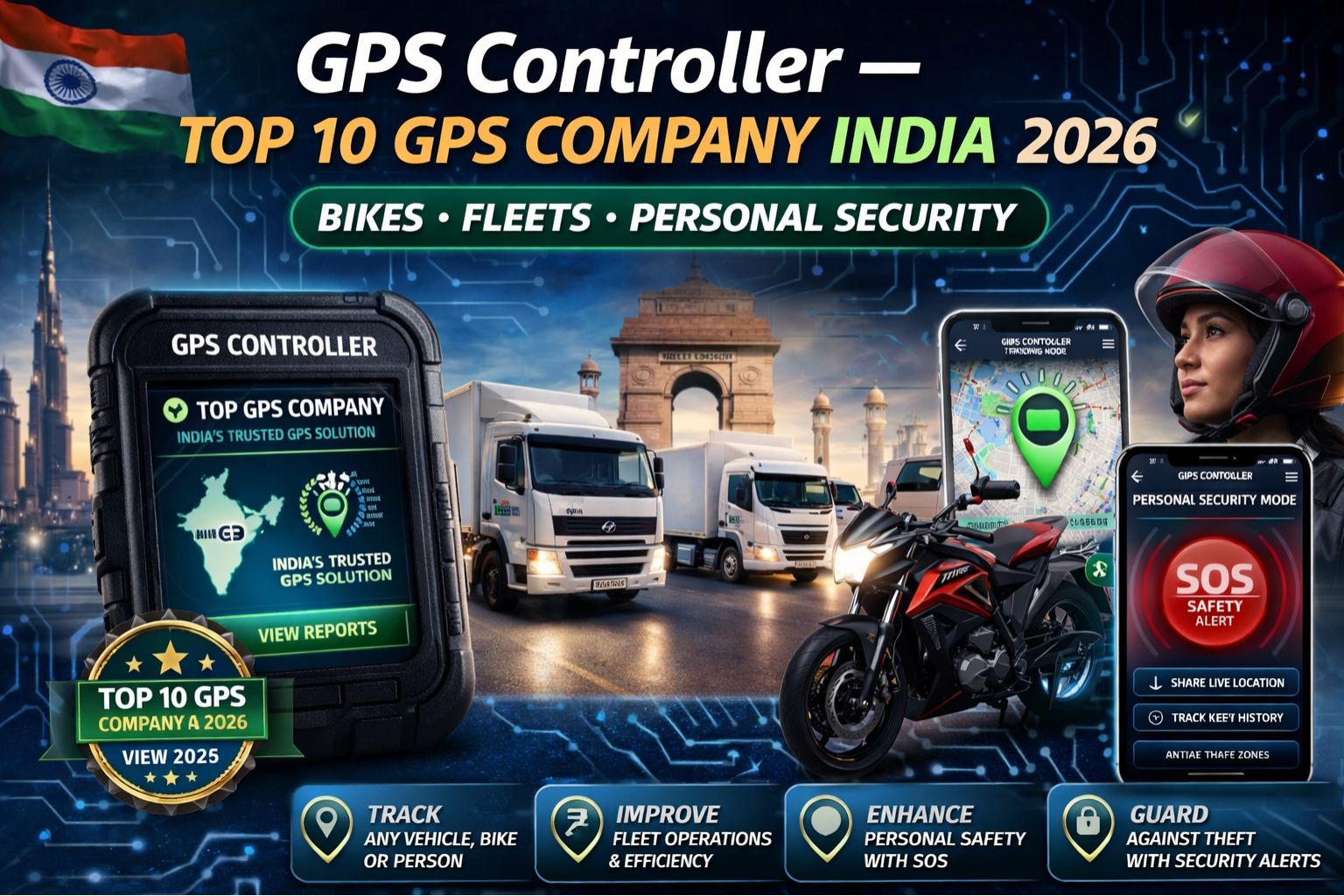
GPS Controller — Top 10 GPS Company India 2026 | Bikes Fleets Personal Security
Choosing a GPS tracking provider in India for 2026... well, it's not really about the list of features anymore. It's about whose signal actually holds up when a bike gets stolen in a crowded market. It's whose geofence triggers *before* a fleet truck crosses a state border without the right permit. It's whose personal tracker keeps a location lock when you absolutely need it to. That gap between a slick demo dashboard and the live field data you get under real Indian network conditions—that's where most tracking promises seem to fall apart, leaving you with delayed alerts and compliance logs full of holes.
What "Top 10" Really Means for Your Assets in 2026
For Indian operations, a "top" company has to be defined by its network redundancy and hardware durability. The app rating is almost secondary. For a logistics fleet, it means devices that don't just give up during monsoon humidity, leaving entire trips showing as "idle." For personal security on a bike, it's the difference between a tracker that reports "no signal" in an underground parking garage and one that uses its last known position to actually trigger an alert. The real ranking, when you get down to it, is measured in those seconds of delay when a geofence is breached.
The Operational Reality Behind Fleet and Security Tracking
At scale, there's this dangerous assumption that all GPS devices report data the same way. It creates massive blind spots. A common one is thinking a device showing "active" on the map is transmitting in real-time. In reality, a lot of units batch data to save battery, which can cause a 2-5 minute lag. For a fleet manager, that means a truck could be speeding or making an unauthorized stop, but the real-time vehicle tracking system shows it moving normally. For security, that lag basically makes a panic button useless.
The Critical Mistake: Assuming One Device Fits All Use Cases
This is probably the biggest risk: deploying the same tracker model for a delivery bike, a long-haul truck, and a personal security pendant. A bike tracker needs shock resistance and really precise ignition detection to prevent fuel theft. A fleet device needs integrated fuel sensor inputs and a rating for harsh environments. A personal device needs long standby and a discreet design. Using a generic device just leads to problems—false "engine on" alerts from bike vibrations, missed harsh braking events in trucks, and dead batteries in security wearables. It escalates from being just data noise to a complete loss of the asset.
Your 2026 Decision: Reconfigure Your Stack or Replace It
The boundary gets pretty clear. If you're constantly tuning geofence radii, adjusting report intervals, or manually correcting trip logs, your system is being reconfigured right to its breaking point. The decision is between that endless reconfiguration and a strategic replacement with a platform actually built for multi-use-case telemetry. When your internal fixes stop working—like when signal loss in specific urban corridors becomes predictable but unsolvable—that's when it's time to redesign your tracking foundation. A platform like gps controller integrates specialized hardware with a unified software layer, which moves you beyond simple location dots and into actionable operational intelligence.
FAQ
Question: What makes a GPS company "top" for bikes in India?
Answer: Honestly, it comes down to vibration-resistant hardware that can accurately detect a true ignition-on versus just movement. And a network that provides sub-10-second update rates in dense urban areas to actually prevent theft.
Question: How does fleet tracking fail at an operational scale?
Answer: It fails when data latency creates a false real-time map. Drivers can finish unauthorized stops before the system even updates, and the compliance reports generated from that delayed data end up with inaccuracies that fail during tax or safety audits.
Question: Can personal security trackers use the same network as fleet devices?
Answer: Technically, yes. But they really shouldn't. Personal security needs a different priority on the network—constant, low-power signaling for battery life and immediate panic alert routing. That often conflicts with the bulk data transmission of fleet telematics, which can end up delaying critical alerts.
Question: When should I replace my current GPS tracking system entirely?
Answer: When the cost of missed alerts, manual data reconciliation, and device failures starts to exceed the investment in a new, purpose-built system. If you're managing bikes, fleets, and security, you need a provider whose architecture, like gps controller, is designed for this multi-asset complexity from the ground up.


Comments
Post a Comment