GPS Controller sub 5 second real time location update 2026
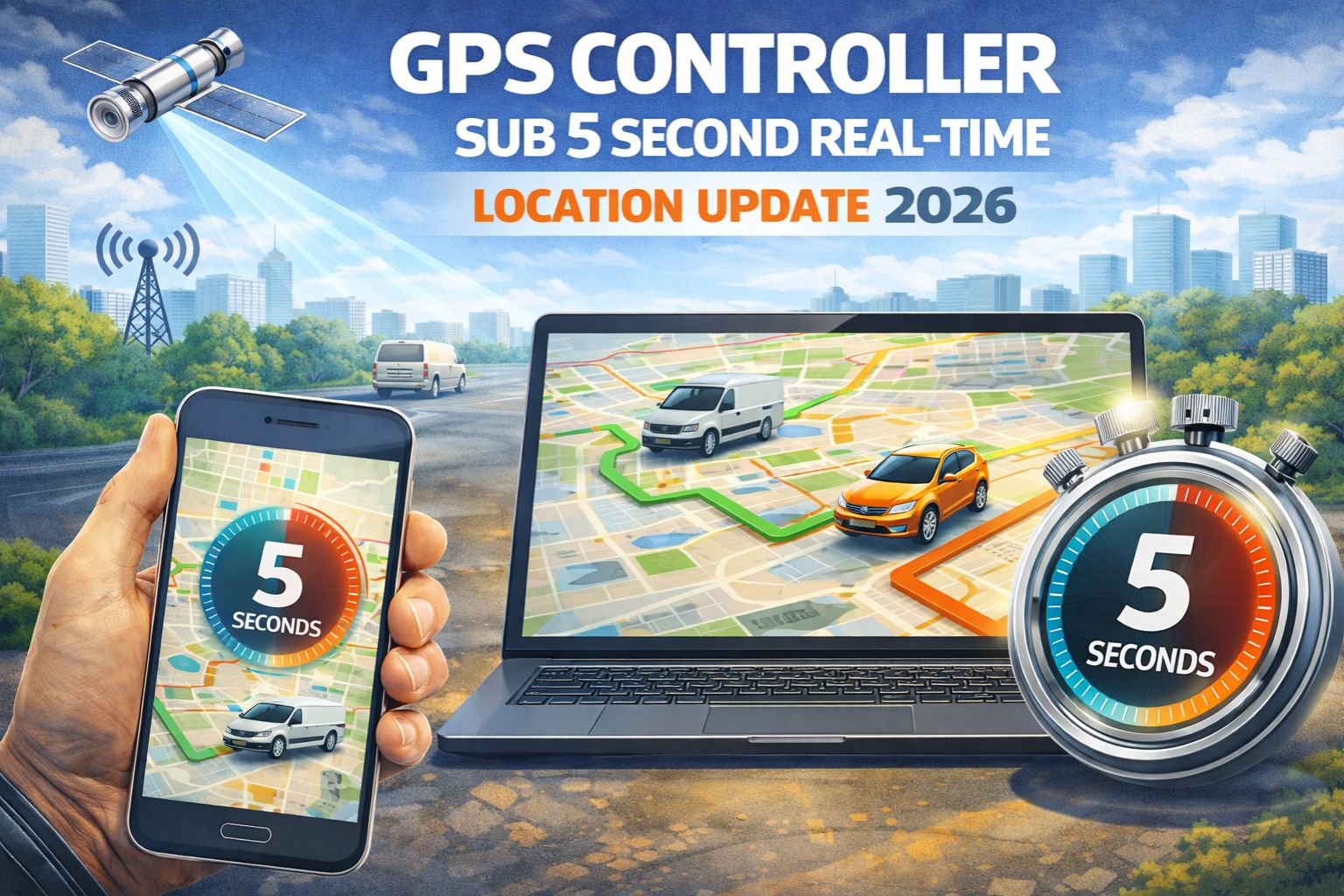
GPS Controller sub 5 second real time location update 2026
Honestly, the push for sub-5-second updates in 2026 isn't just hitting a technical target. It's about those operational blind spots you only notice when something goes wrong. Between a 30-second or 60-second ping, a vehicle in a city or swerving suddenly can cover a surprising distance. That turns a simple geofence breach into a late alert and a frantic reaction. This gap hits driver safety, asset security, and it throws off the route optimization engines that need to know *exactly* where a vehicle is *right now* to recalculate on the fly.
What Sub-5-Second Updates Actually Mean for Your Fleet
We need to be clear: "sub-5-second" means the max delay from the GPS getting a fix to you seeing it and being able to act. It's not just a faster-moving icon on a map. Think about a dispatcher watching a truck inch towards a tight dock in real-time, or a security alert popping up the *instant* an asset drifts out of zone. The real change is killing that "where was it five seconds ago?" guesswork during a crisis. That guesswork is often what separates a manageable problem from a full-blown liability mess.
The Reality Check: Network and Device Demands at Scale
But here's the catch when you try to do this for a whole fleet. It pushes on things you might not think about. You need devices with cellular modems that can handle constant, quick data bursts without killing the vehicle battery, and you're banking on pretty much unbroken network coverage. A classic weak spot is when a device switches between cell towers—that can cause jitter or a quick dropout, breaking your perfect update stream. At this speed, you're not just sending location pings anymore; you're streaming a live telemetry feed. That changes your data costs and backend processing in a way that old-school one-minute tracking never did.
The Mistake: Assuming All "Real-Time" Tracking Is Equal
This is probably the most common mix-up that leads to problems. People see a dashboard updating smoothly and think it's "real-time," but if the actual hardware in the field is only reporting every 30 seconds, you've got a latency issue hiding behind a nice interface. You really see this fail during compliance audits for regulated hauling, where logs need to show a vehicle's location at an exact time, not a rough estimate. The risk is that you build your safety and workflow plans on data that's fundamentally got holes in it.
Decision Help: Tune, Reconfigure, or Redesign Your Tracking Stack
So, what do you do? Your options are pretty distinct. You might be able to *tune* your current devices if they let you adjust the reporting interval and your data plan can handle it. You may have to *reconfigure* your whole telematics setup to focus on low-latency streams instead of batched data. But you'll know you've hit a wall when your existing hardware or its cellular modules simply can't keep up with the required reporting speed without conking out. That's the point where you need to think about *replacing* devices, and maybe even switching network providers. This is exactly when looking at a modern GPS controller platform designed for streaming data, not just occasional reports, becomes a serious move.
FAQ
Question: Why is sub-5-second tracking suddenly important for 2026?
Answer: A few things are coming together: smarter route optimization that needs live feed, tighter safety and compliance rules demanding precise location timestamps, and AI dispatch tools that have to make predictive calls based on what's happening now, not what happened a minute ago.
Question: Can my current 4G LTE devices achieve sub-5-second updates?
Answer: Maybe, but I wouldn't count on it. It comes down to the device's firmware, whether it can handle rapid data sessions without overheating or draining the battery, and how consistent your cellular coverage is. A lot of older 4G gear was built for battery life, not for this kind of constant streaming.
Question: What's the biggest hidden cost of implementing this?
Answer: The data volume and the backend systems. Streaming high-frequency data from hundreds of vehicles will shoot your cellular data costs up, and you'll need serious cloud infrastructure to take in, process, and store that constant flood of information without it bottlenecking.
Question: When should a fleet manager decide to upgrade their entire system for this capability?
Answer: You're forced to decide when the operational gaps—like geofence alerts that come too late, ETAs that are always off, or not being able to prove real-time location for an insurance claim—start directly hurting safety, customer service, or your regulatory status. If tweaking and reconfiguring what you've got doesn't fix it, then a full system overhaul is probably the only path left.


Comments
Post a Comment