GPS Controller Starlink LEO satellite backup when GPS jammed 2026
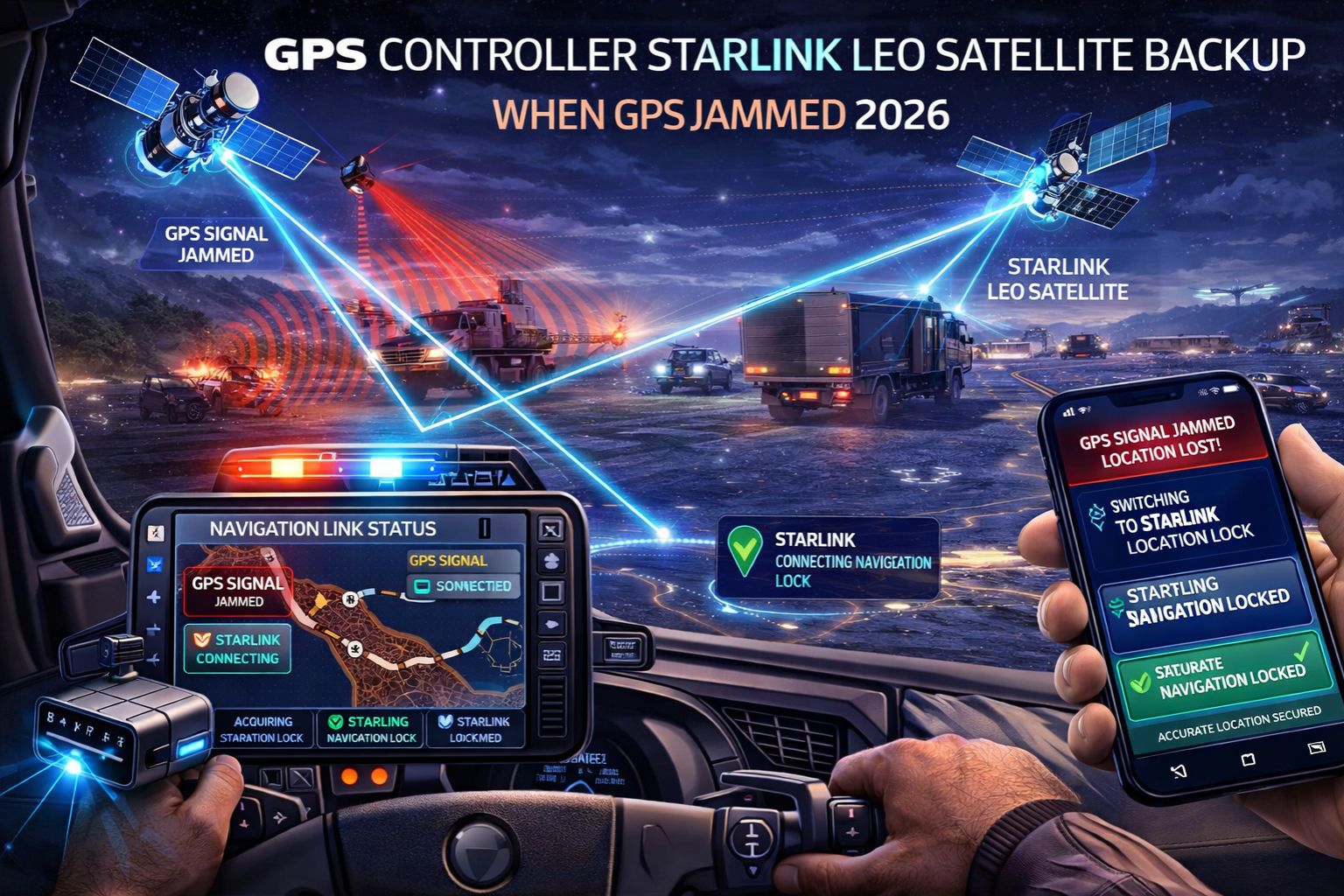
GPS Controller Starlink LEO satellite backup when GPS jammed 2026
When your GPS tracking goes dark from jamming, the first thought is a device failure. But honestly, the real failure is depending on a single signal that someone can just... turn off. A Starlink LEO satellite backup, set up as a secondary data pipe for a GPS controller, is basically a 2026-ready plan B. It's for keeping basic telemetry and position reports alive when the main GNSS signal drops. Don't expect perfect tracking here. The goal is to stop a total operational blackout.
What Starlink Backup Actually Means for a Jammed Fleet
Let's be clear, because this gets confused: this setup doesn't give you a new GPS pin. The Starlink terminal on the vehicle uses its own tech to figure out a rough position—think satellite triangulation and timing—while also acting as a tough internet link. The GPS controller then switches to this backup stream. It'll send out the vital stuff: engine-on status, the last good GPS coordinates before the jamming hit, and basic sensor data (like if a door is open) over Starlink. In reality, you'll watch a vehicle icon freeze on your map. But you'll still get a data heartbeat and crucial geofence breach alerts through the satellite. It keeps you from going completely blind.
The Reality of Deploying This in 2026 Operations
Taking this beyond a pilot program shows you the hard parts. Starlink hardware costs, its power draw (often needing a direct line to the vehicle battery), and finding a spot to mount it with a clear sky view—it's all significant. More than that, the handoff logic in the GPS controller's firmware has to be perfect. It needs to spot GNSS jamming (that's a sustained signal loss while cellular data is still up) and switch over to the satellite modem without causing a data conflict or getting stuck rebooting. We've watched fleets test this only to have the system get stuck "searching" in an urban canyon, draining batteries dry. The backup can work, but only if you treat the integration like a core system redesign. It's not a bolt-on.
Common Mistakes That Lead to Backup Failure
The biggest risk is thinking Starlink backup is a set-and-forget insurance policy. A major mix-up is treating jamming and spoofing as the same thing; Starlink can get around jamming but does nothing against spoofed GPS coordinates fed to the controller before it switches over. Another way to fail? Not simulating the failure mode under real conditions. If you don't test, you won't find out that the controller's internal queue for unsent GPS data can flood and crash when it tries to switch to the higher-latency satellite link. That causes a total data blackout for minutes—right when you need it most. This isn't plug-and-play. It's a systems engineering challenge.
Decision Help: When to Integrate vs. When to Redesign
Your line in the sand is pretty clear. Tune what you have if jamming is rare, short, and local; just focus on getting better alerts for when it happens. Reconfigure by adding a Starlink backup module if you run high-value assets in known jamming zones and can handle the cost and complexity per vehicle. Redesign your whole telematics setup if your compliance or safety rules can't stand *any* gap in data; that means building the failover logic at the chipset level, not just in the software. You know you've crossed the line when internal fixes—like trying to rely on cellular triangulation alone—stop working because they're vulnerable to the same local interference. At that point, a multi-orbit solution run by a dedicated gps controller platform isn't just an option. It's the only path to resilience.
FAQ
Question: How does Starlink work when GPS is jammed?
Answer: Starlink uses its own swarm of LEO satellites for two-way data. When GPS is jammed, the vehicle's Starlink terminal gives you a separate data pipe. That lets the telematics unit send non-GPS data—engine status, the last good location, sensor inputs—to your fleet platform. It stops a total communications blackout.
Question: Is Starlink tracking as accurate as GPS?
Answer: No, it's not. Starlink's main job is broadband internet. It can figure out a rough location for its own network needs, but this isn't the centimeter or meter-level accuracy you get from GPS. It's a backup for keeping data flowing and getting a ballpark location, not for precise route optimization or tight geofencing.
Question: What are the biggest hidden costs of a Starlink backup system?
Answer: Look past the hardware and monthly bills. The real costs are in the integration engineering, managing the extra electrical load on the vehicle, and the operational hassle of running a second, separate comms network. If you don't budget for this stuff, your pilot project will never scale up.
Answer: You make the call when the cost of *not knowing*—failed deliveries, safety issues, compliance fines—gets higher than the cost of the redundant system. If you operate in sensitive areas, move high-value cargo, or have strict chain-of-custody rules, the investment changes. It goes from being optional to absolutely essential for keeping control when the signals are under attack.


Comments
Post a Comment