GPS Controller software for waste collection route compliance 2026
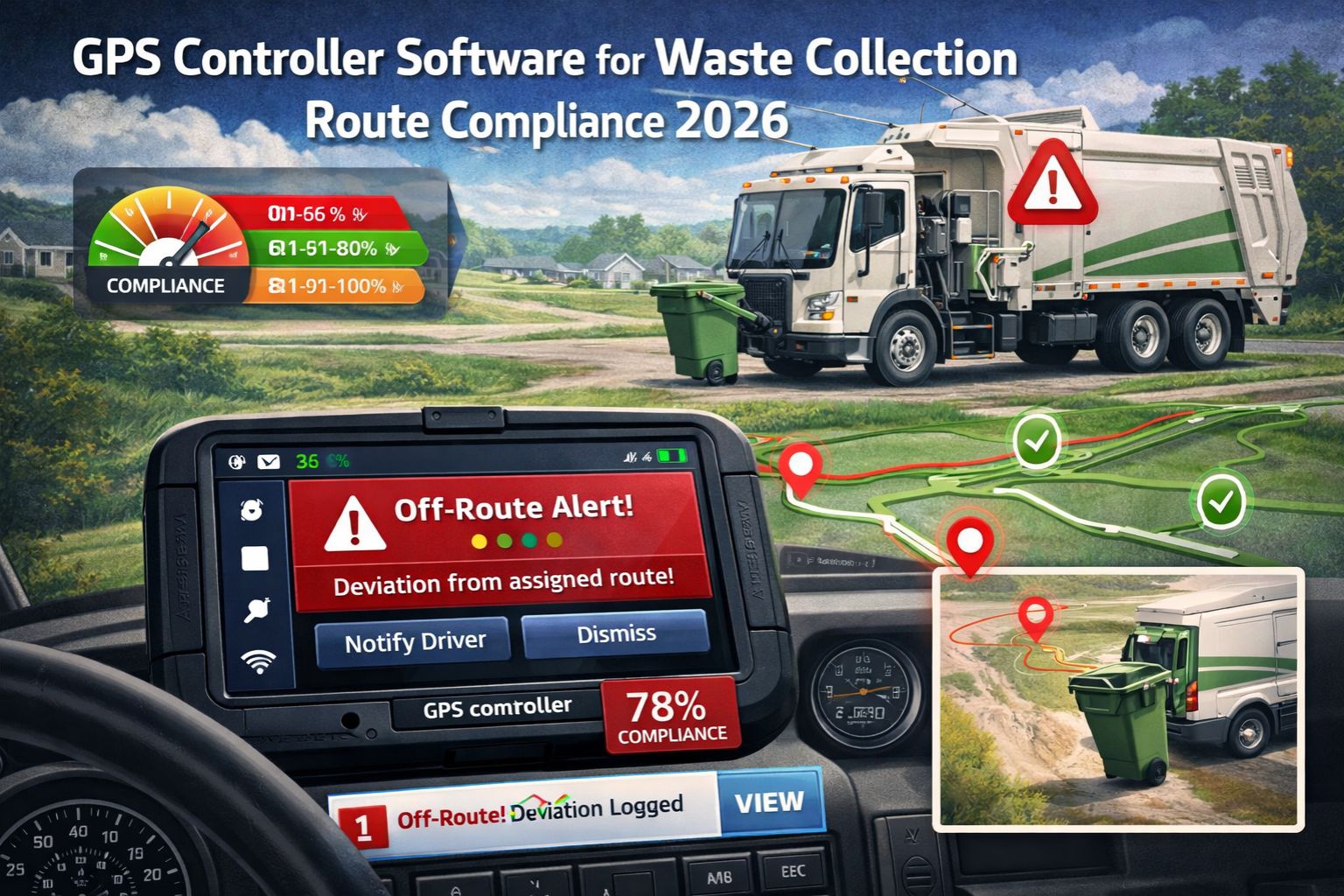
GPS Controller software for waste collection route compliance 2026
Look, in 2026, waste collection fleets are staring down stricter municipal audits. And honestly, GPS Controller software is shaping up to be the only system you can really trust to prove every route was finished, completely and on schedule. The main problem isn't usually a lost signal—it's that laggy, incomplete data feed. That gap between where the truck actually was and what your compliance log says can make a whole day's work impossible to verify. You'll recognize it: geofence timestamps that are weirdly off by minutes, or stop reports that just don't line up with the driver's sheet. Suddenly a straightforward route isn't so straightforward; it's a liability.
What Route Compliance Really Means for Waste Fleets
For waste management, compliance goes way beyond just following a map. It's about creating a locked-down, time-stamped record that every single bin on the route got serviced. That record has to match up with customer tickets and fit into tight municipal reporting windows. A lot of teams trip up here, thinking GPS pings are enough. But the reality is, the software has to connect location data with what the vehicle was *doing*—like the lift-arm activating—to build an audit trail that actually holds up. Without that link, a missed pickup because of a parked car looks like a plain contract violation, with zero data to explain it.
The Real Cost of a "Close Enough" Tracking System
When you're operating at scale, a system that's 95% accurate on location is still a compliance failure. Think about it: 1,000 stops a day means 50 stops that aren't verified. Each one is a potential complaint and a red flag for an auditor. The sneaky part is network latency. A 30-second delay in sending the "arrived at geofence" signal can shove your recorded service time right past the agreed-upon window—especially for those early morning residential routes. This is where teams often get it wrong, blaming the driver for being "off schedule" when the real culprit is a slow telematics data pipeline.
Common Mistakes That Escalate into Compliance Breaches
Probably the most costly misunderstanding is treating route compliance like you're just replaying a vehicle's path on a map. True compliance needs event-based logging: a timestamped record of arrival, service start, service end, and departure for every single geofenced stop. A lot of fleets set up their GeofencingAlerts just for arrival and call it a day, missing the crucial "service performed" event. That puts you in a bad spot: your software shows the truck was there, but it can't prove the waste was actually collected. And you can bet that's exactly what an auditor will zero in on.
When to Tune, Reconfigure, or Replace Your Current System
Here's where you have to draw the line. If your current setup can't automatically spit out a per-route, per-stop report that includes location timestamp, dwell time, and something like a compactor cycle status, you're operating at risk. You might be able to *tune* some alert thresholds if the delays are small. You'll likely need to *reconfigure* the event-trigger logic if the data is there but just not organized for audits. But if the system fundamentally can't marry vehicle CAN bus data—think lift arm or compactor activity—with GPS coordinates to prove the job was done, then you're looking at a redesign or a full replacement. This is the point where purpose-built GPS Controller software stops being an option and starts being non-negotiable for 2026. Generic tracking just won't cut it for the evidence standard you'll need.
FAQ
Question: What is the biggest GPS tracking mistake waste fleets make for compliance?
Answer: It's relying on breadcrumb trails instead of event-based logging. A map showing where the truck drove doesn't prove service happened. You need those timestamped records of arrival and specific service actions at every customer's geofenced spot.
Question: How does signal delay create a compliance failure?
Answer: A lag in transmitting the "arrival" data can mean your recorded service time falls outside the contract window—say, 6-8 AM. The truck was physically on time, but the digital paper trail shows it was late. And that digital trail is what the auditors are going to see.
Question: Can we use basic geofencing for waste route compliance?
Answer: Basic entry/exit alerts are a starting point, but they're not enough on their own. You need multi-event geofencing that logs arrival, service start/stop (often tied to a PTO or lift-arm sensor), and departure. That's how you build a complete, defensible record for each stop.
Question: When should a waste fleet upgrade its tracking software for 2026 compliance?
Answer: The trigger is audit readiness. If you can't, within a few minutes, pull a report for any route that proves time-in-window and service completion for every stop, your system is a liability. Upgrading to software that blends location data with actual vehicle activity data isn't just smart; it's becoming essential.


Comments
Post a Comment