GPS Controller software for roofing contractor crew dispatch 2026
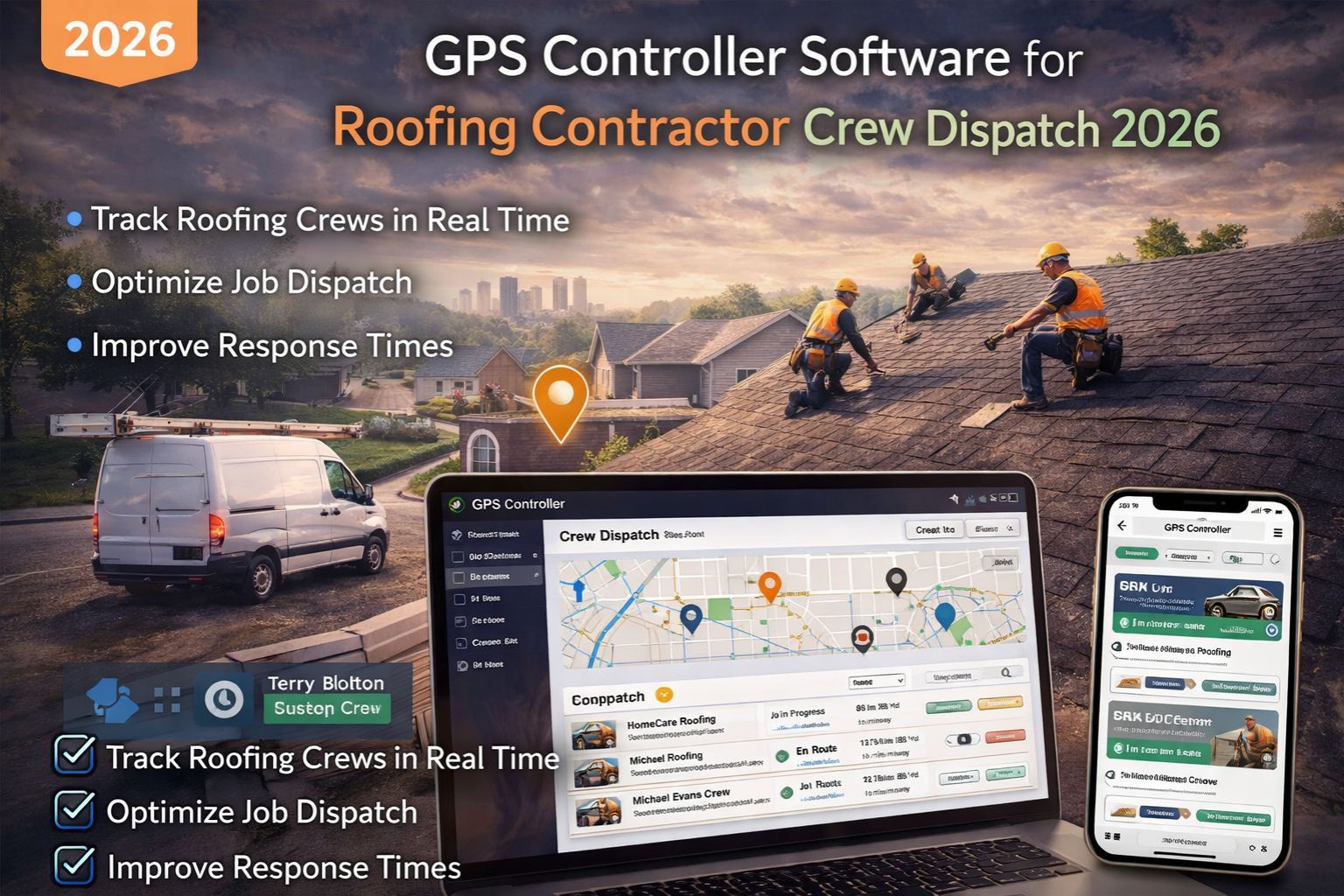
GPS Controller software for roofing contractor crew dispatch 2026
For a roofing contractor in 2026, dispatch software that shows a crew's location from five minutes ago isn't just a lag—it's a direct path to sending the wrong materials to the wrong job site. It leaves a crew idle while another emergency leak goes unanswered. That gap between the GPS signal timestamp and the crew's actual, on-the-ground reality at a steep-pitch roof site creates a cascade of miscommunication. It's a problem traditional fleet tracking just doesn't solve.
What Real-Time Dispatch Actually Means on a Roofing Job
Real-time in this context isn't about a map refresh. It's about syncing the crew's physical progress—like completing a section of underlayment or running out of specific nails—with the dispatcher's view. You see this "phantom arrival" a lot: the software shows a crew at a job site, but they're actually parked three blocks away dealing with a last-minute permit issue. That causes the office to incorrectly log job start times and misallocate afternoon resources.
The Scale Problem: When Five Crews Feel Like Fifty
The failure really escalates not at fifty trucks, but at five. With multiple roofing crews moving between tear-off, repair, and full-install jobs daily, a 90-second signal delay means dispatch is constantly reacting to yesterday's problem. You might see a crew marked "on site" at a repair, but they've already radioed that they need a different shingle color and are en route to the supplier. That creates a chain reaction where both material delivery and subsequent job scheduling are wrong.
The Costly Mistake: Assuming Any GPS is Good Enough for Dispatch
The most expensive misunderstanding is treating crew location as a simple dot on a map. Roofing work has unique telemetry: a truck may be stationary, but the crew could be on the roof (active) or in the customer's kitchen (finalizing paperwork). Basic tracking misses this, which leads to poor route optimization for material runs and inaccurate labor hour reporting for billing. That hits your profit margin on every single job.
Decision Help: Reconfigure Your View or Replace the System
Your decision boundary is pretty clear: you can try to reconfigure alerts and add manual check-ins, or you need a system redesign built for dynamic dispatch. If your teams are regularly waiting for materials or you're losing billable hours to travel confusion, internal fixes are insufficient. The right platform moves beyond location to show job-phase status, integrating dispatch with real-time progress. That's a function where specialized gps controller platforms provide the necessary workflow visibility.
FAQ
Question: How accurate does GPS need to be for roofing crew dispatch?
Answer: Accuracy needs to be lane-level, not city-block. Knowing a crew is at the supplier's lot versus the main road is critical for timing material handoffs. Honestly, sub-10-meter accuracy is the baseline for useful dispatch decisions in 2026.
Question: Can signal delay cause compliance issues for contractors?
Answer: Absolutely. If your software logs a crew at a job site for OSHA or wage-hour compliance based on delayed GPS, but cell tower pings or customer signatures prove otherwise, you have an audit trail discrepancy. That's difficult and costly to explain during an investigation.
Question: What's the biggest dispatch mistake at scale?
Answer: The biggest mistake is using a system that treats all stationary signals equally. A crew stopped at a traffic light looks the same as a crew unloading materials. This lack of context forces dispatchers to make calls based on incomplete data, which leads to double-bookings and missed emergency calls.
Question: When should a roofing contractor replace their dispatch software?
Answer: Replace it when the location lag consistently causes one or more crews to be idle or misdirected per week. The cost of those lost hours quickly exceeds the investment in a system that integrates live location with job status and material tracking. You need that unified operational view.


Comments
Post a Comment