GPS Controller satellite Iridium fallback when GPS signal lost 2026
GPS Controller satellite Iridium fallback when GPS signal lost 2026
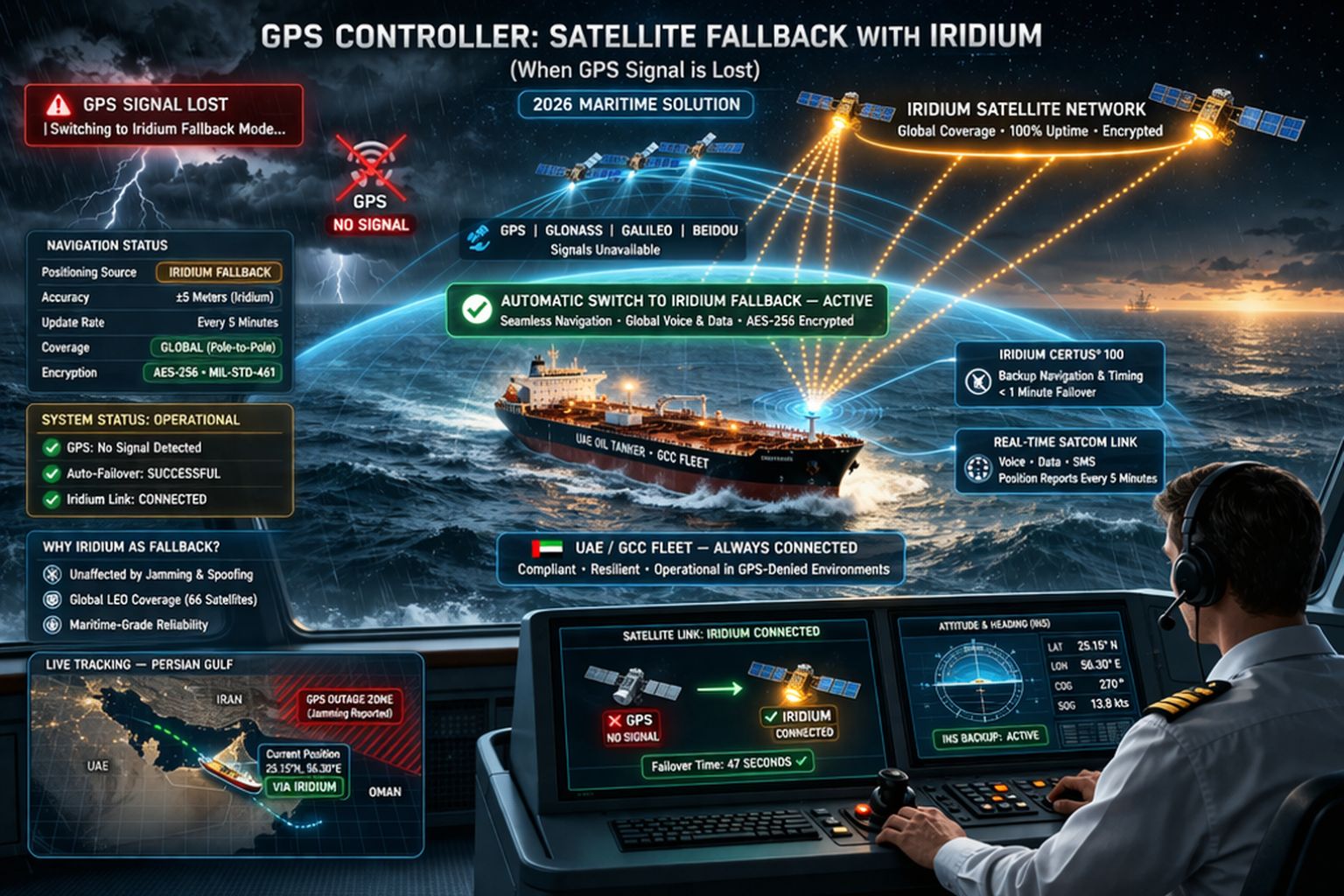
So your primary GPS signal drops in 2026, and the system automatically switches to an Iridium satellite fallback. It's easy to think that's a seamless fix, but honestly, it's not. It's a high-latency, high-cost contingency that a lot of fleet managers don't really get until they're staring at delayed location pings and inflated data bills. This backup is built for continuity, not performance, and that creates a real gap in real-time tracking accuracy. It hits dispatch, geofence alerts, compliance reporting—the works. Where things really go wrong is when operations teams assume the fallback data is just as good, making decisions based on vehicle positions that are already stale.
What Iridium Fallback Actually Means for Your Fleet
Practically speaking, Iridium fallback means your tracking device sends its last known position and a basic status over a global satellite network when the usual cellular and GPS are gone. The operational reality is a significant data delay—we're talking several minutes, compared to near-instant updates on standard 4G/5G. This isn't just a slower map refresh. It means a vehicle your fleet management software shows as "on route" could have already arrived at the job site, or veered miles off course. That's where the dispatch confusion and customer service failures start.
The Real-World Lag and Data Gaps You'll Encounter
When you scale this up, the fallback's limitations get stark. The satellite link sends a minimal dataset. It often strips out the granular telemetry—think precise ignition status, harsh braking events, real-time fuel levels—that you depend on for daily management and fuel performance monitoring. In urban canyons or remote areas where GPS fails, you might get a location ping. But without the context of engine idle time or door sensors, you're essentially blind to driver behavior and asset utilization for that whole blackout period.
Common Mistakes That Escalate a Backup into a Crisis
The most costly mistake? Treating Iridium fallback as a set-and-forget feature without setting up alerts for when it activates. Managers often find out the system's been silently burning through expensive satellite data for weeks because of a spotty cellular signal at a depot, not even a true GPS outage. Another critical error is assuming compliance logs—like HOS or reefer temperatures—just keep flowing. A lot of devices buffer that data locally during satellite use, creating audit gaps if the unit loses power before it can sync back up.
When to Tune, Reconfigure, or Redesign Your Approach
The decision line is pretty clear. If your vehicles have frequent but short GPS drops—say, in specific tunnels or urban spots—then tune the device sensitivity and reconfigure its cellular network preferences. But if you're routinely kicking into Iridium fallback for core daily routes, you've got to redesign your tracking architecture. That's where internal fixes stop. Using satellite data as a crutch for poor primary coverage just isn't sustainable. A platform like gps controller should give you the analytics to see if the fallback is actually masking a bigger infrastructure problem.
FAQ
Question: How much delay should I expect with Iridium fallback compared to normal GPS tracking?
Answer: Expect updates every 2 to 5 minutes on Iridium. Standard cellular GPS is more like every 15-30 seconds. That kind of delay makes real-time routing adjustments or immediate theft recovery pretty much impossible.
Question: Does Iridium fallback work for all types of fleet tracking data?
Answer: No, it doesn't. It usually only sends basic location (lat/long) and a heartbeat signal. The detailed CANbus data, live video feeds, high-frequency sensor telemetry—that's almost always suspended until normal cellular or GPS comes back online.
Question: What's the biggest hidden cost of using satellite fallback?
Answer: Beyond the per-megabyte data cost? The biggest hidden cost is operational blindness. Making decisions on delayed data can lead to missed delivery windows, inefficient dispatch, and not being able to react to problems. Those costs far outweigh the direct data charges.
Question: When should I consider Iridium fallback a failure and look at other solutions?
Answer: If your fallback is activating more than 5% of the time for a vehicle, the primary tracking solution has failed. At that point, you need to look at alternative cellular providers, dual-modem devices, or a different telematics setup. Continuous reliance on satellite is a sign of a deeper system mismatch.


Comments
Post a Comment