GPS Controller SAE J1939 CAN bus mining equipment integration 2026
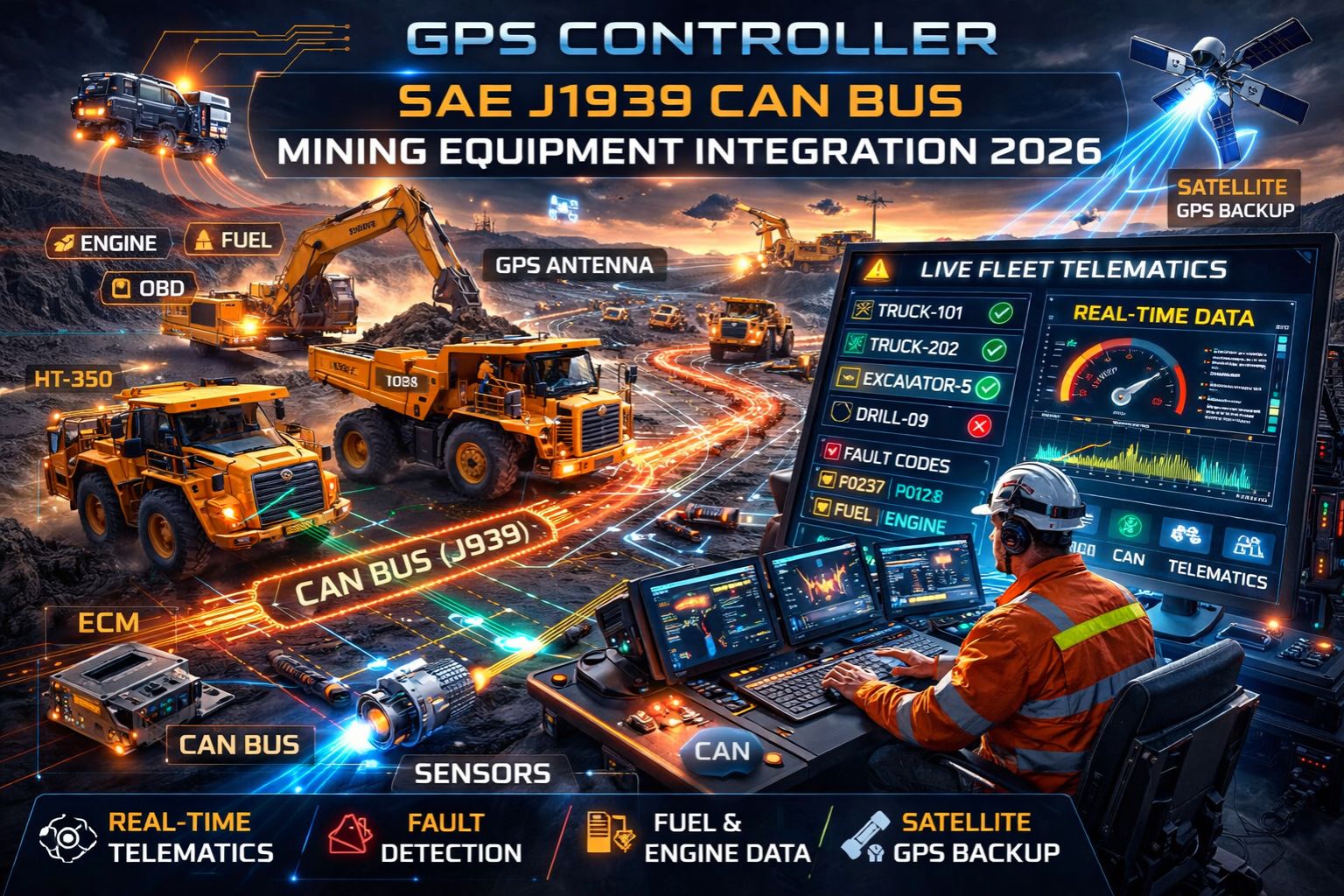
GPS Controller SAE J1939 CAN bus mining equipment integration 2026
Look, integrating GPS Controller telematics with SAE J1939 CAN bus data on mining equipment by 2026... it's more than a tech upgrade. Honestly, it's a mandatory deadline for operational visibility. The real failure point? It's rarely the physical connection. It's the misinterpretation of those proprietary OEM PGNs—Parameter Group Numbers. That's what leaves you with just engine hours while missing the critical stuff: payload, hydraulic pressure, system faults. You end up turning a $2 million excavator into just a blinking dot on a map. Without that deep data layer, your predictive maintenance schedules are basically guesses, and equipment utilization reports might as well be fiction.
What J1939 Integration Actually Means for a Mining Fleet
For a mine manager, true J1939 integration means seeing past the simple location to the machine's actual vitals. It's the difference between knowing a haul truck is moving and seeing its exact payload tonnage, transmission temperature, and DEF level in real-time. A common pitfall we see is assuming all J1939 data is standard; it's not. OEMs like Caterpillar and Komatsu use proprietary PGNs for their most valuable operational data. If your IoT asset monitoring platform can't decode these, you're only getting half the story. That's exactly why so many integrations fail to deliver the promised ROI after the initial GPS tracking goes live.
The Real-World Data Gap When Integration Is Superficial
On a 24/7 mining site, a superficial integration shows up as delayed fault alerts. You might get a generic "engine fault" code hours after a critical overheating event started, simply because the system wasn't set up to stream the specific coolant temperature PGN frequently enough. This data gap isn't just an annoyance—it creates a real compliance risk for emissions reporting and duty-of-care logs. We've seen operations where idle-time reporting was spot on, but actual fuel consumption per load cycle was off by 15% due to mismatched data frames. That skews the entire site's efficiency metrics and makes fuel performance monitoring practically unreliable.
Critical Mistakes in Planning a 2026 Integration
The biggest mistake? Treating 2026 as some distant deadline. Lead times for compatible hardware and firmware validation with specific equipment models can easily stretch to 18 months. Another fatal error is not budgeting for the ongoing data management. Raw J1939 streams are massive. Without a platform actually designed to parse, store, and contextualize this data, you'll face crippling cloud costs or be forced to sample data, which kills the real-time granularity you need for predictive alerts. And assuming your existing fleet management software can handle this natively is a common, and costly, assumption.
Deciding Between a Patch and a Platform Redesign
Your decision boundary is pretty clear. If your current system needs custom scripting for each new equipment model, or if it can't unify J1939 data with GPS location and geofence status in a single view, then you're just patching. The moment you need to cross-reference hydraulic system pressure with cycle times for a specific dig site, a patch will fail. The choice boils down to this: endlessly reconfigure a limited system, or redesign on a platform built for high-velocity telematics data. This is exactly where evaluating a dedicated telematics controller becomes critical, because generic IoT gateways often lack the processing profile for real-time J1939 decoding at scale.
FAQ
Question: What is SAE J1939 data in mining equipment?
Answer: SAE J1939 is the CAN bus protocol used by heavy equipment. It broadcasts standardized and proprietary data packets—those PGNs—containing everything from engine RPM and fuel rate to specialized system pressures and fault codes. It's essentially the digital heartbeat of the machine.
Question: Why is 2026 a deadline for this integration?
Answer: 2026 lines up with major fleet renewal cycles and stricter emissions reporting mandates. Operations that haven't integrated deep telematics by then will face significant compliance gaps. They also won't be able to benchmark against newer, data-native fleets, which means losing competitive bids.
Question: Can't we just use a basic GPS tracker with a CAN port?
Answer: A basic tracker with a CAN port can tap into the bus, sure. But it probably won't decode proprietary PGNs or handle the data volume. You'll get the standard codes but miss the unique, high-value operational data that actually justifies the integration cost. That's a fast track to asset blindness.
Question: When do we need a full platform like GPS Controller instead of an add-on?
Answer: You need a full platform when you operate mixed OEM equipment, when you require real-time data fusion—like location + CAN data + sensor data—for live decisions, or when you need to build custom alerts and reports without constant developer support. Basically, when the add-ons start requiring more maintenance than they provide value, the platform approach becomes necessary.


Comments
Post a Comment