GPS Controller real time in cab safety nudge seat belt phone alert 2026
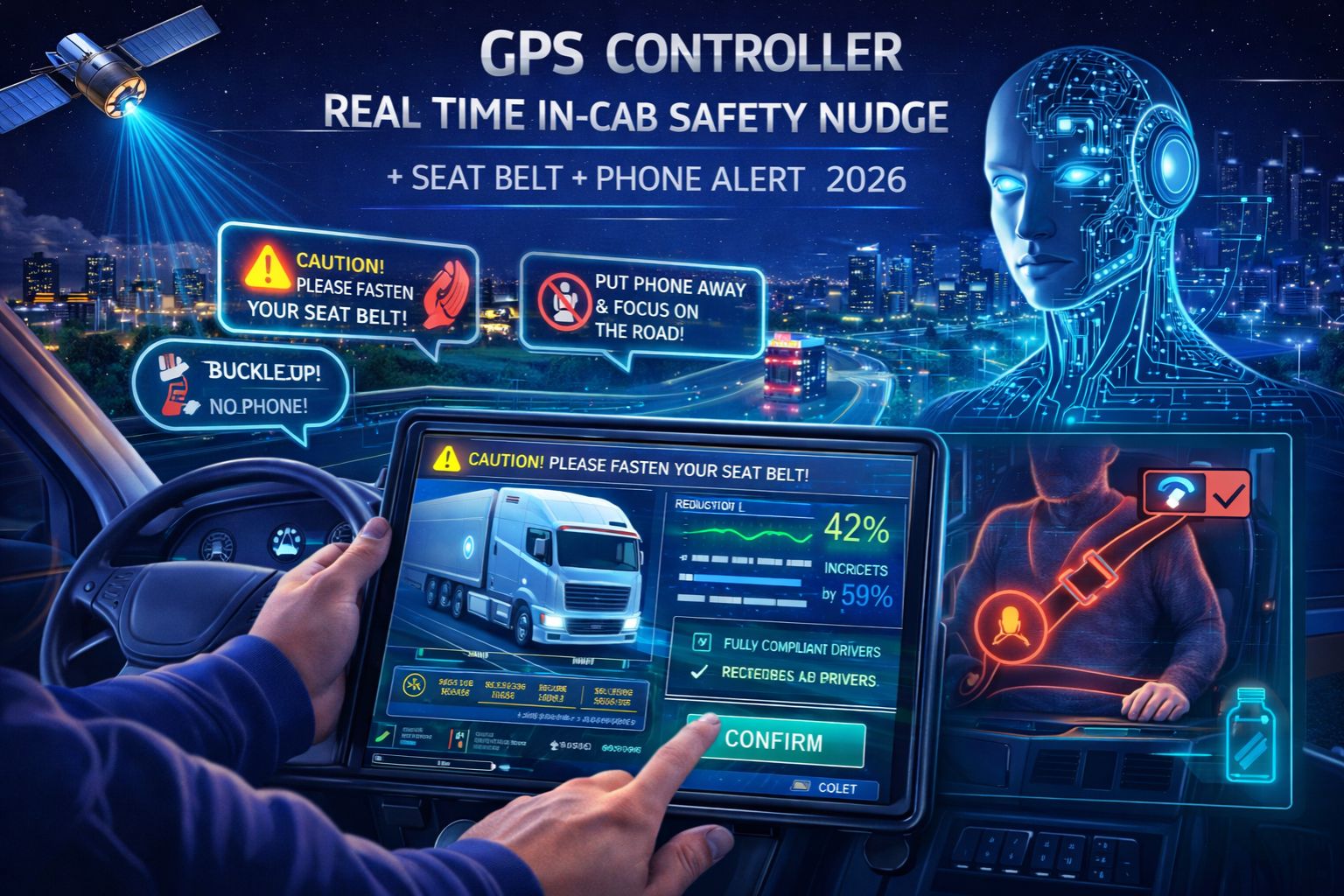
GPS Controller real time in cab safety nudge seat belt phone alert 2026
So in 2026, this real-time in-cab safety nudge—whether it's a seat belt reminder or a phone use alert from your GPS Controller—is supposed to be more than just a beep. It's meant to be a direct intervention, trying to stop high-risk behavior right before something bad happens. The idea is a step up from basic telematics that just logs violations after the fact. This system uses immediate prompts inside the cab to disrupt dangerous actions as they're happening, trying to create a direct link between what the driver does and the fleet's safety rules.
What Real-Time Safety Nudges Actually Do in a Moving Vehicle
Really, the core function is interruption. When a sensor picks up an unbuckled seat belt or a driver holding a phone, the GPS Controller is supposed to act immediately. It triggers a localized alert—a chime and a dashboard message—that's just for that driver. The goal here isn't to punish, but to correct course. In a practical sense, it means a driver going for their phone during a tricky merge might get a prompt before they're fully distracted. It's a form of real-time behavioral coaching, which a generic fleet report sent later can't really match.
The Operational Reality When Alerts Scale Across a Fleet
But when you scale this up across a whole fleet, the effectiveness hinges on two big things: network stability and sensor accuracy. You see a common problem when cellular latency kicks in and delays an alert by those crucial 8-10 seconds; by then, the unsafe action is over, making the nudge pointless and teaching drivers to ignore future prompts. Then there are false positives—like a rough road jostling a seat belt sensor, or a camera mistaking a shadow for a phone. That leads straight to "alert fatigue," where drivers start dismissing *all* warnings, even the critical ones for harsh braking or collisions that come from the same fleet management platform.
The Critical Mistake: Assuming Alerts Equal Compliance
I think the most dangerous assumption you can make is that deploying this technology automatically makes a fleet safer. If you don't correlate the nudge data with actual driving outcomes—like checking if a flurry of phone-use alerts happens right before a hard-braking event—safety managers completely miss the escalation pattern. A driver who gets, say, 12 seat belt nudges in a week but doesn't change their behavior isn't just being non-compliant; they're showing a need for deeper coaching that a system alert alone can't fix. Relying only on the alert log for safety scores can create a false sense of security while risky habits actually get worse.
When to Tune, Reconfigure, or Replace Your Nudge System
The decision point is pretty clear, in theory. If alerts are on time but just being ignored, you *tune* things: adjust the sensitivity, change the alert tones, or tie it into driver scorecards. If the alerts are delayed or inaccurate because of shaky in-cab hardware or a bad network connection, you *reconfigure*: maybe upgrade the onboard IoT sensors or make sure the GPS Controller has dual-modem connectivity for better data transmission. But, if the system can't tell a passenger's phone from the driver's, or if it's completely disconnected from other telematics like lane departure warnings, then you probably need to *redesign* the whole safety setup. When these nudges operate in a silo, separate from the broader driver coaching process, their impact just stalls. That's where a platform with deeply integrated real-time feedback, like gps controller, has to do more than just beep—it needs to actually help modify behavior.
FAQ
Question: How does the in-cab nudge differ from a standard seat belt violation report?
Answer: A standard report is basically a historical log for a manager to look at later, sometimes hours after the trip. A real-time nudge is different—it's an immediate, in-the-moment audio or visual prompt inside the cab. The aim is to stop the unsafe action as it happens, turning a dry compliance metric into an actual coaching moment.
Question: Can drivers disable these real-time safety alerts?
Answer: Usually, no. The alerts are managed across the whole fleet through the telematics platform to make sure the safety policy is enforced. That said, safety admins can often configure how sensitive the system is or what kind of alerts are used, to try and find a balance between being effective and not overly intrusive.
Question: What happens if the cellular signal is lost—do alerts still work?
Answer: This is a major weak spot. Most systems need to process the sensor data in the cloud. So if the signal drops, the real-time nudge typically fails. More advanced setups try to get around this by using edge processing in the vehicle's own gateway. That way, basic alerts can be triggered locally even without a signal, so the core safety functions don't just go dead.
Answer: The real goal is getting actionable insight, not just more data. A mature system should connect nudge events with driving performance. For instance, it could flag drivers who get frequent phone alerts just before they slam on the brakes. Spotting that kind of pattern—which you might see in a platform like gps controller—shifts the focus. It's less about counting violations and more about understanding the chain of risky behavior so you can try to break it.


Comments
Post a Comment