GPS Controller predictive tyre pressure alert heavy vehicle 2026
GPS Controller predictive tyre pressure alert heavy vehicle 2026
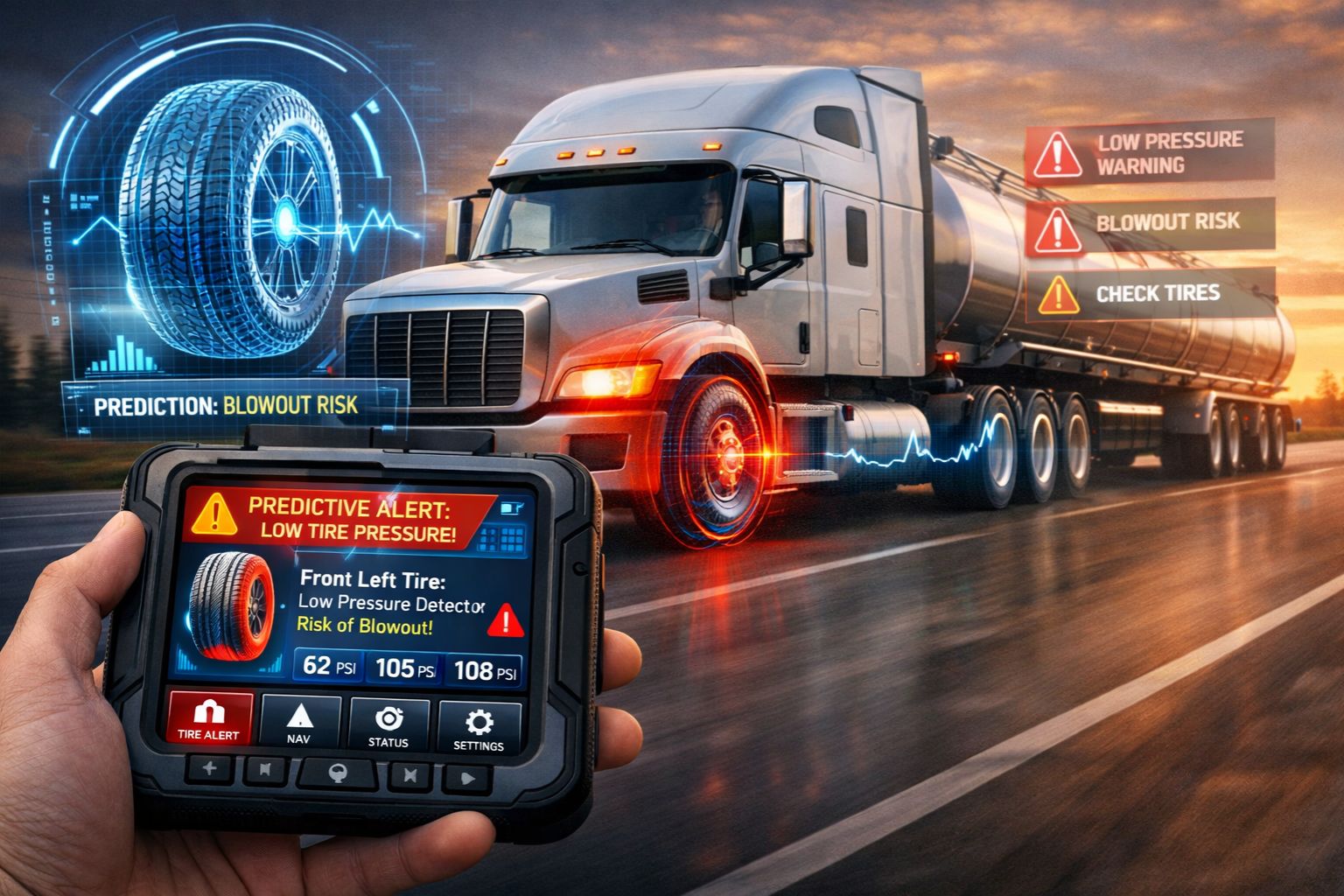
Look, the move from basic tyre pressure monitoring to predictive alerts in 2026 isn't just an upgrade—it's a fundamental rethink. We're talking about preventing blowouts and downtime before they're even on the radar. This goes way beyond a simple warning light. It's a GPS Controller system that pieces together pressure decay trends, engine temperature data, and load patterns to basically forecast a failure days before it happens. That changes a reactive scramble into something you can actually schedule and control.
What predictive tyre pressure monitoring actually means for your fleet
So what does this look like on the ground? Imagine your system flags a trailer tyre losing a tiny amount of PSI each day. It calculates that in four days, it'll hit the danger zone—right in the middle of a long planned route. Now you can top it up during a driver's rest break, avoiding a roadside nightmare. The clever bit is how it might link that slow leak to minor temperature spikes from your fuel performance monitoring, hinting at increased rolling resistance. A basic sensor would never catch that connection.
The reality of scaling predictive alerts across a mixed fleet
Here's the catch when you try to scale this up. The problem isn't getting the alerts; it's getting drowned by them. With a large fleet, you could be hit with dozens of warnings a day, all with different levels of urgency. If your fleet management software can't intelligently prioritize them, a critical warning about a steer axle tyre gets lost under less urgent stuff. The real insight often comes from the bigger picture—like if several trucks on the same route show similar pressure drops. That points to a road hazard, not just random tyre faults.
The critical mistake: treating predictive alerts like simple alarms
This is where a lot of people trip up. They think a predictive system means they can stop doing physical pre-trip checks. They see the dashboard and get complacent. But the system has a clear boundary: it can't predict a sudden curb strike or a nail picked up right after leaving the yard. That false sense of security actually increases risk. The tech predicts wear-based failures, not impact-based ones. That distinction has to be absolutely clear in everyone's workflow, or you'll end up with dangerous gaps in your safety compliance.
Decision help: tune, integrate, or replace your current monitoring
Figuring out what to do comes down to your existing hardware's data. If you're still using basic sensors that just say "low" or "okay," you'll need to replace them with sensors that report continuous PSI, plus a telematics platform that can actually analyze trends—the kind that powers serious IoT asset monitoring. If you have decent sensors but a basic platform, you might integrate a dedicated analytics module. The line is pretty clear: if your current setup can't handle time-series pressure data and cross-reference it with load and temperature, no amount of tweaking will get you predictive insights. That's when a platform with deep analytical muscle, like gps controller, stops being a nice-to-have and becomes essential.
FAQ
Question: How accurate are predictive tyre pressure alerts?
Answer: It hinges on data quality and how often you sample. Good systems taking readings every minute can predict trends within about 6-12 hours. But they can't predict a sudden puncture or impact damage. Their real value is in forecasting the slow, gradual failures and leaks.
Question: Can this help with CSA (Compliance, Safety, Accountability) scores?
Answer: Definitely. Having logs that show predictive maintenance is a strong point in safety audits. It demonstrates a proactive, systematic approach to vehicle safety to inspectors, which can help lower your intervention rate.
Question: What's the minimum sensor update frequency needed for prediction?
Answer: You really need a PSI reading at least every 5 to 10 minutes while the vehicle is moving. Daily or even hourly snapshots just don't give you enough data points to model a reliable trend, especially when load and temperature are constantly changing.
Question: When should we consider a full system replacement instead of an upgrade?
Answer: Consider a full replacement if your current hardware only gives you basic "low/okay" alerts, or if your telematics platform can't store and analyze high-frequency data. Just upgrading the sensors won't cut it if the backend can't do the predictive analytics—that's the core of what systems like gps controller are built for.


Comments
Post a Comment