GPS Controller plug and play OBD2 no installation required 2026
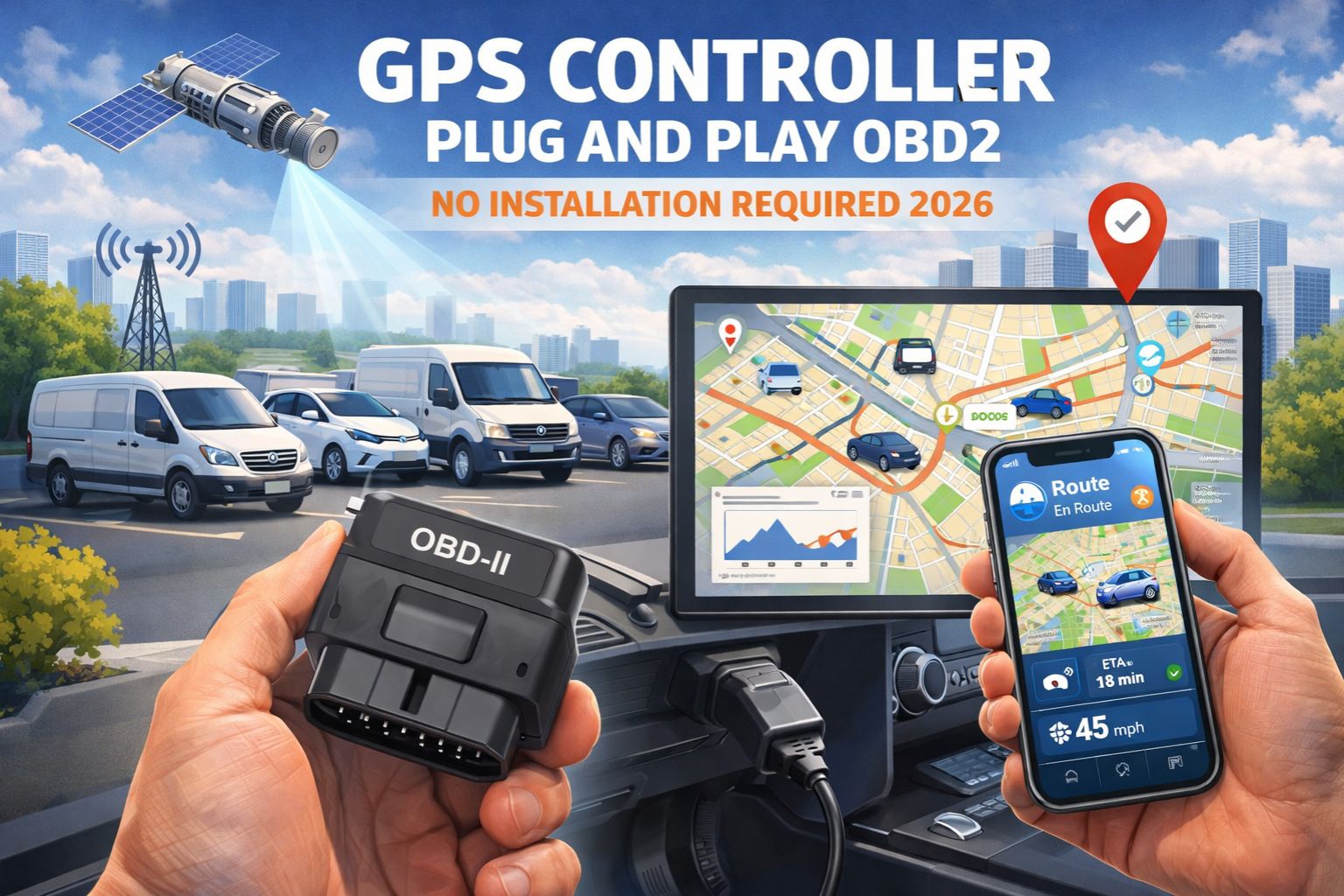
GPS Controller plug and play OBD2 no installation required 2026
The promise of a plug and play OBD2 GPS tracker is fleet visibility without a mechanic—just snap it into the diagnostic port under the dash and go. For 2026, that simplicity is looking more like a double-edged sword. Sure, you get instant location pings, but you also inherit this fragile data chain that can fail silently, right when you need it for a compliance check or because a driver decided to unplug the thing for "personal privacy." The keyword is convenience, but the reality is conditional visibility, and that condition isn't always met.
What Plug and Play Really Means for Fleet Data
Plug and play means the device draws power and vehicle data straight from the OBD2 port, so you skip the hardwiring. What people often miss is that most of these ports only give you accessory power. So the tracking cuts out the moment the ignition is off. I've seen it happen—fleets assuming they have 24/7 tracking, then realizing their "idle" vehicles show zero location data overnight. That's a blind spot for unauthorized movement, or worse, theft. It creates this odd trade-off: installation-free doesn't mean maintenance-free. Instead, the physical security of the device itself becomes your new problem to solve.
The 2026 Reality Check: Signal and Data Gaps at Scale
When you actually try to run this at scale, the convenience starts to crack. Take a mixed fleet of, say, 50 vehicles. You'll get inconsistent engine diagnostics because OBD2 protocols aren't universal; a Ford F-150 reports fuel data differently than a Freightliner. And then there's the hard stop: if a vehicle's port is faulty, or already has another telematics dongle in it, your "no installation" solution literally has nowhere to go. You're looking at an expensive retrofit. This isn't some future worry—it's a weekly support ticket for fleets trying to use OBD2 alone for fuel performance monitoring.
Common Mistakes That Escalate to Compliance Failure
The biggest risk is assuming plug and play data is ready for an audit. For things like Hours of Service or state mileage reports, regulators need consistent, tamper-proof records. An OBD2 device can be yanked out in seconds without leaving a trace, breaking that chain of custody. I've reviewed logs where a driver unplugging the unit looked just like an engine fault, wasting hours of diagnostic time. The mistake is treating these like permanent telematics. They're really more like conditional tools, maybe better suited for IoT asset monitoring on equipment where the stakes are lower.
Decision Help: When to Use OBD2 vs. When to Hardwire
So your choice comes down to this: either tune your entire process to work around OBD2's limits, or redesign your approach with a hardwired solution. Go with plug and play for temporary rentals, pilot programs, or non-powered assets where simplicity is worth more than perfect data. You've crossed the line the moment you need unchangeable data for compliance, real-time ignition status, or real theft recovery. When your internal fixes—port locks, driver policies—still can't stop the data gaps, switching to a professionally installed gps controller system isn't just an upgrade. At that point, it's an operational necessity.
FAQ
Question: Do plug and play OBD2 trackers work when the vehicle is off?
Answer: Most don't, no. They're usually relying on the vehicle's accessory power from the OBD2 port, and that typically shuts off with the ignition. So you get these big data gaps for any after-hours tracking.
Question: Can drivers easily tamper with or remove an OBD2 tracker?
Answer: Yeah, way too easily. Since it just plugs in with no tools, it comes out with no tools, too. That makes it a poor fit for compliance or high-security jobs where you can't have the data chain broken.
Question: Are OBD2 trackers accurate for fleet fuel monitoring and reporting?
Answer: The accuracy really depends on the vehicle's make and model, because the OBD2 protocols differ. You're often getting an estimate, not a precise reading, and that can cause real reporting headaches when you scale up.
Answer: It boils down to data reliability versus deployment speed. For quick, temporary visibility on low-risk stuff, OBD2 can be enough. But for permanent, compliance-grade fleet management, you need the step up to a hardwired solution from a provider like GPS Controller. That's what actually gets rid of the physical and data vulnerabilities.


Comments
Post a Comment