GPS Controller Iridium satellite fallback when cellular GPS fails 2026
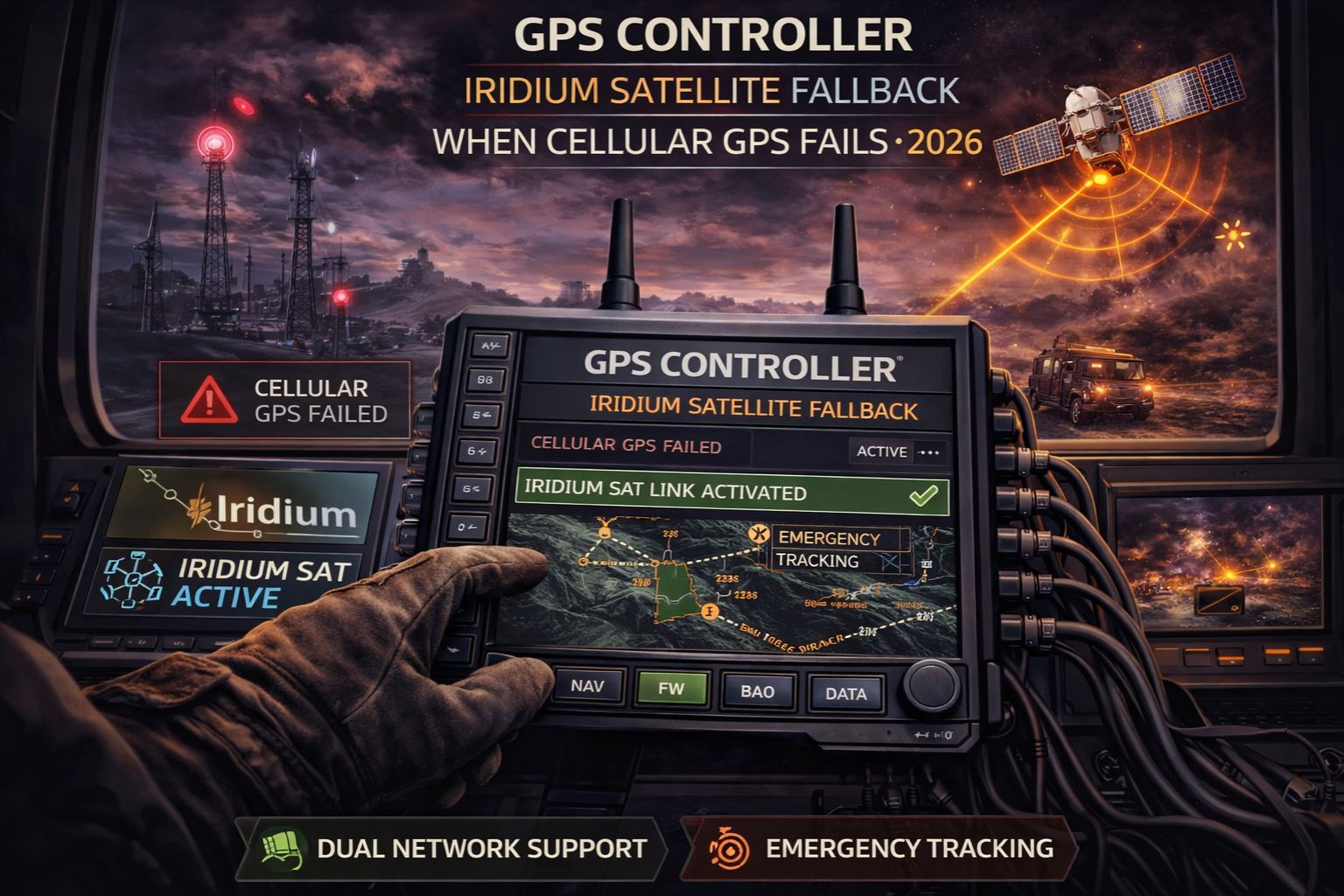
GPS Controller Iridium satellite fallback when cellular GPS fails 2026
When your primary cellular GPS tracker goes silent in a dead zone, the Iridium satellite fallback in a GPS tracking device is what keeps your telematics data flowing. It turns a potential compliance blackout into a logged position report. Honestly, this isn't just a backup; it's the critical link that maintains audit trails for hours-of-service and proves vehicle location when standard networks can't. It's a real shift from reactive tracking to something closer to assured connectivity.
What Iridium Fallback Actually Means for Your Fleet
Clarity here is about guaranteed message delivery, not real-time streaming. The system uses the Iridium satellite constellation to send small, critical data packets—like a vehicle's last known position, ignition status, or a geofence breach alert—when the cellular modem finds zero signal. In practice, you might see a delayed "vehicle entered geofence" alert pop up in your fleet management software 20 minutes after the event. But the important part is the log timestamp will be accurate, preserving the sequence of events for later review.
The Reality of Cellular Blackout Zones in 2026 Operations
The scale of this problem is often underestimated. It's not just remote mines or forests; it includes urban canyons, large industrial facilities, underground parking, and even stretches of major interstates where carrier coverage is just spotty. At an operational scale, a fleet of 50 trucks routing through these zones daily can generate hundreds of data gaps, making route verification and time-on-site reporting unreliable. The non-obvious detail? Cellular modems can show "connected" but have such high latency that position data times out before transmission, creating silent failures that look like device malfunctions.
Common Mistakes and Hidden Risks with Satellite Backup
The biggest misunderstanding is treating Iridium fallback as a like-for-like replacement for cellular data. It's not. It's a lower-bandwidth, higher-latency safety net designed for essential data only. A common failure pattern is configuring the device to send full diagnostic reports or high-frequency pings via satellite. That rapidly drains the device's battery and can exhaust prepaid data plans, causing the entire fallback system to shut down when it's needed most. The real risk is a false sense of security that leads to escalated compliance issues, because you assumed all data was being captured.
When to Tune, Reconfigure, or Redesign Your Tracking Setup
This is your decision boundary. Tune if gaps are brief and in predictable locations—maybe adjust reporting intervals or geofence sizes. Reconfigure if blackouts are frequent and critical—you need to ensure your Iridium fallback is set to transmit only vital status and event data. You really have to redesign your tracking approach if operations consistently depend on connectivity in zero-infrastructure areas; this is where a primary satellite device, not a fallback, becomes necessary. The line is crossed when internal fixes—like carrier switching or device settings—fail to capture the data required for safety audits or contractual proof-of-location. At that point, a platform like gps controller built for hybrid connectivity becomes an operational necessity, not just an upgrade.
FAQ
Question: How much does Iridium satellite fallback add to my monthly tracking cost?
Answer: Costs vary by data usage, but typically add a fixed monthly access fee plus a small per-kilobyte charge for transmitted data. The key is to configure the device to send only essential alerts to avoid unexpected overage charges.
Question: Will satellite fallback work if the GPS antenna itself has no signal?
Answer: No. Iridium fallback only solves the data transmission problem. If the vehicle is in a location where the GPS receiver can't get a satellite fix (like deep indoors or a sealed garage), there's simply no position data to send via any network.
Question: What's the typical delay for data sent via Iridium versus cellular?
Answer: Expect delays of several minutes to over an hour with Iridium, as the system often stores and forwards data when a satellite is overhead. Cellular data, when it's available, is typically near real-time with delays of just seconds.
Question: At what point should I stop relying on fallback and get a primary satellite tracker?
Answer: The decision point is when over 30% of a vehicle's operational time is spent in cellular dead zones, or when the lack of real-time data in those zones creates safety, security, or contractual compliance risks that fallback latency can't mitigate.


Comments
Post a Comment