GPS Controller intermodal freight container GPS seal tracking 2026
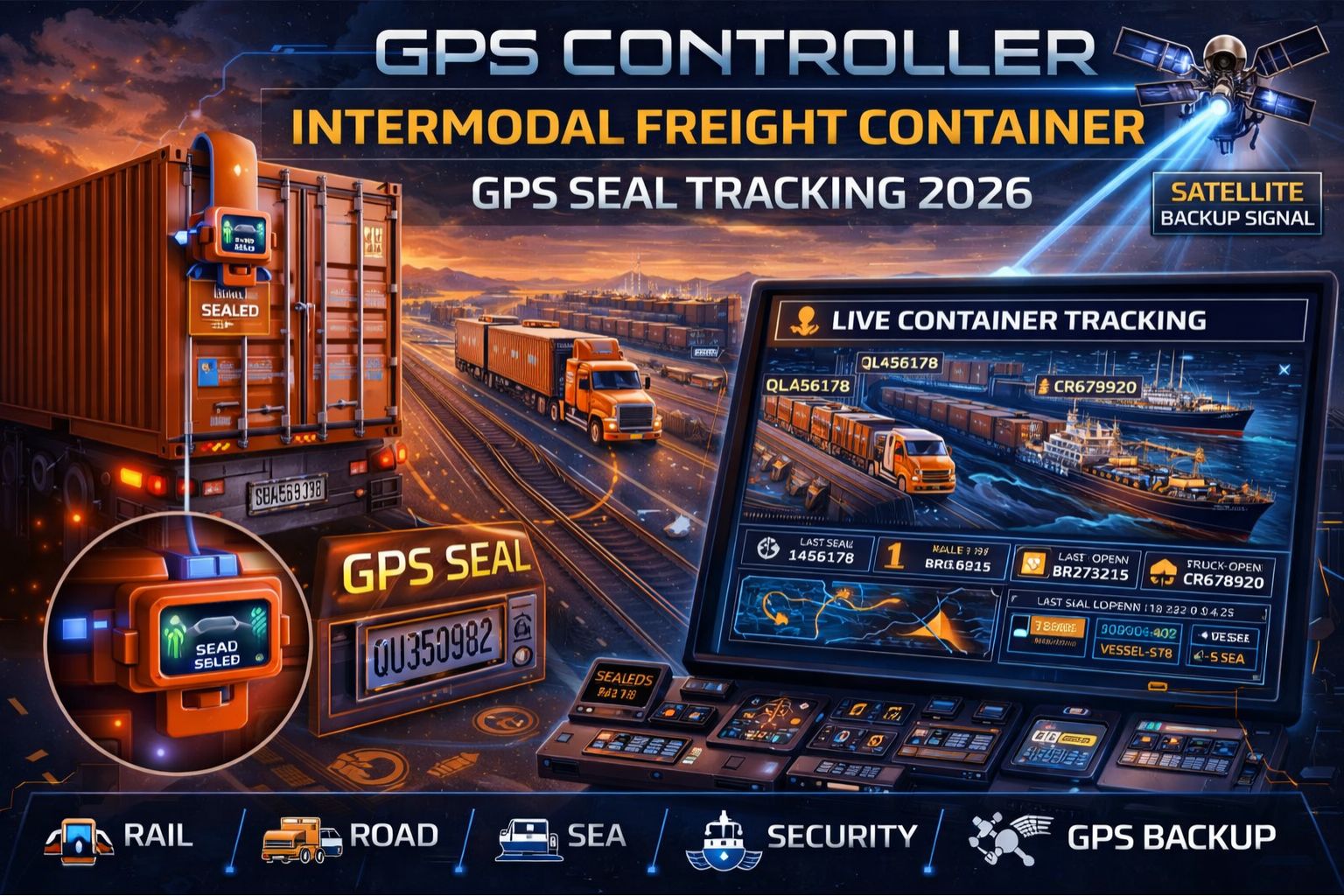
GPS Controller intermodal freight container GPS seal tracking 2026
You know that feeling when your intermodal container GPS seal shows "active" but the location hasn't updated in 12 hours? That's when you're already blind to a potential breach or delay, staring down customs holds and contractual penalties. This gap—between a transmitted "all secure" signal and the container's real-world position and integrity—is the core failure point now. In 2026's complex freight corridors, a single missed geofence alert can easily cascade into a week of port congestion.
What Intermodal GPS Seal Tracking Actually Means
So in practice, intermodal GPS seal tracking isn't just a location ping. It's this layered data stream combining door seal status, shock detection, and periodic GPS fixes, usually sent over hybrid cellular-satellite networks. The critical detail most operators miss is the "heartbeat" interval. A seal might send a tamper-alert packet immediately but then batch its GPS coordinate for transmission hours later to save battery. That creates a dangerous lag—sometimes a huge one—between a breach event and you actually knowing where it happened. And here's the thing: this isn't a device malfunction. It's a designed trade-off that just falls apart under real operational pressure.
The Reality of Tracking at Intermodal Scale
At scale, with hundreds of containers moving across rail, ship, and truck, the network reality hits hard. Seals go dormant in metal-hulled ship holds or rail cars, stuck in signal blackouts that can last for days. The system just assumes they'll reconnect and backfill data later. But if a seal's internal clock drifts or a local gateway gets congested, that data can arrive completely out of sequence. You might see a container as "at the depot" hours after it was actually loaded onto a vessel. We've seen manifests where the IoT asset monitoring dashboard showed all green, while physical audits at the destination found seals compromised days prior. No alert was triggered because the status message was queued up behind a bunch of outdated location packets.
Common Mistakes That Escalate to Total Failure
The most costly mistake? Assuming GPS seal data integrates seamlessly with your Transportation Management System (TMS) as a real-time feed. In reality, these are often just asynchronous data dumps that get parsed on a schedule. Another common misunderstanding is treating the seal's "last communication" time as the "last verified secure" time—when it could just be a network registration pulse. That leads to approving high-value loads for dispatch based on stale data. Plus, operators often set geofence alerts for port boundaries but forget to account for the seal's location error radius in a dense container yard. The result is false "departure" alerts that trigger unnecessary and expensive escalation procedures.
When to Tune, Reconfigure, or Replace Your Tracking
The decision boundary is pretty clear: if your team is spending more than 15 minutes daily just reconciling seal alerts with actual shipment status, you're beyond simple tuning. Reconfiguring means demanding shorter reporting intervals and dual-network fallbacks from your provider, which of course impacts battery life and cost. If breaches or major location lags happen more than once per 100 shipments, the system design itself is insufficient. At that point, you need a platform-level redesign that treats the seal as one sensor in a fused data pipeline, not a standalone reporter. This is where a purpose-built fleet and asset management software layer becomes non-negotiable, because generic platforms can't resolve the timing and compliance logic specific to intermodal freight. Honestly, the internal fix stops when you can no longer guarantee a sub-4-hour latency between a physical event and a correlated, actionable alert in your workflow.
FAQ
Question: How accurate is GPS inside a stacked shipping container?
Answer: Accuracy degrades significantly—often to a 100-meter radius or worse—because of the metal shielding. Modern seals use the last-known GPS fix combined with accelerometer-based dead reckoning to detect movement during transit blackouts. But precise pin-pointing is unreliable until the container is unstacked.
Question: Why do I get "seal tamper" alerts hours after the container left a facility?
Answer: This is typically a data sequencing failure. The seal detected the tamper and stored the event immediately but couldn't transmit it until it later acquired a network connection (like when it left the metal-clad yard). The alert arrives with a *current* timestamp, but the event timestamp buried in the data payload is hours old. It's a discrepancy many basic platforms just fail to highlight.
Question: Can GPS seals prove chain of custody for compliance audits?
Answer: Only if the data log is cryptographically signed and includes uninterrupted timestamps for location, seal integrity, and shock events. A simple location history is often rejected by customs agencies like CBP (U.S. Customs and Border Protection). You need a system that generates an immutable, auditor-friendly report from the raw sensor data, which most standard tracking interfaces don't provide.
Question: At what point is the tracking delay a hardware vs. a platform problem?
Answer: If delays and blackouts are random across different carriers and routes, it's likely a hardware or network coverage limitation. If the delays are consistent and predictable (like always at the same transload yard or during a rail segment), then it's a platform configuration issue failing to manage data catch-up. The latter is a decision for your provider; the former may require a hardware refresh. A capable platform, like GPS Controller, should actually diagnose this pattern for you, which takes the guesswork out of it.


Comments
Post a Comment