GPS Controller hybrid OBD2 BLE asset tracker for small fleet 2026
GPS Controller hybrid OBD2 BLE asset tracker for small fleet 2026
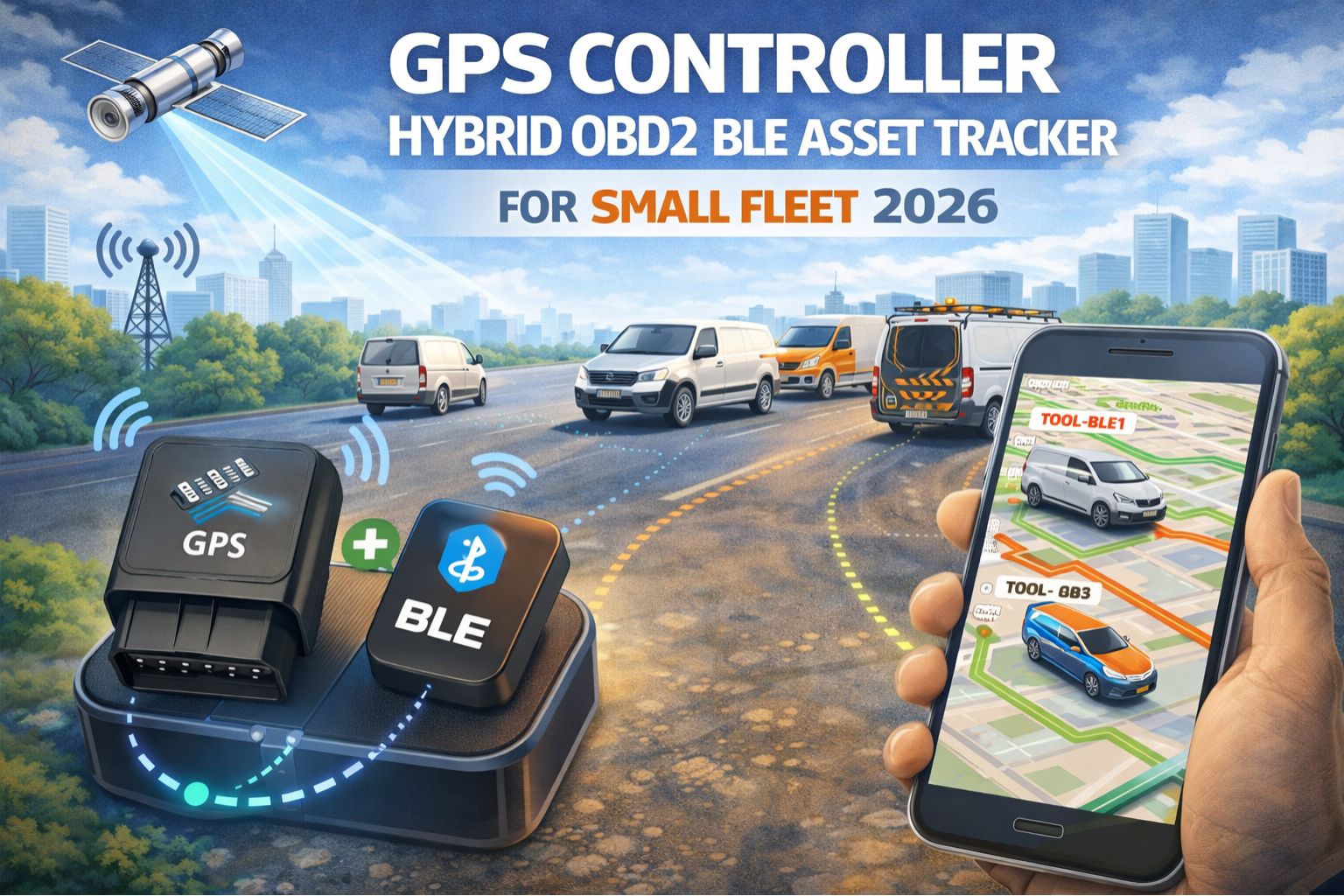
For a small fleet manager in 2026, a hybrid OBD2 and Bluetooth Low Energy (BLE) asset tracker from GPS Controller looks like a compelling choice on paper. But it's a nuanced one. It merges direct vehicle diagnostics from the OBD-II port with the extended, low-power location tracking of Bluetooth tags for non-powered assets. That creates a single-device solution, sure, but one that absolutely demands careful integration planning from the start.
What Hybrid OBD2 + BLE Really Means for Your Fleet
This isn't just two devices in one case. It's a unified telematics unit that pulls engine RPM, fault codes, and fuel data directly from the vehicle's computer. At the same time, it's trying to maintain a constant, low-energy Bluetooth connection to nearby asset tags. We've seen this setup struggle in places like metal warehouses, where the BLE signal just gets blocked. The OBD2 data keeps flowing, but the attached pallet of tools becomes effectively invisible on the map. That's the reality of the tech.
The 2026 Reality: Data Overlap and Workflow Gaps
At a real operational scale—even with just 10 vehicles—the hybrid model creates two parallel data streams. You've got precise vehicle telematics on one side, and approximate Bluetooth proximity data on the other. The common failure pattern is assuming these streams auto-correlate seamlessly. In practice, they often don't. A delayed geofence exit alert from the OBD2 GPS can arrive minutes before the BLE tag's "asset left" ping. That leaves dispatchers scratching their heads, wondering which signal to trust for compliance logging on custom reports.
The Cost vs. Complexity Mistake
The primary risk here is choosing this hybrid tracker solely for the perceived cost savings on a per-vehicle basis, while completely underestimating the backend configuration burden. Each BLE tag has its own battery life and signal profile, which is totally distinct from the OBD2 module's power source. A major misunderstanding is thinking "plug-and-play" applies to the entire ecosystem. That assumption leads directly to escalated support tickets when the dashboard shows the truck's location but lists all its tagged assets as "out of range"—often due to a single missed API integration step during setup.
Should You Configure, Integrate, or Look Elsewhere?
The decision boundary is pretty clear. If your small fleet's primary need is solid vehicle tracking with basic asset awareness, and you actually have the technical bandwidth to manage dual-data validation, then this hybrid is a tune-and-configure play. However, if your operation depends on split-second, audit-ready location sync between a powered asset and its unpowered cargo, be warned. The inherent latency between OBD2 GPS pings and BLE signal handshakes might force a redesign toward a dedicated, unified tracking platform. That's the point where evaluating the core telematics architecture from a provider like GPS Controller becomes critical.
FAQ
Question: How accurate is the location data from the BLE tag compared to the OBD2 GPS?
Answer: The OBD2 GPS gives you standard satellite-based location, typically within 5-10 meters. The BLE tag's location is different—it's inferred by its proximity to the OBD2 device or other gateways. So it's zone-based (think "with Vehicle #12" or "in Bay 3"), not precise coordinates. For pinpoint yard inventory, that's often insufficient.
Question: Does the OBD2 part drain the vehicle battery?
Answer: Modern hybrids do have smart power management. But in practice, we've still seen issues with older vehicles or those that sit unused for long periods. The device draws minimal power, but if a truck sits for 3+ weeks, it can trip low-battery alerts. A standalone BLE tag with a multi-year battery doesn't have this problem.
Question: Can I see both vehicle and asset data on one map in real-time?
Answer: Yes, you can, but there's a crucial caveat. "Real-time" for the vehicle is near-instant. The BLE tag's status, though, only updates when it successfully "checks in" with the OBD2 module. That can be delayed if the tag is in a signal-blocking position. The result is a temporary data mismatch on your fleet management software map, which can be confusing.
Question: When does a hybrid tracker become more trouble than it's worth for a small fleet?
Answer: You cross that boundary when your operational decisions start requiring guaranteed, time-synchronized data between the vehicle and its asset. If you find yourself constantly reconciling timestamps for proof-of-delivery or compliance audits, the hybrid's inherent architecture is limiting you. At that point, the integration complexity truly outweighs the cost benefit, and you likely need a system designed from the ground up for unified data provenance.


Comments
Post a Comment