GPS Controller fuel card transaction location match fraud alert 2026
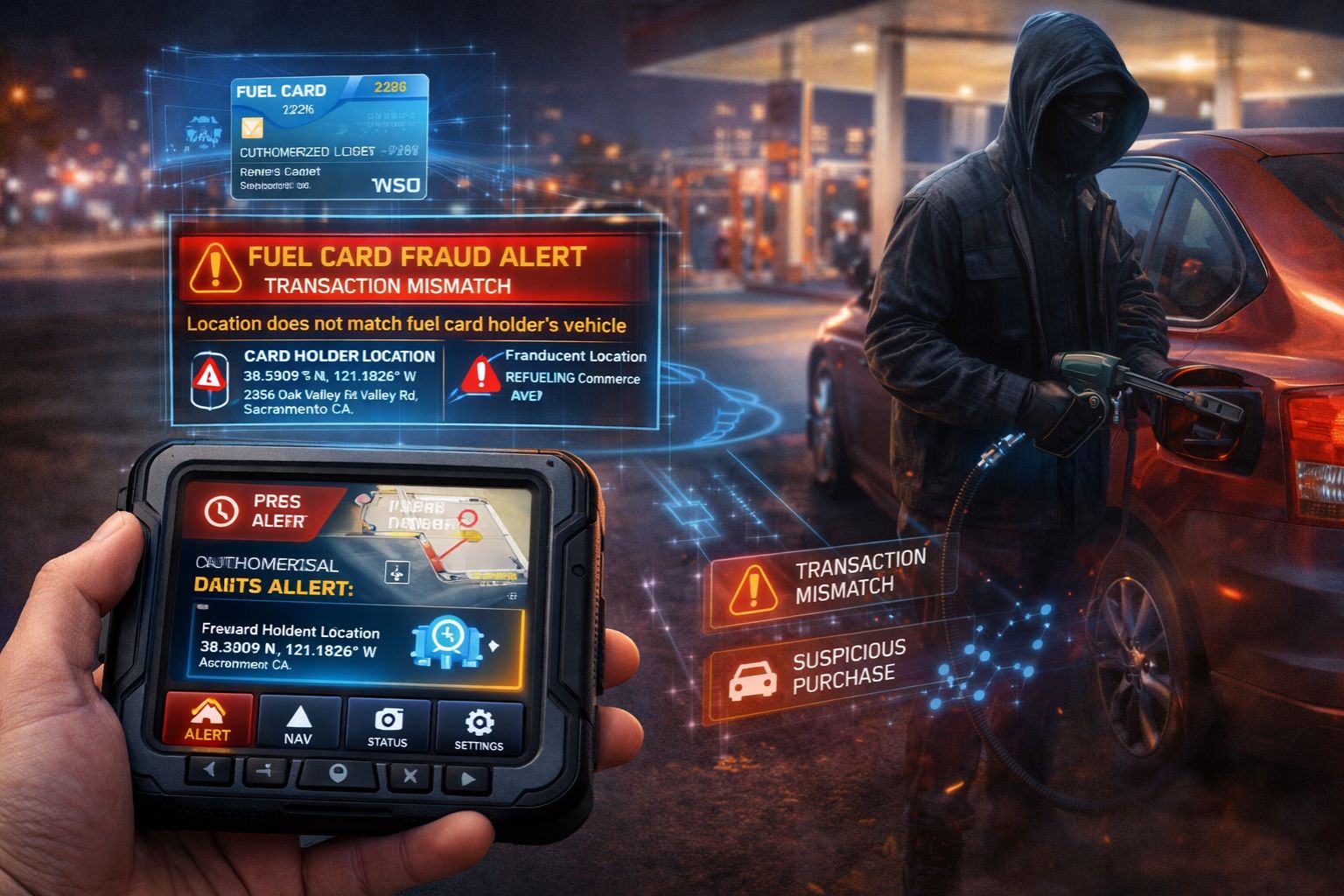
GPS Controller fuel card transaction location match fraud alert 2026
So, when a fuel card transaction location doesn't match where your GPS says the vehicle is, it triggers a fraud alert. In your 2026 fleet management system, that's exposing a pretty critical gap in real-time asset verification. This mismatch—sometimes just a delay of a few miles, other times a completely different city—is often the first solid signal you get that fuel is being siphoned, cards are being misused, or you've got ghost vehicles on the books. And look, the alert isn't just a notification; it's a direct compliance breach in your fuel log. It demands immediate reconciliation before your next audit. You'll probably see this most often with overnight refueling at truck stops, when the vehicle's last known location was parked at a depot 50 miles away. That's a clear red flag that your telematics and financial data streams are just... out of sync.
What a Fuel Card Location Mismatch Actually Means
Technically, a location mismatch alert means the geofence around the fuel pump's address and the GPS ping from the vehicle didn't intersect at the exact transaction timestamp. In practice, we've seen alerts fire when a driver uses a card at a station while the assigned truck shows as idling at a warehouse—a classic sign of card sharing or maybe fuel resale. The system isn't checking for perfection, honestly. It's flagging a variance outside a configurable radius, usually set between 100 meters and a quarter mile. But here's the thing: that tolerance itself can be gamed if it's not paired with real-time vehicle tracking heartbeat data. The non-obvious detail is the timestamp lag. GPS data might be batch-transmitted every 2-5 minutes, while the card transaction authorizes instantly. That creates a brief, but definitely exploitable, window for fraud.
The Real-World Scale of Fuel Transaction Fraud
At scale, these mismatches reveal systemic theft, not one-off errors. A fleet manager we spoke with discovered a pattern: mismatches kept clustering on weekends for vehicles supposedly undergoing scheduled maintenance. It uncovered a coordinated scheme that was draining thousands in fuel every month. The risk really escalates when you rely solely on the fuel card provider's basic reporting; their fraud alerts often come days later, long after the fuel is gone. The boundary condition here is your telematics update frequency. If your GPS device only reports every 10 minutes to conserve battery, a driver can complete a fraudulent transaction and move the vehicle back within range before the next ping, effectively hiding the mismatch from older systems.
Common Mistakes That Let Fuel Fraud Escalate
The biggest mistake? Treating these alerts as data noise and just raising the match radius to reduce "false positives." That removes the system's sensitivity and lets small-scale theft become routine. Another critical error is failing to integrate the fuel card data directly into the fleet management software for live correlation, relying instead on manual monthly report cross-checks. By then, the audit trail is stone cold. A common misunderstanding is assuming all mismatches are GPS signal issues. Sure, urban canyons can cause drift, but a transaction in another state? That's not a signal problem—it's a theft problem. That assumption causes teams to waste time troubleshooting devices instead of investigating driver behavior.
When to Tune, Reconfigure, or Replace Your Fraud Detection
The decision boundary is usually pretty clear. If you get more than 2-3 legitimate mismatch alerts per week per 100 vehicles, your system probably needs tuning. If you get zero alerts, your radius is too wide or your integration is broken—you need to reconfigure the geofence logic and data pipeline. However, if you confirm fraud incidents that the system did not catch, or if your current platform can't correlate transaction time, pump location, and vehicle movement in under 60 seconds, it's time to redesign your monitoring stack. Replacement becomes necessary when your telematics provider can't support the real-time API hooks needed for instant validation—a core function of modern platforms like gps controller. Internal fixes just don't cut it when the latency between data sources exceeds the fraud window.
FAQ
Question: How does the system know the fuel pump's location for a transaction?
Answer: The fuel card network provides merchant category codes and addresses with each transaction. Your fleet software geocodes this address and creates a temporary geofence, then checks for a GPS ping from the assigned vehicle inside that fence at the exact transaction time.
Question: Can GPS signal delay cause a false fraud alert?
Answer: Yes, but typically only in dense urban areas or tunnels where signal loss is brief. Systems account for this with a configurable time buffer (e.g., 2-5 minutes). A mismatch lasting longer, or over a greater distance, is unlikely to be signal-related.
Question: What's the minimum GPS update frequency needed to catch fuel fraud?
Answer: To reliably catch misuse, you need updates at least every 60-90 seconds during operating hours. Batch updates every 5-10 minutes create gaps where a driver can fuel up and return to route without the system detecting the vehicle ever left.
Question: Do I need to integrate with a specific fuel card company?
Answer: Not necessarily. The critical integration is between your telematics data platform and your fuel card transaction feed, often via an API. The system should work with any card provider that supplies transaction-level location data. The decision to invest in this integration really hinges on your fuel spend volume and past loss history.


Comments
Post a Comment