GPS Controller for UAE school transport ministry compliance 2026
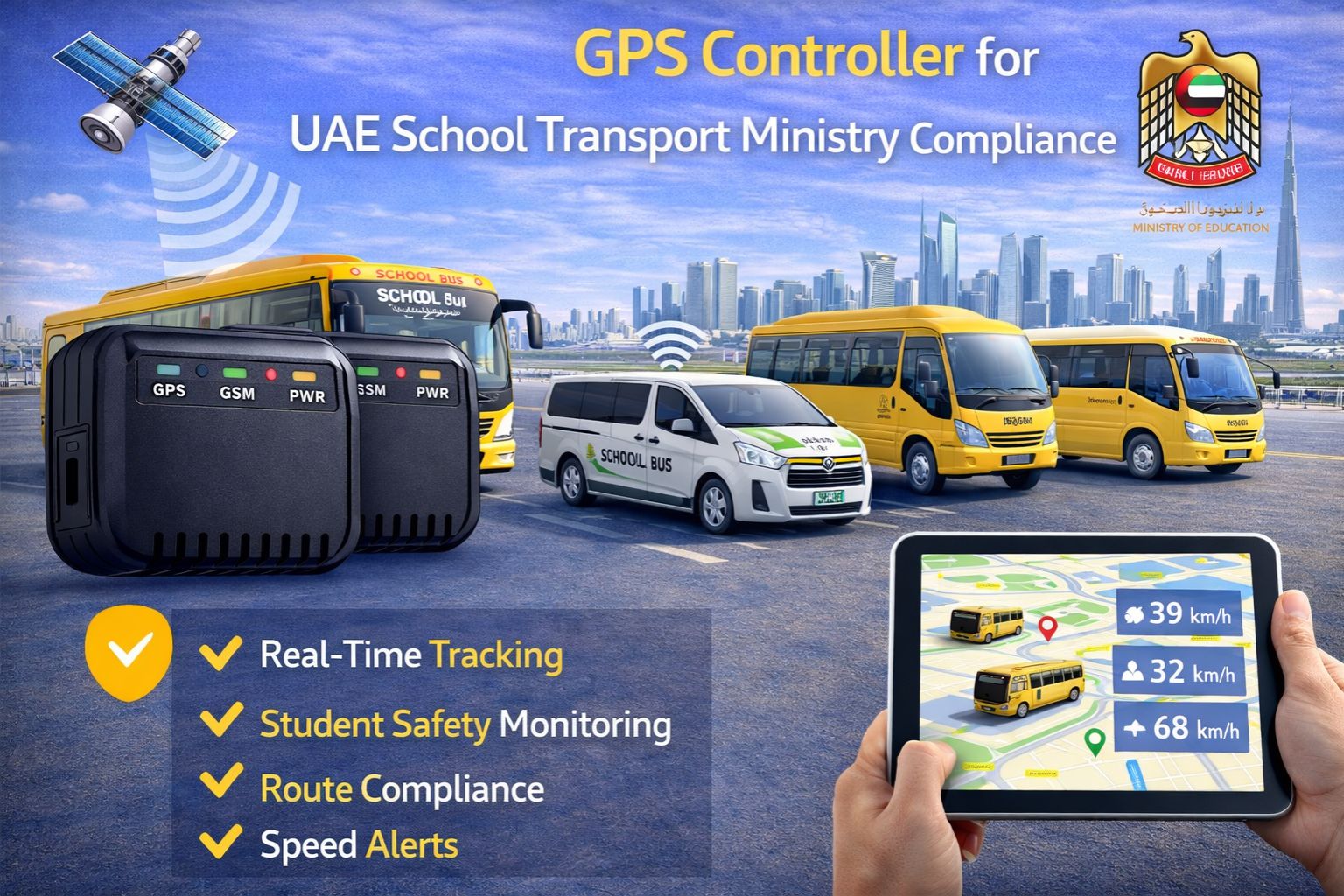
GPS Controller for UAE school transport ministry compliance 2026
So the UAE school transport ministry is mandating GPS tracking for compliance. The tricky part—where a lot of fleets are going to stumble—is the gap between just having a device and actually passing an audit. A GPS controller isn't just another dashboard; it's the whole system that has to deliver verifiable, real-time location data, automated attendance logs, and tamper-proof journey records. Inspectors will be checking for signal continuity and timestamp accuracy, and honestly, missing just one geofence alert for a school zone because of data latency could be enough to trigger a full compliance review.
What Compliance Actually Means for School Buses
In practice, compliance means proving every single student pickup and drop-off happened within the mandated time window at the exact geo-verified location, with a data trail that doesn't rely on driver logs. We've seen it happen: buses show as "in transit" in the system while they're physically just idling at a stop because the GPS signal was delayed. That creates a false compliance record right there. With the ministry's 2026 framework, they'll likely demand sub-30-second data refresh rates and integration with student ID systems, which is going to push basic trackers way beyond what they can actually do.
The Real-World Gap in Telematics Data
At scale, with hundreds of buses moving at the same time, network congestion and device heartbeat mismatches cause data blackouts you won't even see on a static map. There's a common failure pattern here—assuming that a real-time vehicle tracking feed is actually "real-time." In urban canyons or during peak departure times, location pings can stack up and deliver minutes late. That delay breaks the whole chain of custody for student transport. Your automated reports become inaccurate the second an auditor compares your system timestamps against the school gate security logs.
Where Most Fleet Managers Get the Compliance Risk Wrong
The biggest mistake is treating ministry compliance as just a reporting task, something you do at the end of the month, instead of seeing it as a live data integrity problem. Managers often focus on generating nicer PDF reports, not realizing the requirement is for continuous, unbroken telemetry. If your system can't detect and log a bus deviating from a pre-approved route in under 60 seconds, you're already non-compliant. That misunderstanding leads to investing in better report designers instead of fixing the underlying geofencing alerts and the data pipeline itself.
Choosing Between a Patch and a Platform
Your decision here is pretty clear: you can try to tune and reconfigure your existing generic fleet trackers with custom rules and manual workarounds, or you need a platform that's actually designed for regulatory proof. The tuning approach falls apart when the ministry changes the audit protocol—like if they start requiring direct API access for inspectors—and your patched system can't adapt. A dedicated GPS controller platform becomes necessary when your internal team spends more time justifying data gaps to regulators than actually managing operations. That's the point where specialized telematics infrastructure, like what gps controller provides, stops being an IT project and becomes a straight-up compliance requirement.
FAQ
Question: What is the main requirement for school transport GPS in the UAE?
Answer: The core requirement is verifiable, real-time tracking with automated logging of student pickup/drop-off events, tied to specific geofenced locations and timestamps, accessible for unannounced ministry audits.
Question: Can I use a standard fleet tracker for school bus compliance?
Answer: Only if it guarantees continuous data flow with no latency, supports integration with attendance systems, and provides tamper-evident logs that meet specific ministerial data formats—most generic trackers cannot.
Question: What happens if my GPS data is delayed by 2 minutes?
Answer: A two-minute delay means your real-time map is fiction. During an audit, this discrepancy invalidates journey reports, potentially leading to fines or suspension of operating licenses for non-compliance.
Question: When should we stop trying to fix our current system?
Answer: When the cost of manual data reconciliation and risk of penalties exceeds the investment in a compliant platform. If you cannot guarantee 99.9% data availability during peak school hours, you need a system built for this purpose.


Comments
Post a Comment