GPS Controller for UAE school bus ministry compliance tracking 2026
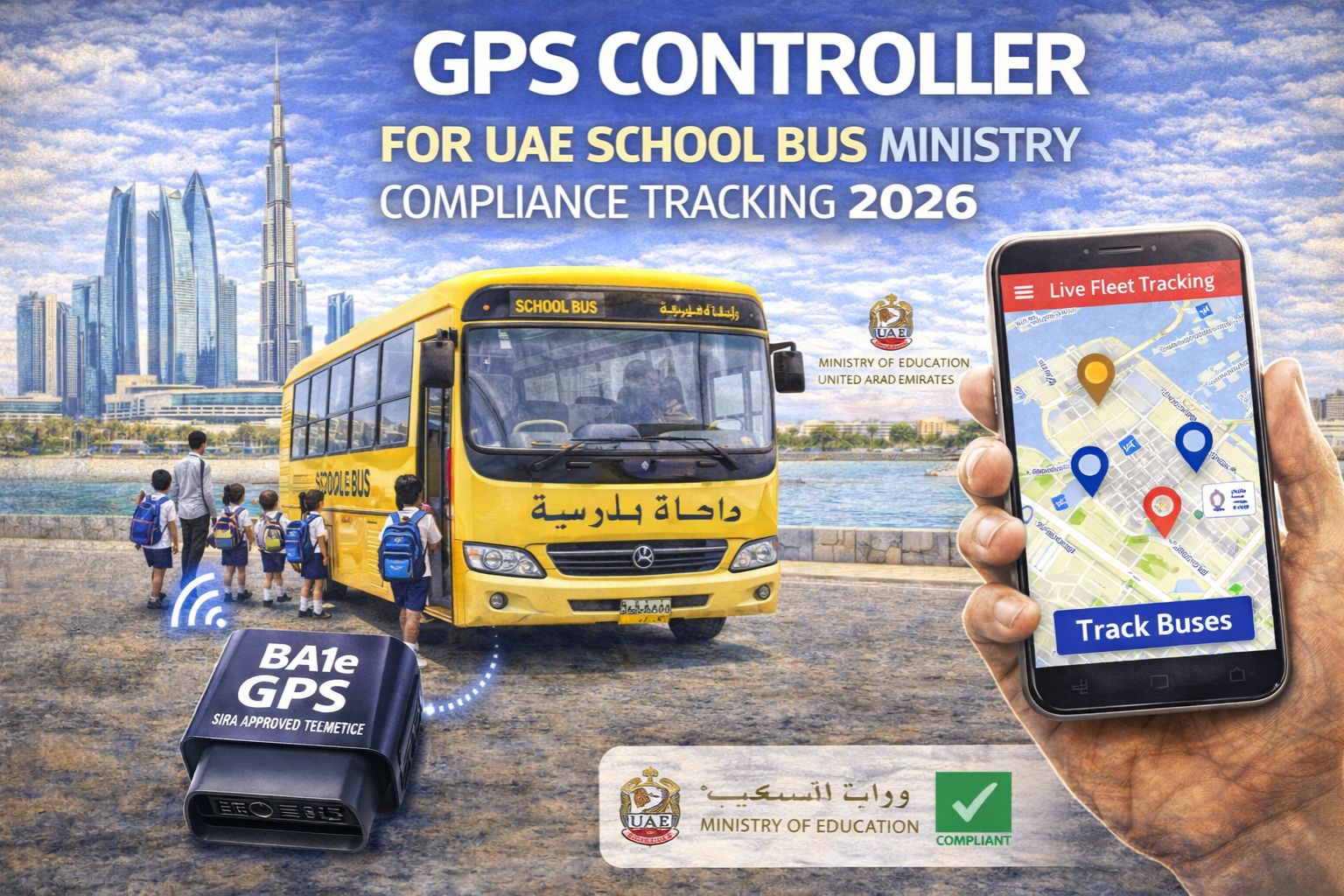
GPS Controller for UAE school bus ministry compliance tracking 2026
So the UAE Ministry of Education's 2026 framework is mandating real-time tracking for every school bus. A standard GPS tracker won't cut it; you'll need a GPS controller that actually manages and verifies the data stream. It's the difference between getting a location ping and proving an unbroken, auditable record of a child's entire route—which is exactly what inspectors will ask for. A lot of people think any live map view meets the requirement, but that's not quite right. The ministry's audit trail wants consistent heartbeat data, geofence logs, and speed violation timestamps with zero gaps. Those failures often start with simple things, like signal jitter in dense urban areas or an alert that fires too late after ignition is off.
What Compliance Tracking Really Demands in 2026
For UAE school transport, compliance tracking means your system has to log more than location. It has to capture and time-stamp door events, keep a tamper-proof record of any route deviations, and automatically link driver ID to vehicle movement. Here's the real-world problem: at scale, with hundreds of buses moving at once, network latency from a basic GSM module can cause a 90-second data delay. That creates a compliance gap where, on the official record, a bus is "off-grid" during a critical student transfer. It's not just a missed ping. It's a violation that triggers an immediate audit inquiry, because the ministry's platform expects sub-30-second refreshes for every vehicle.
The Real-World Failure When Telemetry Lags
The main risk isn't a lost signal—it's delayed or out-of-sequence data that breaks the chain of custody in the log. We've seen buses finish their route while the tracking portal still shows them en route. That lag usually comes from buffered data transmission in older GPRS modules that can't keep up with UAE's 5G/LTE networks. So you get a scenario where a speed violation recorded on the device arrives at the ministry portal minutes later, long after anyone could intervene. Trying to patch this with just software alerts hits a wall: if the hardware-to-network handshake is slow, no dashboard warning can fix that fundamental latency.
Choosing Your Control Point: Tune, Reconfigure, or Replace
Your decision really comes down to three options: tune the existing device settings, reconfigure the whole data reporting setup, or replace the hardware with a controller-grade unit. Tuning might work if the gaps are under 2 minutes and sporadic—sometimes adjusting the heartbeat frequency and APN settings does it. Reconfiguration is needed when your whole Fleet Management Software stack isn't aligned with the ministry's API specs, requiring middleware to repackage the GPS data into their mandated format. But you hit the replacement boundary when the hardware itself can't guarantee sub-30-second, encrypted transmission with built-in redundancy. That's where a dedicated GPS controller becomes non-negotiable for 2026. It manages the connection, it doesn't just report it.
FAQ
Question: What is the minimum data refresh rate required for UAE school bus compliance in 2026?
Answer: The mandated minimum is a verified location update every 30 seconds while the vehicle is moving. Slower rates create audit gaps that can get flagged as non-compliance during an inspection.
Question: Can I use my existing GPS trackers if I just update the software?
Answer: Only if your existing hardware actually supports continuous, low-latency streaming on UAE's LTE bands and has the processing power for encryption. A lot of older GPRS/3G devices will fail this test no matter the software—the bottleneck is the cellular modem itself.
Question: What happens if our tracking system has a 2-minute data gap during a ministry audit?
Answer: A gap that long is typically recorded as a compliance violation. It forces a deeper audit of your system's reliability and might require a formal corrective action plan, which could include fines or operational sanctions until you prove the issue is fixed.
Answer: The final call often comes down to network reliability. If you're constantly dealing with signal loss or delayed Geofencing Alerts, the problem is probably at the device level. A true GPS controller manages this connection proactively, which is why operators facing these strict 2026 mandates are looking at it as a core component, not just an add-on.


Comments
Post a Comment