GPS Controller for taxi cab fleet management Dubai 2026
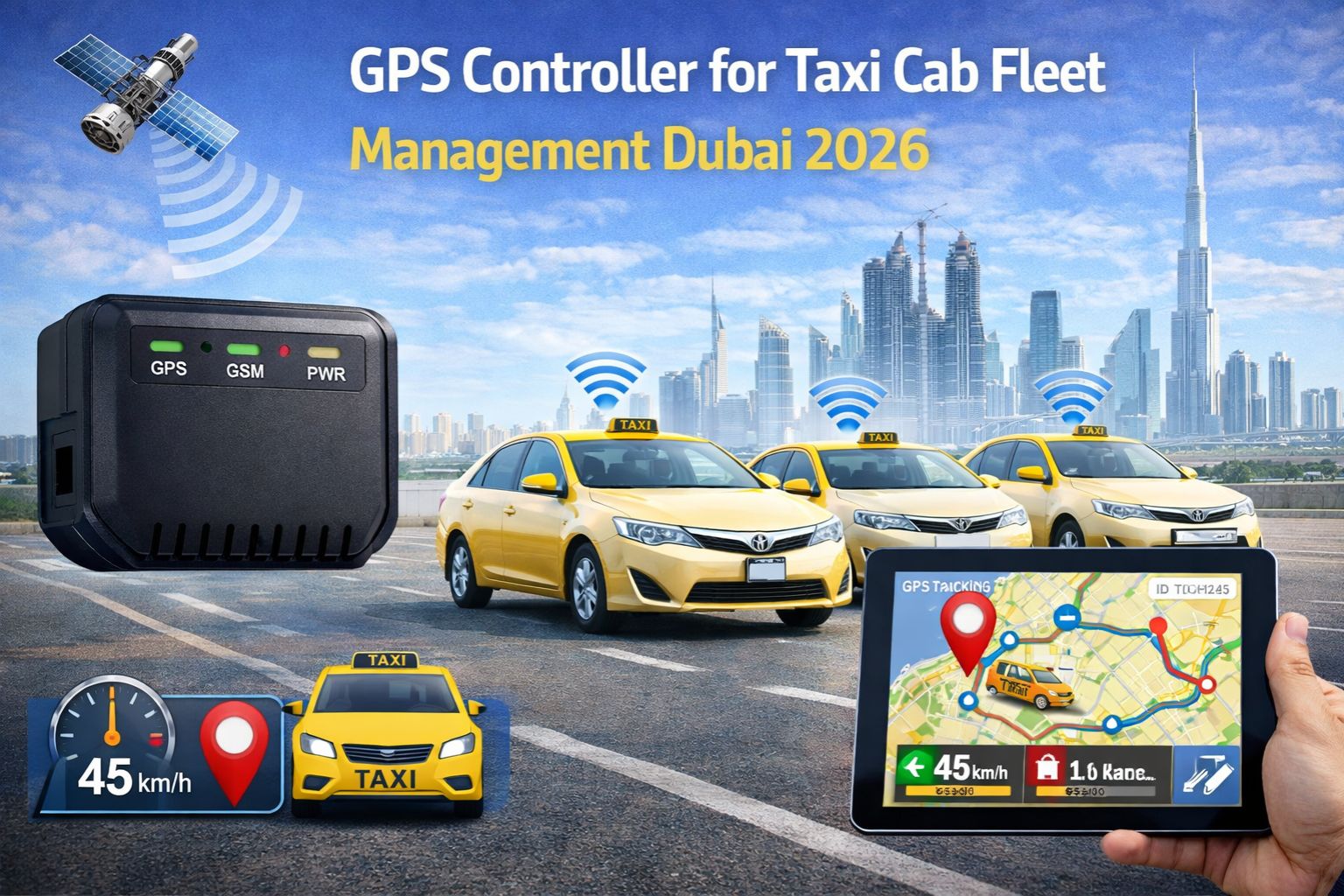
GPS Controller for taxi cab fleet management Dubai 2026
So, deploying a GPS controller for taxi cab fleet management in Dubai by 2026... it's not just about installing devices. Honestly, it's about navigating a dense urban signal environment where a five-second location delay can cascade into missed passenger pickups, dispatch gridlock, and direct revenue loss. The real challenge now shifts from simple vehicle tracking to orchestrating real-time movement data across hundreds of cabs competing in zones like Downtown or the Marina. In those places, passenger wait-time tolerance is basically zero, and regulatory reporting for the RTA demands pinpoint accuracy.
What GPS Controller Management Means for Dubai Taxis
For a Dubai taxi operator, a GPS controller is the central nervous system. It connects vehicle location with dispatch logic, driver behavior, and those RTA-mandated trip logs. It means seeing not just where a cab is, but its real-time status—occupied, vacant, on-call, or idle—and capturing the precise moment a fare begins and ends for automated meter integration. The non-obvious detail, the one people miss, is the controller's role in managing "hotspot" algorithms. These predict passenger demand surges around malls or metro stations before they happen. But that function just fails if the underlying GPS data suffers from urban canyon effects, which is so common in areas like Business Bay.
The Reality of Scaling a 500-Cab Fleet in 2026
At the scale of 500 cabs, the comfortable assumption that more data equals better control breaks down. The reality is a constant trade-off between update frequency and network load. Think about it: pinging every cab every 10 seconds can overwhelm cellular networks during peak hours, causing data packet loss. That makes a cab appear stationary on a map while it's actually moving. This creates a critical workflow dependency: your dispatch software sends a cab to a pickup location that was accurate 45 seconds ago, only to find the cab is now stuck in traffic two blocks away, while the passenger has already hailed another ride. That latency directly hits fleet utilization rates and driver earnings.
Common Mistakes That Escalate into Operational Crises
The most costly misunderstanding is treating the GPS controller as a set-and-forget system. Operators often assume that once GPS tracking devices are installed, the system is optimized. In reality, without continuous tuning of geofences for taxi stands and airport queues, alerts become meaningless noise, and drivers just start ignoring them. A major risk is compliance failure; if the controller's timestamp for a trip's start doesn't match the physical taximeter's log due to signal delay, it creates an audit discrepancy with the RTA. This isn't a simple glitch—it's a violation that can lead to fines or permit reviews, turning a data error into a full-blown legal and financial threat.
When to Tune, Reconfigure, or Replace Your System
The decision boundary is usually clear. You *tune* when you have minor dispatch inefficiencies—like slightly suboptimal cab assignments—that can be corrected by adjusting alert thresholds or update intervals in your existing fleet management software. You have to *reconfigure* or even *redesign* the data flow when you experience systemic failures: chronic "ghost" vehicles on your map, daily driver complaints about incorrect job assignments, or consistent gaps in the digital trip log required for RTA reporting. Look, if your current controller architecture simply cannot handle the data integrity and sub-10-second latency required for Dubai's 2026 competitive and regulatory landscape, then incremental fixes are a waste of time. This is the point where a platform-level replacement, potentially involving a specialist like GPS Controller, becomes a business continuity necessity, not just another IT upgrade.
FAQ
Question: How accurate is GPS for taxis in areas like Dubai Marina with tall buildings?
Answer: Standard GPS accuracy can degrade to 20-30 meters in dense urban canyons, which is enough to misidentify which side of the street a vacant cab is on. Advanced controllers use sensor fusion—that's combining GPS with cellular tower triangulation and inertial movement data—to improve positional clarity. But this requires modern hardware and really precise calibration to work right.
Question: Can a GPS controller help reduce fuel costs for a taxi fleet?
Answer: Indirectly, but the impact can be significant. By optimizing dispatch to reduce vacant cruising and identifying inefficient idling patterns—like drivers waiting in congested areas instead of directed stands—the controller provides the data for fuel performance monitoring. The real savings, though, come from actually changing driver behavior and dispatch protocols based on this telemetry.
Question: What happens if the GPS signal is lost during a fare?
Answer: A robust controller system should have a contingency plan. It will log the last known location and timestamp, and often use onboard device memory to record subsequent movement via accelerometer data, syncing the "missing" trip segment once connectivity is restored. But a prolonged loss during peak hours can completely break the real-time dispatch chain, which then requires manual intervention to sort out.
Answer: The key is data integrity under load. A system for 2026 has to guarantee near-real-time location updates (under 10 seconds) for hundreds of vehicles simultaneously. It needs to seamlessly integrate trip data with digital taximeter logs for RTA compliance, and provide AI-driven predictive analytics for demand hotspots. Here's the thing: many older systems can track, but they cannot perform this integrated orchestration at scale without introducing latency or data loss. That's the core differentiator for a modern GPS controller platform.


Comments
Post a Comment