GPS Controller for supply chain continuity during Middle East conflict 2026
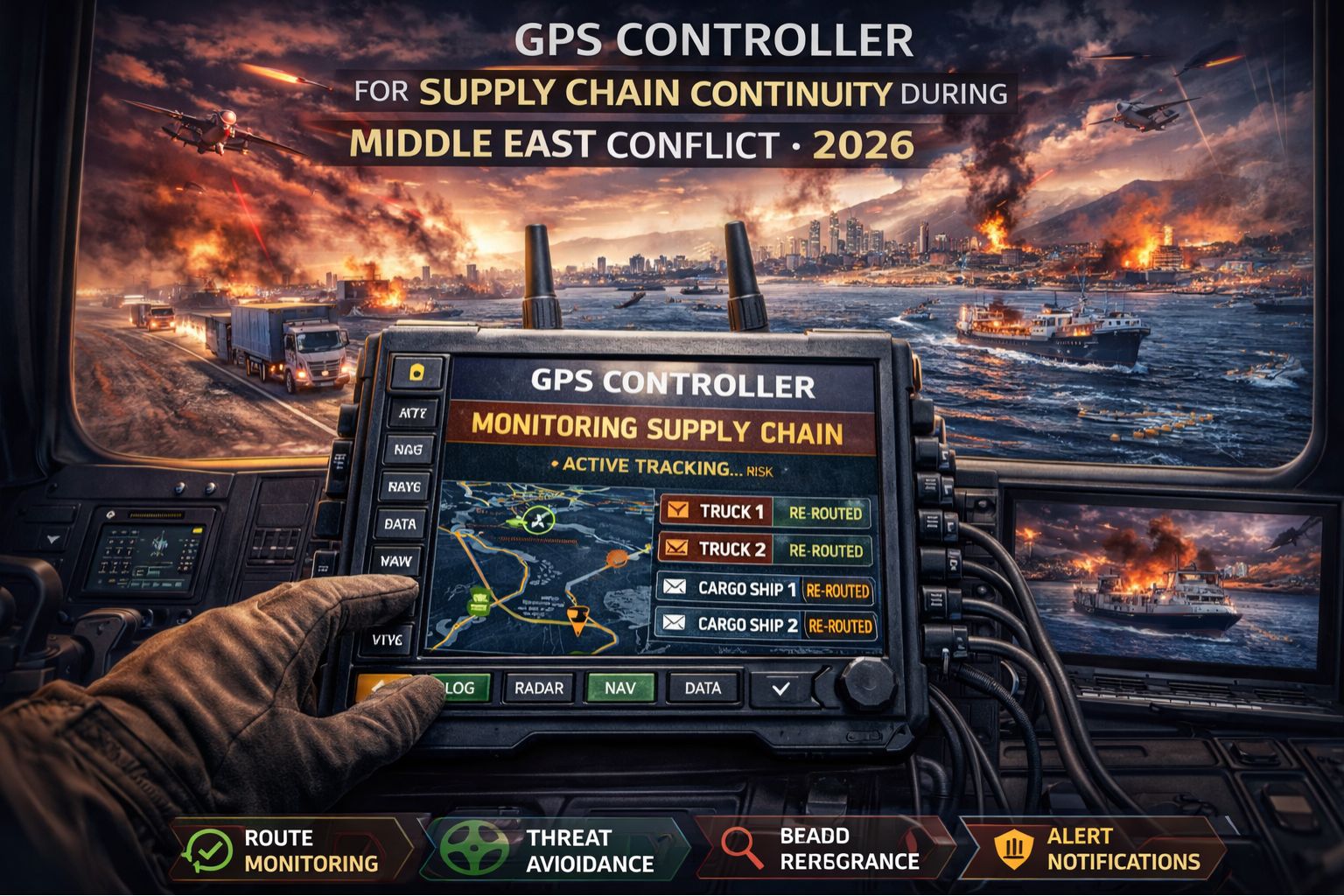
GPS Controller for supply chain continuity during Middle East conflict 2026
When conflict zones shut down shipping lanes and ground corridors, standard fleet tracking tends to fail right when you need it most—your map goes dark just as a convoy nears a volatile checkpoint. GPS Controller provides the persistent, secure telemetry you need to maintain supply chain continuity. It's more than location pings; it's a resilient operational layer that adapts to sudden route closures, communication blackouts, and heightened security. This isn't about watching dots on a map. It's about keeping critical goods moving when every mile and minute carries real, amplified risk.
What continuity actually means in a conflict zone
Here, continuity isn't just avoiding delays. It's about maintaining verified custody and predictable movement when the environment itself is anything but predictable. We've seen convoys where standard GPS showed a truck "stopped" for hours because of signal jamming. Meanwhile, our integrated inertial measurement and last-known-route analytics confirmed it was actually creeping through a secured military corridor. That distinction is critical for managing downstream warehouse and personnel schedules. This layer of inference stops panic reroutes and keeps the broader supply chain logic working.
The reality of 2026 Middle East logistics pressure
The sheer scale creates unique failure points. Imagine 300 assets moving across three countries, each with different levels of degraded infrastructure and intentional signal interference. A common, costly mistake is relying on a single cellular provider. When that network gets throttled or shut down for security, an entire fleet segment vanishes. Real continuity needs multi-network SIMs and the ability to cache data, bursting it out the moment any sliver of connectivity appears. That's a core function of the hardened telematics devices you need.
The critical risk of misunderstood "secure" tracking
One major risk is assuming standard geofencing and alerts will work normally. In conflict zones, geographic boundaries change overnight. A geofence for a "safe" unloading yard yesterday could be in a contested area today. If your system can't handle dynamic, rapid geofence updates from a central desk, and fails to log every entry or exit attempt—successful or blocked—you lose more than visibility. You lose the audit trail required for insurance and compliance in high-risk transport. That gap turns a tracking tool into a genuine liability.
Deciding between rerouting tools and a resilience platform
This is the real decision: are you just looking for a tool to reroute trucks, or do you need a platform that ensures the continuity of the data itself? You can tweak standard fleet management software for minor hiccups. But when you're facing systemic communication blackouts, you need encrypted data bursts, remote device configuration, and integration with security intelligence feeds. That's where internal fixes stop. You need a system designed for resilience, not just fair-weather efficiency. A platform like GPS Controller is built for this environment.
FAQ
Question: Can regular GPS tracking work during a conflict?
Answer: Honestly, standard GPS tracking often fails. Signal jamming, spoofing, or network shutdowns see to that. Real continuity needs hardened devices with multi-network connectivity and offline data caching to maintain a chain of custody when the signals drop.
Question: How do you protect driver safety with real-time tracking?
Answer: Safety is the priority. Systems have to balance visibility with security. That means discreet devices and secure data protocols to avoid broadcasting sensitive locations, while still giving central command the critical alerts needed for emergency extraction.
Question: What happens to delivery proofs if the network goes down?
Answer: Without a resilient system, that proof is just gone. Platforms built for continuity use device-side storage to log everything—timestamped geofence entries, sensor triggers like door openings, even image captures. It transmits the encrypted log as soon as any network is back.
Question: When should a logistics manager upgrade from basic tracking?
Answer: The threshold is when route uncertainty and communication blackouts become what you expect, not rare exceptions. If you're constantly manually verifying locations or lack a proper audit trail for insurance in high-risk zones, then basic tracking is a liability. At that point, investing in a dedicated resilience platform like GPS Controller shifts from an option to a strategic necessity.


Comments
Post a Comment