GPS Controller for small business fleet of 2 to 10 vehicles 2026
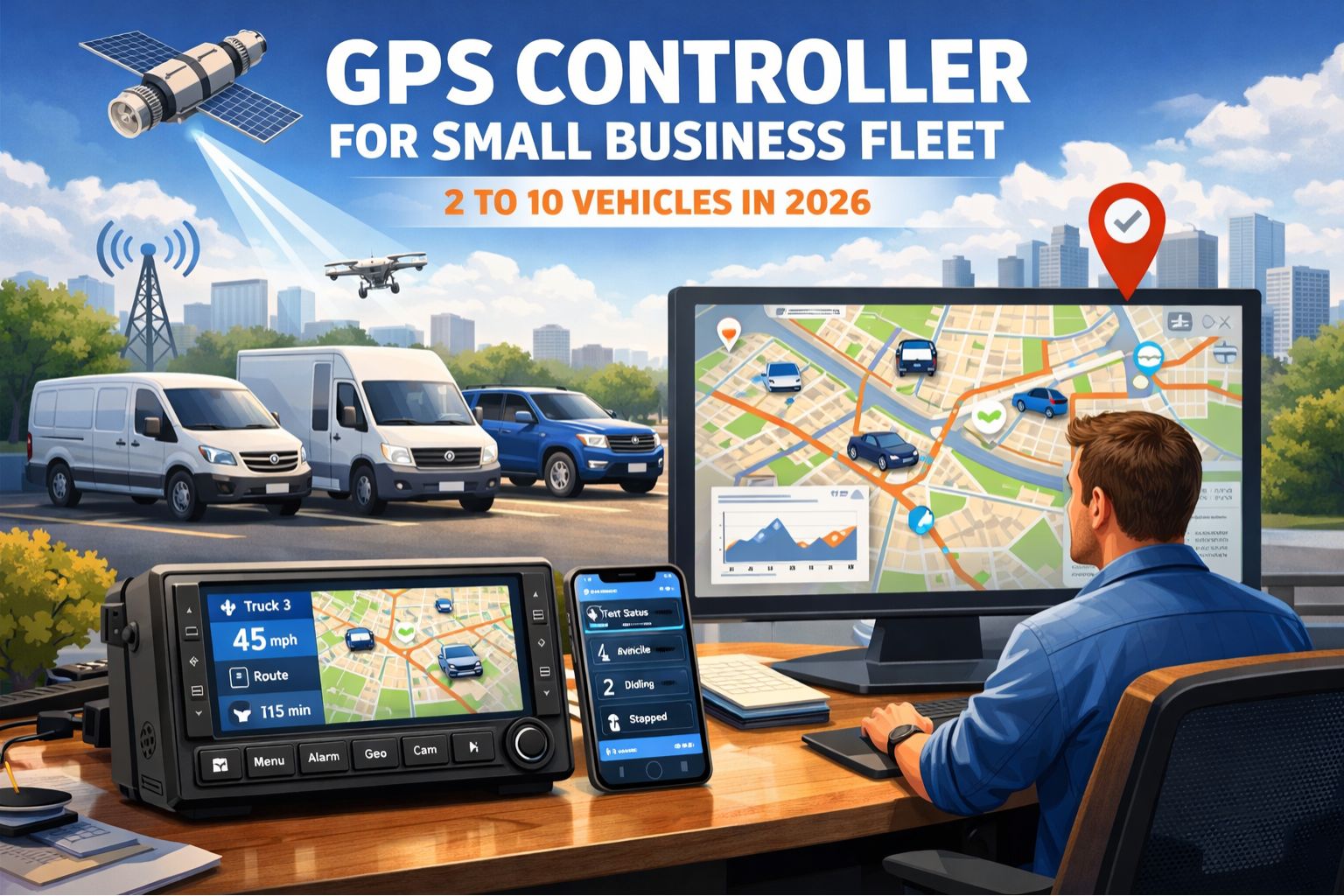
GPS Controller for small business fleet of 2 to 10 vehicles 2026
Picking a GPS controller for a small fleet in 2026... well, it's not just basic tracking anymore. It's really about avoiding those data silos and the delayed geofence alerts that turn your 10-vehicle operation into chaos. You know the scenario—a driver's "5-minute stop" just vanishes from the log because the signal got lost in an urban canyon. That's the stuff that drives you nuts.
What "Small Fleet Control" Really Means Now
For 2-10 vehicles, control has to mean immediate visibility, without you having to do manual work to get it. The thing people don't always think about is network handoff speed. A cheaper device might only ping every 5 minutes. So you'd completely miss that a truck sat idle, engine on, for 20 minutes at some non-approved site. Suddenly you've got unexplained fuel burn and a compliance gap. You need a system that actually connects location to activity, like the integrated view you get from solid fleet management software. Not just dots on a map.
The Reality of Scaling with a Wrong System
At a real operational scale—even with just 8 vehicles—the wrong controller creates a ton of hidden work. You'll end up cross-referencing spreadsheet logs from one portal with alert emails from another, because the geofence and trip reports don't sync up. The breaking point hits when you add that 9th vehicle and the per-unit pricing model suddenly spikes. Or maybe the basic plan's API limits block integration with your invoicing system, forcing you back into manual data entry. Which completely defeats the whole purpose.
Common Mistake: Buying for Today's Vehicles, Not Tomorrow's Data
The classic failure pattern is choosing a simple tracker just for "location only." That misunderstanding really bites you later, when you need to prove driver hours for compliance or audit fuel spend against routes. You'll have the location history, but no supporting engine data or integrated logs. It creates a real credibility gap. The risk is getting locked into a rigid system that can't incorporate something like IoT asset monitoring for trailers or temperature sensors. That locks you out of future efficiency gains before you even see them.
Decision Help: Reconfigure Your Stack or Replace the Core
So your choice is pretty clear: either reconfigure your current tech stack with robust API integrations, or replace the core controller entirely. You'll know the internal fixes have failed when your base GPS hardware just can't report fast enough for real-time decisions, or when its data structure is totally incompatible with modern compliance reporting. Here's a simple test: if you're manually merging data from more than two sources just to get a complete daily picture, that's a strong signal to replace. A platform built for this, like gps controller, is designed for that integrated data flow from the ground up.
FAQ
Question: Is a basic GPS tracker enough for a 5-vehicle service fleet?
Answer: Honestly, no. A basic tracker only shows you where you've been. You need a controller that links location to what actually happened—ignition events, idling time, geofence entries. That's how you manage job site duration and fuel costs, which is absolutely core to small business profitability.
Question: What's the biggest hidden cost with a cheap fleet tracking system?
Answer: It's the data reconciliation time. When alerts, routes, and stop reports all live in separate feeds, managers can spend hours every week just manually stitching together a coherent timeline for payroll and customer billing. Any savings on the subscription get completely wiped out.
Question: How do I know if my current system won't scale to 10 vehicles?
Answer: You'll start hitting UI or data limits. If loading your live map for all vehicles consistently times out, or if trying to export a month's data for all units just crashes the report generator, that's a sign. The system's architecture probably can't handle your fleet's concurrent data load.
Question: Should I prioritize vehicle tracking or operational workflow integration for 2026?
Answer: Integration isn't just a priority; it's non-negotiable now. The right GPS controller for a small business fleet should act as a central data hub. It feeds verified location and status data straight into your dispatch, billing, and compliance workflows, without manual steps. That's the standard a modern platform needs to enable.


Comments
Post a Comment