GPS Controller for Sharjah Abu Dhabi fleet management 2026
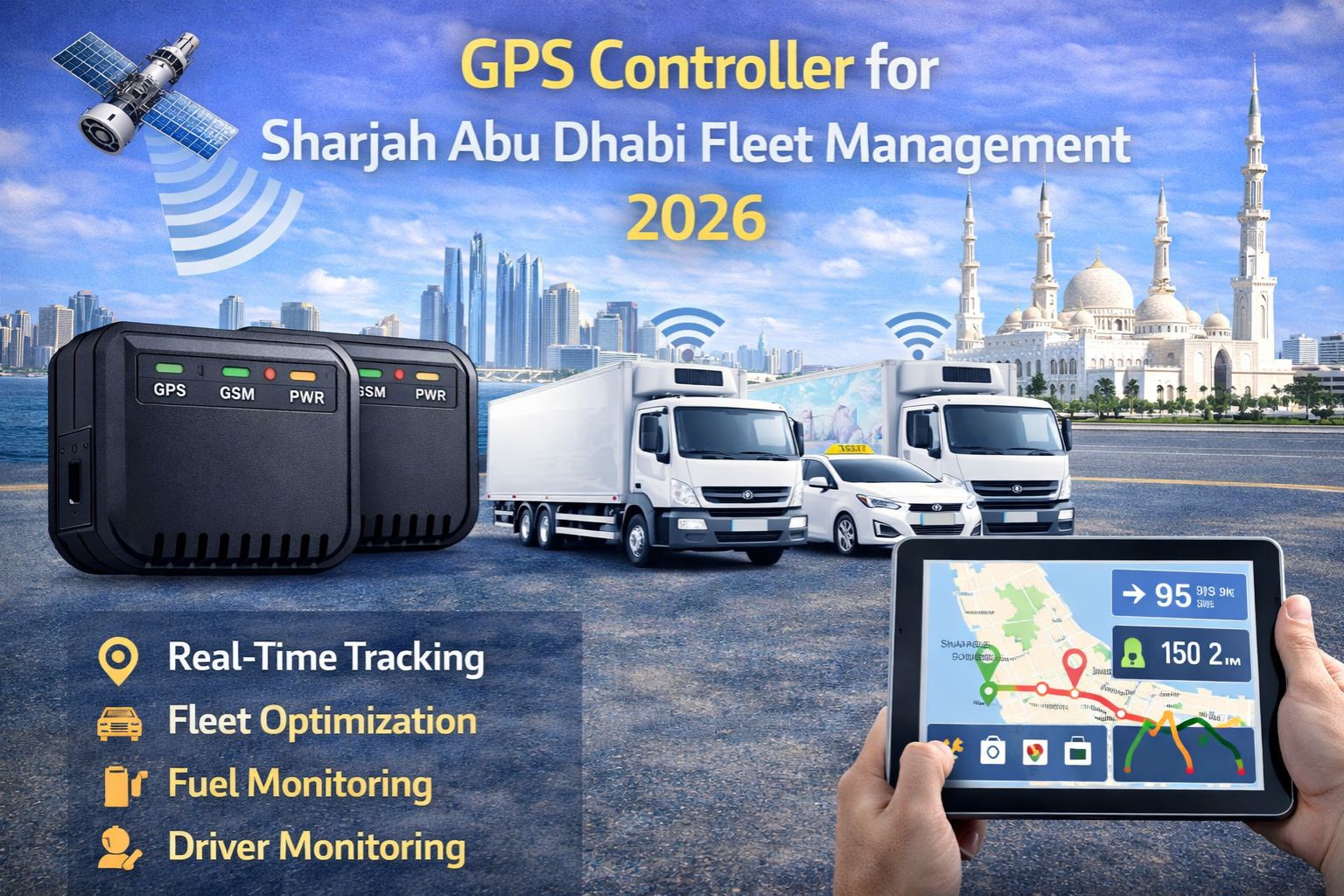
GPS Controller for Sharjah Abu Dhabi fleet management 2026
So your fleet management system in Sharjah and Abu Dhabi shows a vehicle just sitting there in Al Quoz, but the driver's already unloading in Sharjah Industrial Area. That's not just a minor GPS blip—it's a fundamental signal delay that completely breaks real-time tracking. This lag, between the satellite getting a fix and that data finally showing up on your dashboard, creates a kind of phantom fleet. Your whole operational view is minutes behind what's actually happening, and that directly messes with dispatch accuracy and driver accountability across the Emirates.
What GPS Signal Delay Means for Live Fleet Tracking
Put simply, signal delay is that gap between a GPS satellite's timestamp and when that location update finally gets processed and shows up in your fleet management software. You could be looking at a truck apparently idling at a client site in Abu Dhabi when it actually left eight minutes ago. Or you get a geofence entry alert long after the vehicle has already come and gone. It's not just a slow map refresh; it means your whole command and control loop is cut. You're forced to make decisions based on stale, and often just wrong, data.
The Reality of Operational Scale Across the Emirates
When you're operating at scale, with dozens of vehicles moving between Sharjah, Dubai, and Abu Dhabi, these little individual delays add up into a kind of systemic blindness. One thing people don't always think about is how network congestion—during peak hours at border crossings, or in dense urban corridors—can make the delay even worse. The cellular networks get swamped trying to transmit bursts of GPS data from all your devices at once. The real boundary condition hits when you try to reconcile trip logs for compliance or customer billing. The timestamps in your system won't match the driver's logsheet or the client's dock records, leaving you with an audit trail full of inconsistencies.
The Critical Mistake in Diagnosing the Problem
The most common misunderstanding? Blaming the GPS hardware alone. Companies end up cycling through different tracking devices, which is a costly escalation that doesn't fix the core issue. The real failure pattern is usually in the data pipeline: the interval settings on the device itself, how the data packets are routed over the network, or a processing queue on the server side. Operators see a "strong signal" and assume it means real-time data. They don't realize a device can have a perfect GPS fix, but the whole transmission and processing architecture adds a fatal lag. That lag makes live tracking useless for things like dynamic rerouting or actually recovering a stolen vehicle.
Your Decision Boundary: Tune, Reconfigure, or Replace
So your decision really comes down to a clear choice. You can try to tune the existing system—adjust reporting intervals, tweak data filters. You can reconfigure the whole network and server-side setup. Or, you replace the telematics platform entirely. The boundary where internal fixes stop working is when the delay consistently exceeds what your workflows can tolerate. Think proof-of-delivery timestamps getting legally contested, or making dynamic dispatch decisions based on data that's over five minutes old. At that point, patching settings won't bring back real-time control. The architecture itself needs a redesign focused on cutting latency. That's where a platform actually engineered for low-latency telematics, like gps controller, becomes less of an option and more of a necessary operational upgrade.
FAQ
Question: What is an acceptable GPS delay for fleet management?
Answer: For just basic location tracking, a delay of 60 to 120 seconds might be something you can live with. But for active dispatch, security geofence alerts, or giving customers live ETA updates, the delay really needs to be under 30 seconds to be viable. Anything longer and you're basically managing history, not a live fleet.
Question: Can a better GPS antenna fix tracking delay?
Answer: Only if the delay is specifically caused by poor satellite acquisition. In most urban and inter-emirate scenarios, the holdup is in the data transmission and processing. A better antenna might improve fix accuracy, but it does nothing to speed up the cellular network hop or the server processing time—which are usually the real bottlenecks.
Question: How does fleet size affect GPS data delay?
Answer: It gets worse exponentially. A system handling 10 vehicles might process updates one after another with barely any lag. At 50+ vehicles, the server has to queue, parse, and database thousands of data points every single minute. Without a scalable, high-throughput architecture, that processing queue creates delays that get bigger with each vehicle you add. It cripples real-time visibility exactly when you need it most—during peak operational scale.
Question: When should we consider replacing our entire tracking system?
Answer: When the data delay starts causing tangible business loss. Think failed SLA penalties because your ETAs were wrong, not being able to prove a driver's location for a compliance audit, or missing a shot at theft recovery because the geofence alert came in too late. If you've tried tuning reporting intervals and checking network APNs, and the latency still isn't in an acceptable window, then the core telematics platform itself probably lacks the modern data pipeline you need for 2026's real-time demands. That's the signal it's time for a replacement.


Comments
Post a Comment