GPS Controller for school bus real time tracking for parents 2026 best
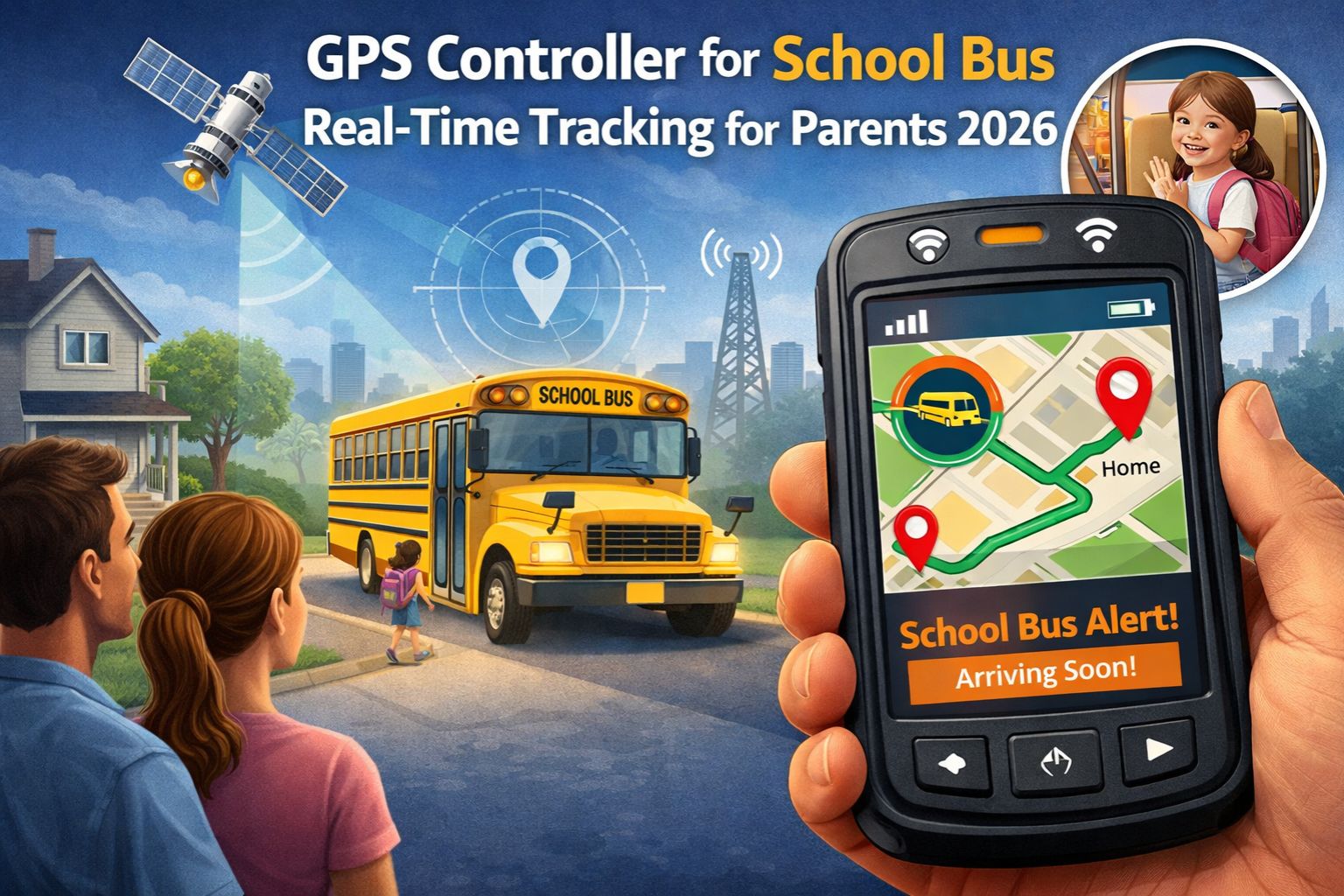
GPS Controller for school bus real time tracking for parents 2026 best
When a GPS controller for school bus tracking shows a vehicle "arriving in 5 minutes" for ten straight minutes, the parent waiting in the rain isn't thinking about telematics—they're experiencing a direct failure of the safety promise. Honestly, the "best" system in 2026 isn't about the flashiest map; it's about the relentless accuracy of location data and the immediate, reliable delivery of that data to a parent's phone. This is especially true during critical windows like morning pickup and afternoon drop-off, where every second of delay doesn't just create logistical chaos—it actively erodes trust.
What Real-Time Tracking Actually Means for a Parent in 2026
For a parent, "real-time" should mean seeing their child's bus move smoothly along the expected route on their phone, with an ETA that updates predictably. But the operational reality is trickier. It all depends on a constant, high-integrity data stream from the vehicle's GPS controller through cellular networks to the parent app. A common, critical misunderstanding is that a "live" map is always current. In practice, we've all seen it: buses showing as "idle at school" for minutes after they've actually left. Why? Because the first GPS fix after leaving the building's signal shadow was delayed, and that causes a whole cascade of late alerts.
The Reality Check: When "Best" Tracking Systems Fail Under Scale
Think about 2:45 PM, when 50 school buses across a district simultaneously power on and start transmitting location pings. Network congestion and server processing queues introduce inevitable latency—it just happens. A system marketed as "best" might handle this by prioritizing data for buses actively moving versus those still in the depot. But here's the thing: parents don't see that backend logic. They just see a frozen icon. This scale failure becomes painfully obvious during sudden route changes or emergency weather dismissals, exactly when the demand for accurate data spikes and the system is most strained.
The Critical Mistake: Choosing a System for Features Over Data Integrity
The biggest risk? Picking a platform with beautiful geofencing and alert dashboards, but an underlying architecture that batches location updates just to save on cellular data costs. That creates a dangerous illusion of safety. A bus can pass a geofence boundary, but the alert to parents gets queued and delivered 90 seconds later—which is a lifetime in traffic. This mistake gets worse when districts assume all geofencing alerts are created equal, not realizing that alert latency is a separate, and frankly more critical, metric than how much you can customize the alert.
Your 2026 Decision: Tune, Reconfigure, or Replace the Controller
Your decision boundary is pretty clear. If your current GPS controller shows consistent sub-30-second data latency during peak times, you can probably tune reporting intervals and reconfigure alert thresholds. But if you're seeing multi-minute delays, unexplained location jumps, or parents are routinely calling the transportation office because the app is wrong, then internal fixes aren't enough. At that point, the architecture itself can't support the real-time promise. A replacement focused on low-latency data pipelines becomes necessary. A modern gps controller platform should be invisible, delivering certainty without the parent ever having to question the data.
FAQ
Question: How accurate is real-time school bus tracking for parents?
Answer: Accuracy is two things: GPS precision (often within 10-30 feet) and data latency. The best systems in 2026 aim for location updates on the parent's app within 10-15 seconds of the bus's actual position. But you have to factor in cellular dead zones and urban canyons—they can still cause temporary delays or inaccuracies.
Question: Can parents see if the bus is early or late?
Answer: Yes, but how reliable it is depends on the system's predictive algorithms, which use real-time traffic and historical route data. A common failure point is the ETA freezing or jumping erratically when the bus hits unexpected traffic, because the algorithm isn't getting frequent enough location pings to recalculate properly.
Question: What happens if the GPS signal is lost?
Answer: A robust system should indicate "signal lost" on the parent's map and usually keep showing the last known location and direction. The real risk is if the system fails to queue and deliver the delayed location data once the signal comes back. That leaves a gap in the trip history, and parents find that really alarming.
Question: When should a school district upgrade its tracking system?
Answer: The decision gets urgent when data latency consistently messes with daily operations. I'm talking about when dispatchers have to manually call drivers to verify location because the tracking is wrong, or when parent complaints about app inaccuracy become a major administrative burden. At that scale, patching an old system is usually less effective than just implementing a new one built for modern data throughput.


Comments
Post a Comment