GPS Controller for private security guard patrol vehicle 2026
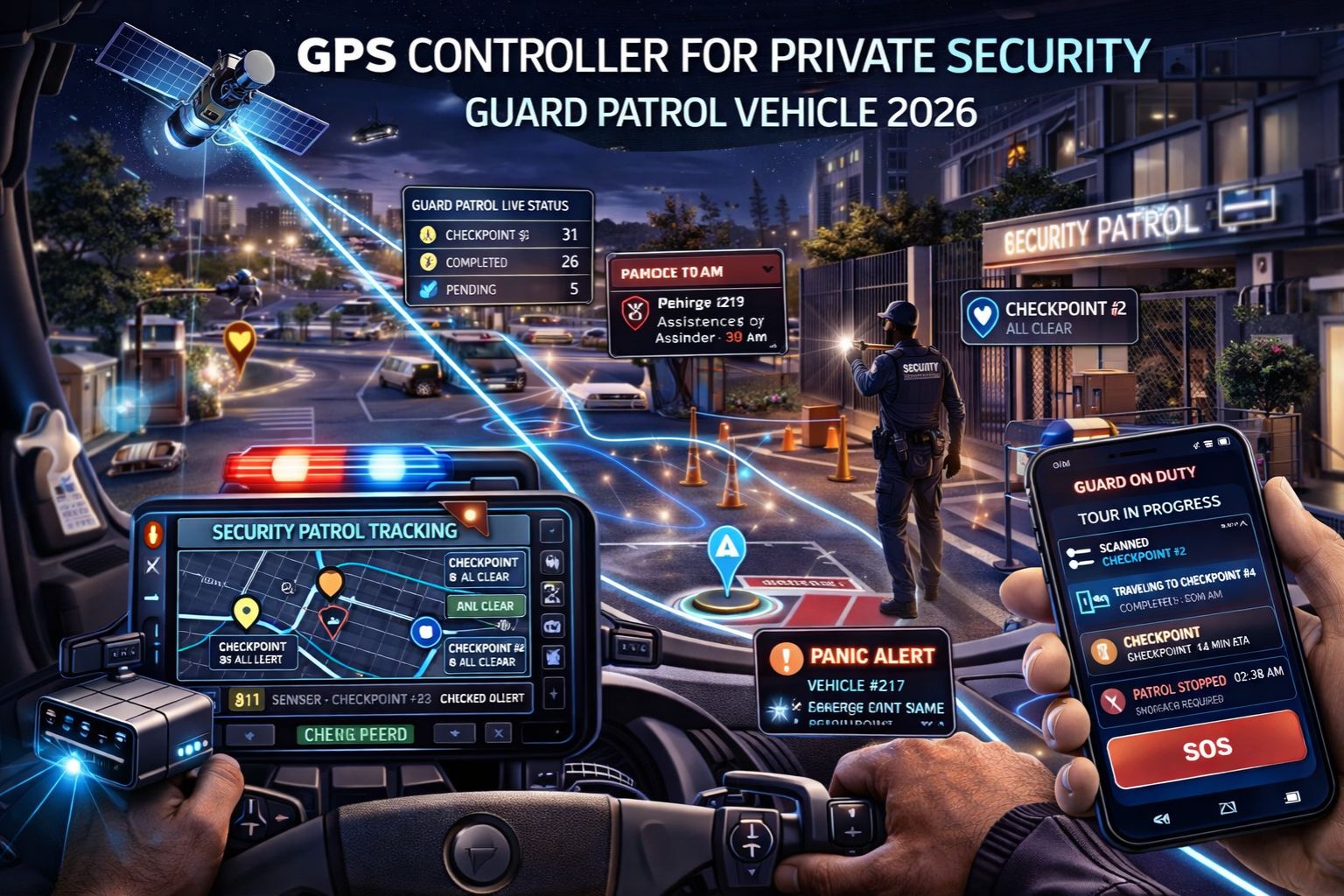
GPS Controller for private security guard patrol vehicle 2026
Picking a GPS controller for a private security patrol vehicle in 2026... it's not really about basic tracking anymore. It's about making sure that stream of location data is precise, reliable, and actually useful for real-time response and for creating logs you can trust. Get the wrong device, and you create a dangerous lag—a guard could be somewhere completely different from what the dispatch screen says. That's how a routine check-in turns into a critical failure.
What This Choice Really Means for Security Patrols
In a security operation, the GPS controller is like a silent partner on every patrol. It's not just a dot on a screen. It's what you base client billing on, it's how you establish timelines for incidents, it's how you ensure officer accountability. A lot of people make the mistake of treating it like a standard fleet tracker for deliveries, but the stakes here are totally different—we're talking about liability and human safety, not just whether a package is late. The device has to perform in urban canyons and underground parking, with minimal signal hiccups. Otherwise, you get false "stationary" alerts while an officer is actually moving through a site, and that undermines everything.
The Reality of 2026 Patrol Operations and Scale
You really see the flaws under real pressure. Picture a guard doing a foot patrol from their vehicle around a big facility. A low-quality controller with slow updates might show them clustered at the car for ten minutes. That's a ten-minute hole in the patrol log. Now multiply that across multiple vehicles and shifts. Those data gaps eat away at the integrity of the entire security report, rendering it useless for an audit or for figuring out what happened after an incident. The bottom line is client trust—once that's gone because of missing data, good luck getting it back.
The Critical Mistake: Prioritizing Cost Over Data Fidelity
The biggest risk is going for a controller based on price alone, thinking all GPS data is basically the same. Cheap units usually have poor antenna design and weak processors. The result? Delayed geofence breaches, inaccurate timestamps. In security, that's not a minor glitch. A delayed "arrival" signal or a missed "perimeter breach" alert can literally be the difference between a situation that's contained and one that escalates. Some operators think they can patch this over with software later, but you can't software your way out of the hardware's built-in latency. That's a hard limit.
Your 2026 Decision: Reconfigure or Replace
So where's the line? It's pretty clear. If your current controllers give you consistent, timestamp-accurate logs and they work smoothly with your security management software, then maybe you just need to tweak your geofences and alert settings. But if you're seeing patrol gaps, or the ignition-on detection is flaky, or you look at the data and think "this wouldn't hold up in a review," then replacement is your only option. For the compliance and transparency demands coming in 2026, the systems from gps controller providers built for high-stakes environments are going to be non-negotiable.
FAQ
Question: What's the most important feature in a 2026 GPS controller for security vehicles?
Answer: Honestly, it's sub-second data reporting latency and guaranteed data integrity for audit trails. The pretty map isn't the point. The point is having an unbroken, court-admissible chain of where someone was and what happened.
Question: Can't I just use a smartphone app for my security patrol tracking?
Answer: No, you really can't. Consumer apps aren't built for this. They lack the reliability, the dedicated hardware for constant tracking, and security-specific features like tamper alerts and redundant logging. Using one opens up a massive liability gap.
Question: How does GPS delay specifically create a security risk?
Answer: Think about a 30-second delay. It means a guard could be a full block away from where your screen says they are during a rapid response. It also throws off the timestamps for door checks and incident reports, which completely breaks the narrative if you ever need to investigate something.
Answer: You draw the line at data trust. If your team starts questioning the logs, or if you're constantly having to manually fix patrol reports, then your hardware isn't cutting it. For 2026, putting money into professional-grade IoT monitoring hardware is a core operational cost. It's not just an IT expense anymore.


Comments
Post a Comment