GPS Controller for part time seasonal rental equipment fleet 2026
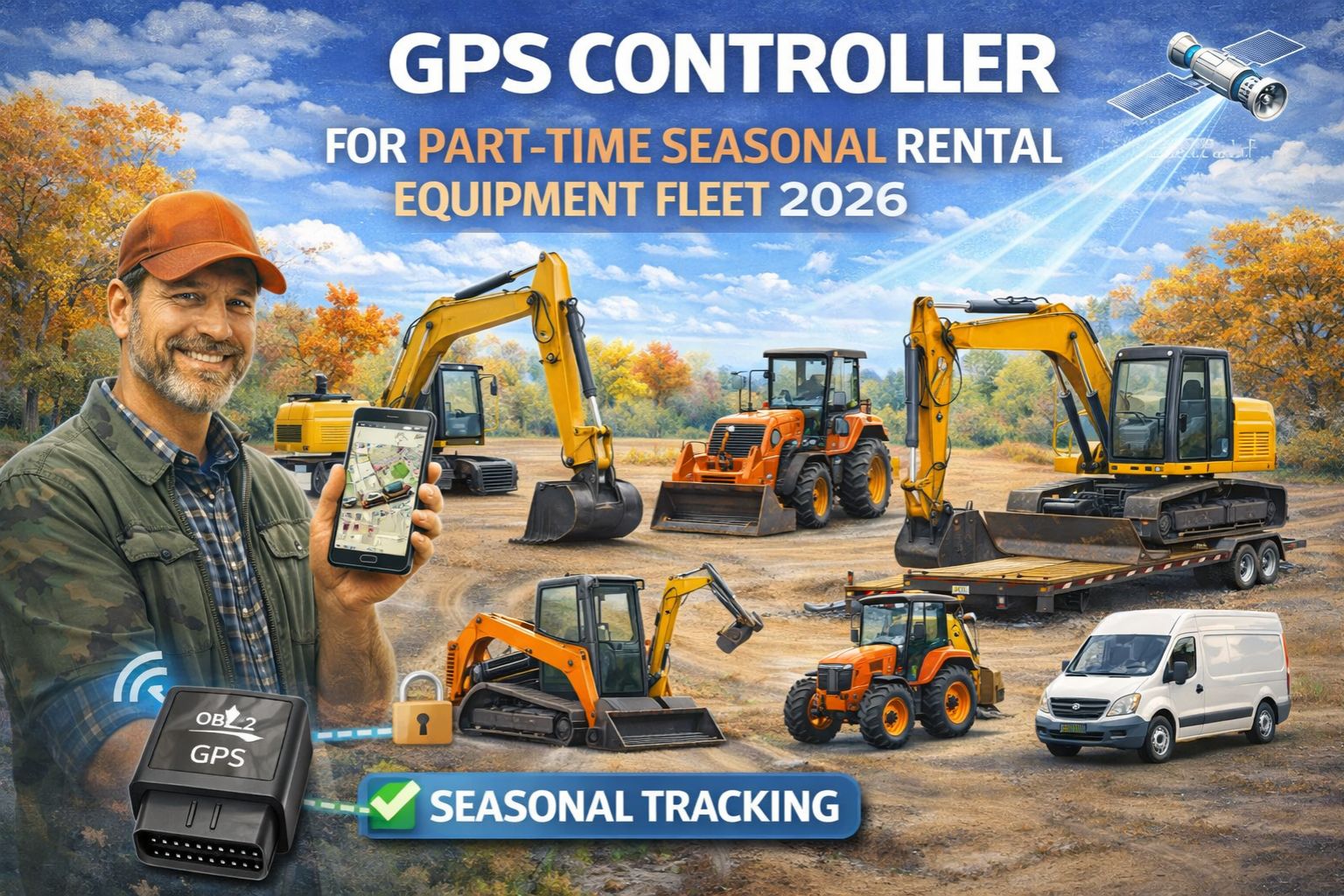
GPS Controller for part time seasonal rental equipment fleet 2026
When your rental fleet only runs a few months a year, the GPS controller you pick has to solve this specific problem: tracking sporadic, high-value assets where even one delayed update can cause a missed pickup, a billing dispute, or an asset you just can't locate for the next customer. It's not about constant monitoring. It's about perfect reliability during those short, critical windows when your revenue actually depends on it.
What This Means for Your Seasonal Rental Operation
For a seasonal rental business, a GPS controller is more than a tracker—it's your off-season security and your in-season operational backbone. The real failure? It's when a backhoe rented for a weekend project doesn't report its location for six hours on a Saturday. Your team then wastes half a day driving to its last known ping, only to find the customer finished early and moved it without telling anyone. The device might technically be "working," but that data delay creates a massively costly blind spot.
The Reality of Intermittent Fleet Tracking
At a real operational scale, the assumption that a device will just seamlessly wake up from months of dormancy and connect perfectly is where most systems fall apart. We've seen controllers with poor cold-start GPS acquisition take 15, even 20 minutes to get a first fix after a long idle period—plenty of time for the asset to be loaded up and moved. On top of that, many cellular modules made for constant connection really struggle with the network re-registration process on intermittent plans. That can cause the first few data packets, which are the ones confirming pickup, to be lost completely.
Common Mistakes That Escalate Costs
The most expensive misunderstanding is treating seasonal rentals like a standard fleet and just using a standard GPS tracking device with a continuous reporting plan. You end up paying for year-round data you don't use, and the device's firmware usually isn't built for deep sleep and instant wake cycles. The result? Drained batteries when in storage, or something worse: missed alerts because the geofence engine wasn't properly primed to activate after a long static period, so it fails to notify you the rental has actually started.
Choosing the Right Control Strategy for 2026
Your decision is pretty clear: you can try to tweak a general-purpose device with complex sleep schedules, reconfigure your entire platform's alert logic for intermittent assets, or you can redesign your approach with a controller built for the rental lifecycle. Those internal fixes tend to stop working once you have more than a handful of units, or when your customers start expecting real-time digital check-in/check-out confirmations. At that point, you need a system that manages the dormant phase as actively as the rental phase. That's a core capability of a modern GPS controller platform.
FAQ
Question: How do I track rental equipment that's stored indoors or in a metal shed for months?
Answer: The controller really needs to use a mix of long-interval heartbeat signals and motion-triggered reporting. When motion is finally detected after a long static period, it should immediately try for a location fix and transmit, even if the signal is weak—and it should log that attempt for you to review later.
Question: Will battery-powered trackers last an entire 6-month off-season?
Answer: Only if the controller firmware is specifically designed for ultra-long dormancy. Most consumer-grade devices will fail. You need a device that quotes a "shelf mode" or "storage mode" lifespan measured in years, not months, and one that has a documented low-battery alert well before the rental season starts.
Question: How can I prove rental period start and end times for billing disputes?
Answer: This is a major compliance gap that generic trackers create. You need a controller that generates a tamper-proof audit log, one that ties movement start/stop with precise location and timestamp to create an immutable record for billing. That should be accessible right through your fleet management software.
Question: What's the 2026 benchmark for "real-time" tracking for seasonal rentals?
Answer: The benchmark now is event-driven real-time, not interval-driven. A pickup, geofence exit, or impact event should trigger an alert within 90 seconds, while dormant assets might only report once a week. The real intelligence is in the system automatically knowing the difference between these states.


Comments
Post a Comment