GPS Controller for offshore supply vessel fleet management 2026
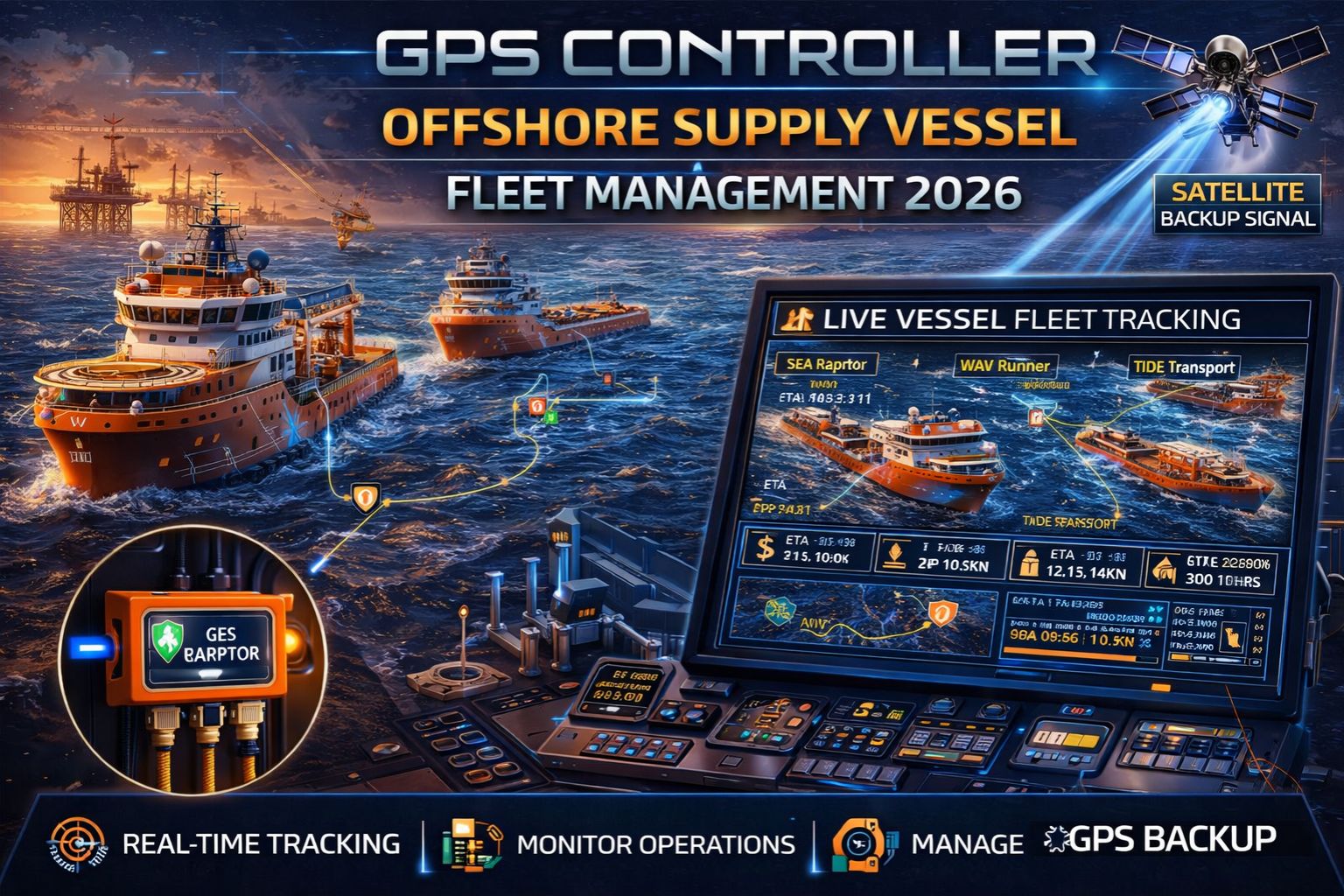
GPS Controller for offshore supply vessel fleet management 2026
Managing an offshore supply vessel fleet in 2026? It's about navigating a unique set of operational blackouts. Think satellite signal loss in remote oil fields, or the critical compliance logs maritime authorities demand. Here, a delayed position update isn't just a data point—it's a missed cargo window. Or worse, a safety protocol breach.
What Offshore Vessel Tracking Actually Means Now
For a fleet manager staring at a screen, it's that live connection to a vessel 150 nautical miles out. You're watching its AIS and GPS data merge to show true position, speed, and heading against complex sea lanes and weather overlays. The non-obvious detail, though, is the data jitter during high seas. When the vessel pitches and rolls, the GPS antenna can momentarily lose lock. That creates false "stationary" alerts, which completely confuse geofencing alerts for port approach zones.
The Reality of Scale in Offshore Operations
At scale, with 20+ vessels running simultaneous crew changes, equipment deliveries, and bunkering operations, the real failure pattern emerges. It's in the cascading delays. A single vessel's delayed ETA, because of poor routing data, doesn't just affect one platform. It backs up the entire logistics chain. That means standby charges, and it forces helicopters into holding patterns. You hit the boundary condition when legacy tracking systems can't even ingest real-time weather and current data. At that point, their ETA predictions are basically useless beyond a 12-hour window.
Common Mistakes That Escalate Risk
The most costly misunderstanding is treating offshore vessel tracking like land-based fleet management. Assuming cellular backup will work far offshore leads to complete data blackouts. And not accounting for the increased power draw of always-on satellite terminals? That can drain vessel batteries. Many teams make it worse by trying to manually reconcile delayed positional data with paper-based cargo manifests. It's a process that inevitably creates audit gaps for SOLAS or ISPS code compliance.
When to Tune, Reconfigure, or Redesign
This is the decision lock. You can tune settings if it's just occasional signal loss for a few vessels. But you have to reconfigure the entire telematics stack if compliance reporting is consistently delayed by hours. And a full redesign is non-negotiable when your current system can't provide the unified operational view needed for 2026's integrated port and platform logistics. That's the boundary where piecemeal fixes become a liability. In this space, a robust gps controller platform has to be the central nervous system, not just a tracker.
FAQ
Question: How accurate is GPS tracking for vessels far offshore?
Answer: Standard GPS accuracy itself remains high. The real challenge is data transmission latency over satellite networks. That can delay position updates by several minutes, which really affects real-time decision-making for things like dynamic positioning or collision avoidance.
Question: Can you track cargo and equipment on deck with vessel tracking?
Answer: Basic vessel tracking can't do that. This requires an integrated IoT asset monitoring layer using RFID or Bluetooth sensors to monitor specific containers or equipment. That's what ensures cargo integrity and prevents loss overboard.
Question: What's the biggest compliance risk with outdated tracking systems?
Answer: The inability to produce immutable, timestamped logs of vessel movements and port calls for authorities like the Coast Guard or classification societies. That risks fines, or even vessel detention during inspections.
Question: When should we consider a new fleet management platform?
Answer: When your daily operational briefings rely on manually stitching together data from 3+ disparate systems—AIS, weather, ERP—and critical alerts are consistently missed. That's a clear signal your platform is a bottleneck, not an enabler.


Comments
Post a Comment