GPS Controller for mining haul truck fleet management 2026
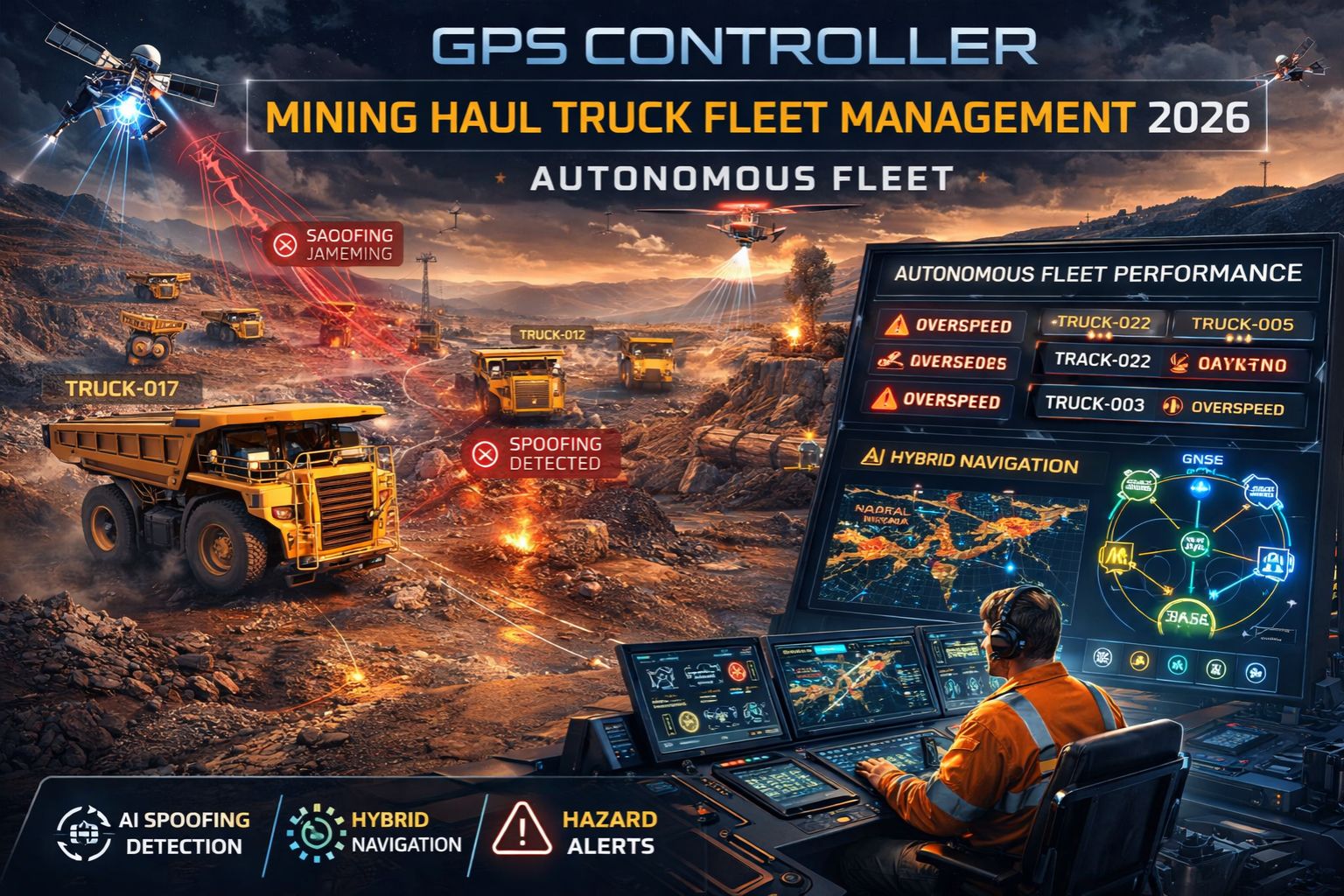
GPS Controller for mining haul truck fleet management 2026
When your haul truck telematics shows a truck is loaded at the shovel but the dispatch system sees it idle, you're facing more than a GPS lag—you're managing a cascade of payload miscalculations, missed cycle targets, and compliance logs that won't survive an audit. Honestly, this isn't a simple connectivity drop; it's a fundamental data integrity failure under the extreme conditions of a mining operation. Vibration, dust, and electromagnetic interference from heavy equipment just eat away at the signals that consumer-grade fleet trackers rely on.
What GPS Controller integration means for haul truck visibility
Clarity here is about real-time payload and location sync, not just dots on a map. It means your system actually knows the difference between a truck waiting in a queue and one that's broken down on a haul road. Because the telemetry includes engine data, PTO status, and weight sensor integration, not just those periodic GPS pings. In practice, this is the difference between optimizing for tons-per-hour and reacting to a bottleneck after the shift ends.
The reality of scale in a 100-truck mining fleet
At real operational scale, small data errors compound into massive financial exposure. Think about it: a 2-minute delay in geofence arrival alerts per truck, across 100 trucks over three shifts, can mean hundreds of lost production hours monthly. More critically, if your system can't timestamp load and dump events accurately—say, due to signal jitter near crushers or in deep pits—then your production reports and royalty calculations are built on flawed data. That's not just an error; it's a significant compliance risk waiting to happen.
Common mistakes that escalate downtime and cost
The most costly assumption? That a device rated for "rugged" use can handle the constant shock and vibration of a 400-ton truck on an unpaved haul road. The failure pattern isn't sudden death; it's a gradual sensor drift where reported idle times shorten artificially or location data develops a persistent offset. That makes route optimization for haul roads practically useless. Another big misunderstanding is relying on cellular coverage alone. That leads to data blackouts that mask critical events, like unauthorized stops or route deviations, until the truck finally returns to coverage.
When to tune, reconfigure, or replace your tracking setup
The decision boundary is pretty clear: if you're manually reconciling dispatch logs with telematics data more than once a week, you're beyond simple tuning. Reconfiguring involves integrating auxiliary sensor data, like onboard weight systems, directly into the telematics stream. But if your current devices can't maintain sub-five-second reporting intervals under full vibration, or fail to provide deterministic data during satellite signal loss, then a redesign with a purpose-built system is necessary. This is where a platform like gps controller, built for deterministic data in harsh environments, stops being an upgrade and becomes an operational necessity.
FAQ
Question: How accurate is GPS for mining truck location in deep pits?
Answer: Standard GPS accuracy degrades significantly in deep open pits or near highwalls. The issue is signal multipath—reflections off rock faces can cause location errors of 10-30 meters. That makes precise load-point geofencing unreliable unless you have augmented positioning or dead reckoning technology to cover the signal loss.
Question: Can fleet tracking reduce haul truck fuel consumption?
Answer: Yes, but only if the data is high-frequency and includes engine telemetry—RPM, idle time, load factor. Generic tracking might show route adherence, but optimizing fuel burn requires knowing if a truck is idling at 800 RPM or 1200 RPM while waiting. That's a detail most basic systems miss, and it leaves significant savings just sitting there, uncaptured.
Question: What's the biggest compliance risk with poor tracking data?
Answer: The largest risk is inaccurately logged hours of service for drivers and misreported production volumes for royalty payments. If your system's event timestamps are unreliable due to signal delay, both driver log audits and production reconciliations with the mining authority can fail. The result isn't pretty: fines and back-payments.
Question: When should a mine upgrade its entire fleet tracking system?
Answer: Upgrade when the cost of data errors—in lost cycle time, fuel waste, and manual reconciliation labor—exceeds the new system's cost within 12-18 months. Or, when operational decisions are consistently made 15+ minutes after the fact due to data latency. At that point, incremental fixes just won't restore the integrity you need for modern fleet management software demands.


Comments
Post a Comment