GPS Controller for logistics company with 50 plus vehicles 2026 does
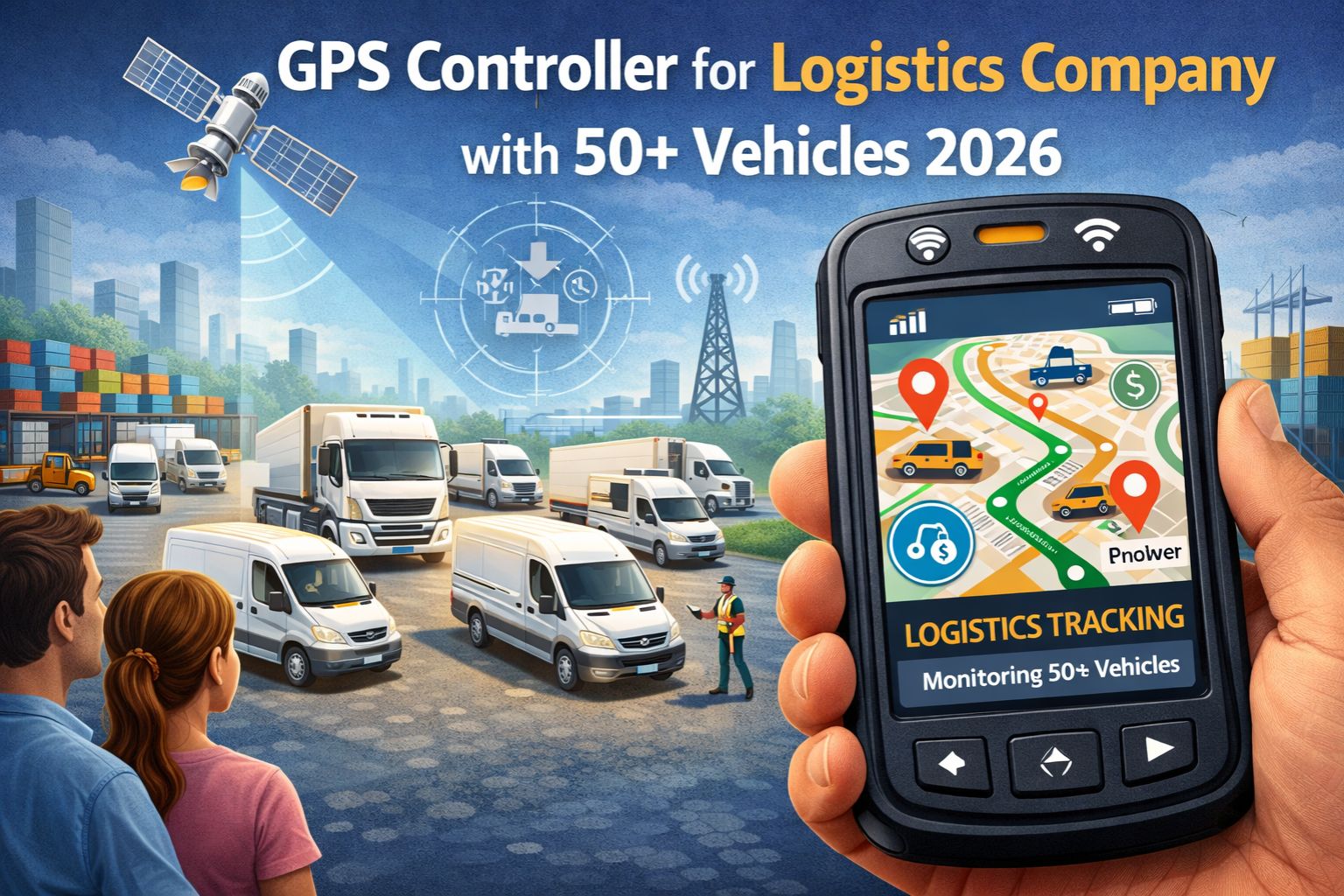
GPS Controller for logistics company with 50 plus vehicles 2026 does
When your logistics company crosses the 50-vehicle threshold, the GPS controller that worked fine for 20 trucks starts to behave differently under load. The system doesn't just slow down; it creates cascading failures where delayed location pings cause missed geofence alerts, which then corrupts driver HOS logs and throws your entire daily dispatch into a reactive scramble. What you need in 2026 isn't just more tracking dots on a map, but a controller architecture built for the telemetry volume and decision speed of a mid-sized fleet where every minute of signal latency translates directly into fuel waste and customer service failures.
What This Scale Change Actually Means for Your GPS Data
At 50-plus vehicles, you're no longer managing individual assets; you're managing a data firehose. Each unit sends position, engine diagnostics, and sensor data every 30 seconds. A standard controller might handle the GPS points, but it chokes on the accompanying CAN bus data from 50 engines, creating a bottleneck where fuel consumption reports are hours stale. We've seen fleets where the real-time vehicle tracking dashboard shows trucks as "moving" long after they've been parked at a dock, because the system is queuing updates instead of processing them live. The problem isn't the GPS signal itself; it's the controller's inability to correlate location bursts with ignition status and driver ID across all units simultaneously.
The Real-World Failures at 50-Vehicle Operational Scale
The first tangible failure is in geofencing. With 20 trucks, arrival alerts are near-instant. At 50+, delayed data processing means the alert for a truck arriving at Warehouse A triggers 8 minutes later, after the driver has already checked in and begun unloading. This delay voids the automated proof-of-delivery timestamp, forcing manual back-office work. The second failure is in route compliance. Controllers not built for this volume will sample data, skipping breadcrumbs to save server load. This creates "straight-line" routing on reports, making it look like drivers cut across city blocks, which is impossible to defend during safety audits. The system's attempt to keep up creates audit trails that are factually incorrect.
The Costly Mistake: Assuming More Devices Fixes the Problem
The most common and expensive error is believing that adding more of the same GPS devices or upgrading to a "premium" plan on an entry-level platform will solve these scale issues. It won't. The limitation is in the controller's core logic—its ability to ingest, timestamp, and correlate high-frequency data streams from a large, moving asset pool. Throwing hardware at a software architecture problem leads to signal collision, where two devices on the same vehicle report conflicting locations, and the controller, lacking robust de-duplication logic, logs both, doubling fuel use and creating mileage discrepancies that take weeks to reconcile.
Your 2026 Decision: Reconfigure, Redesign, or Replace
You face a clear boundary. You can *reconfigure* if your current system has unused capacity settings (like adjusting data transmission intervals from 30s to 2 minutes for stationary vehicles) and your provider confirms the backend can handle 50+ active connections. You must *redesign* your tracking workflow if the core need is integrating telematics data with your fleet management software via API, as middleware can sometimes offload processing. However, you must *replace* the GPS controller entirely when you see persistent data gaps, the provider cannot guarantee sub-60-second alert latency for all assets, or compliance reporting requires manual cleanup. This is the point where internal fixes are insufficient, and the platform itself becomes the bottleneck.
FAQ
Question: How does GPS tracking fail with more than 50 vehicles?
Answer: It fails systematically, not randomly. The controller's data pipeline gets overloaded, causing timestamp errors. Live locations lag, geofence alerts queue up, and reports blend data from different time windows, making fuel and mileage metrics unusable for decision-making.
Question: Will 5G fix GPS delays for large fleets?
Answer: No. 5G improves the speed data travels *from* the device, but if the receiving GPS controller software can't process the incoming volume fast enough, you just get a faster flood of data into a bottleneck. The network isn't the constraint; the processing logic is.
Question: What is the biggest compliance risk at this scale?
Answer: Corrupted Hours of Service (HOS) logs. When location pings are delayed or dropped, the electronic logging device (ELD) integration can misassign driving time to off-duty periods, creating violations that are hard to detect and correct before an audit.
Answer: The threshold is operational silence. If your team isn't questioning data or manually correcting reports, and alerts fire consistently under 90 seconds, you're likely okay. If you are, the platform isn't working for you. In 2026, a capable gps controller for a 50-vehicle fleet should be an invisible utility, not a daily source of problem-solving.


Comments
Post a Comment