GPS Controller for Jebel Ali port container tracking 2026
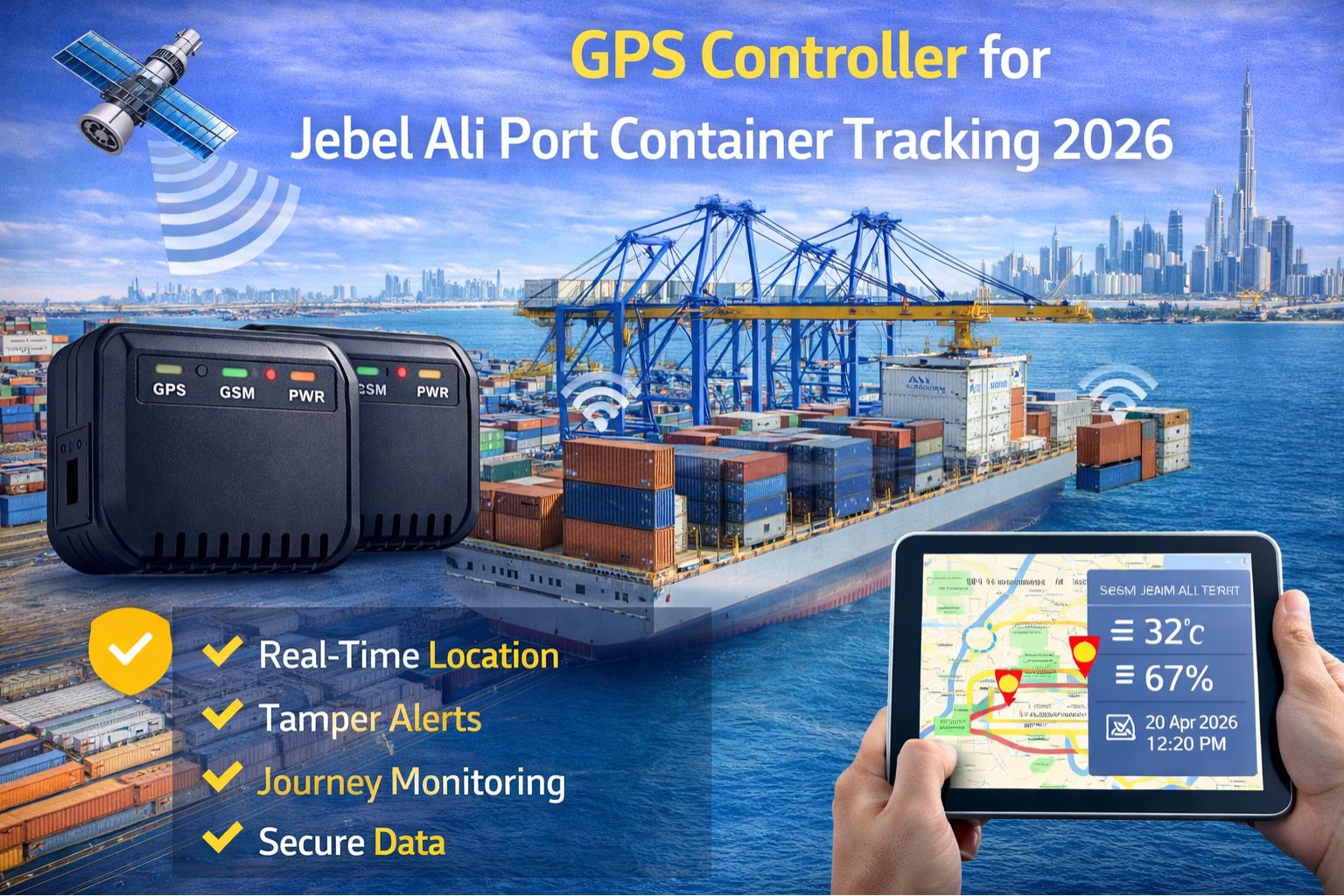
GPS Controller for Jebel Ali port container tracking 2026
So your GPS controller says a container is at the gate, but the port logs show it's still in the stack. That's not just a blip—it's a signal delay that starts a chain reaction of missed vessel cut-offs and terminal fines. In Jebel Ali's dense steel environment, standard GPS pings just bounce around. You get a lag between where a container actually is and the timestamp on your screen, and that gap is only going to get worse with the traffic they're projecting for 2026.
What GPS Signal Delay Means for Container Movements
This isn't just a pin dropped in the wrong spot on a map. It's a data latency problem, where the GPS clock and the container's real-world position are out of sync by minutes that really matter. You could see a truck marked as cleared in your fleet management software while it's actually still sitting in a queue. That creates a false sense of availability and leads to booking clashes for the next job. What a lot of people miss is that the delay often gets worse during handoffs between yard cranes and prime movers. Those short, rapid movements are where the signal is most likely to drop out completely.
The Real-World Cascade at Jebel Ali Scale
Think about 2026's projected throughput. Now, take a 5-minute average delay per container and multiply it across the whole terminal. You get gridlock. Dispatch sees a "gate out" alert and sends a prime mover, but the alert was wrong—the container isn't ready. Everyone's first thought is to blame the network coverage, but that's usually not it. The real failure is the GPS device itself. It can't filter out the multi-path signal bounce in those canyon-like stacks, so your automation systems are running on stale positional data they think they can trust.
Why "Stronger Signal" is the Wrong Fix
The instinct is to boost antenna power or throw up more cellular gateways. But in a port this dense with metal, that often just increases the noise and jitter, it doesn't add clarity. You risk turning a simple latency issue into a full-blown data integrity problem, where corrupted timestamps wreck your compliance reports and analytics for the port authorities. You hit a wall when internal tweaks can't overcome the physical RF interference, and your telematics start showing a container in two places at once.
Deciding Between a Tune, Reconfigure, or Replace
Your decision really comes down to one thing: is the delay consistent? If it's a fixed 3-5 minute lag everywhere, you can probably work around it by reconfiguring your geofence logic and building in alert buffers. But if the delay is random and spikes during peak crane activity, then the GPS hardware's refresh rate and filtering just aren't up to the job—that's a replacement scenario. This is the point where you have to look at a purpose-built gps controller made for high-interference hubs like this. Internal fixes stop working when the underlying signal protocol itself can't adapt.
FAQ
Question: How do I know if my GPS delay is a Jebel Ali port problem or a device problem?
Answer: Map the delay against location. If it only happens within the port's container stacks and vanishes on the open road, it's the environment. If the delays follow you outside the port gates, then the device or its configuration is the fault.
Question: Can better cellular data plans fix GPS tracking delays in ports?
Answer: No. GPS signal acquisition and timing are separate from cellular data transmission. A strong 5G connection just sends stale location data faster; it doesn't do anything to fix the fundamental latency in the satellite signal itself.
Question: What's the compliance risk if my container tracking times are wrong?
Answer: Port authorities use automated systems for things like dwell time and demurrage charges. Inconsistent timestamps can lead to fines, losing priority berthing slots, and even an audit of your entire container movement history.
Answer: It's about the cost of the error versus the cost of the upgrade. If the delays are predictable and you can manage them with process buffers, then tune. If they're random and causing you to miss ship departures and rack up fines, then you need new hardware. You need something with multi-frequency GNSS and inertial measurement units to bridge the signal gaps—that's a core function of the more advanced port telematics systems.


Comments
Post a Comment