GPS Controller for FMCG fleet rerouting around conflict zone 2026
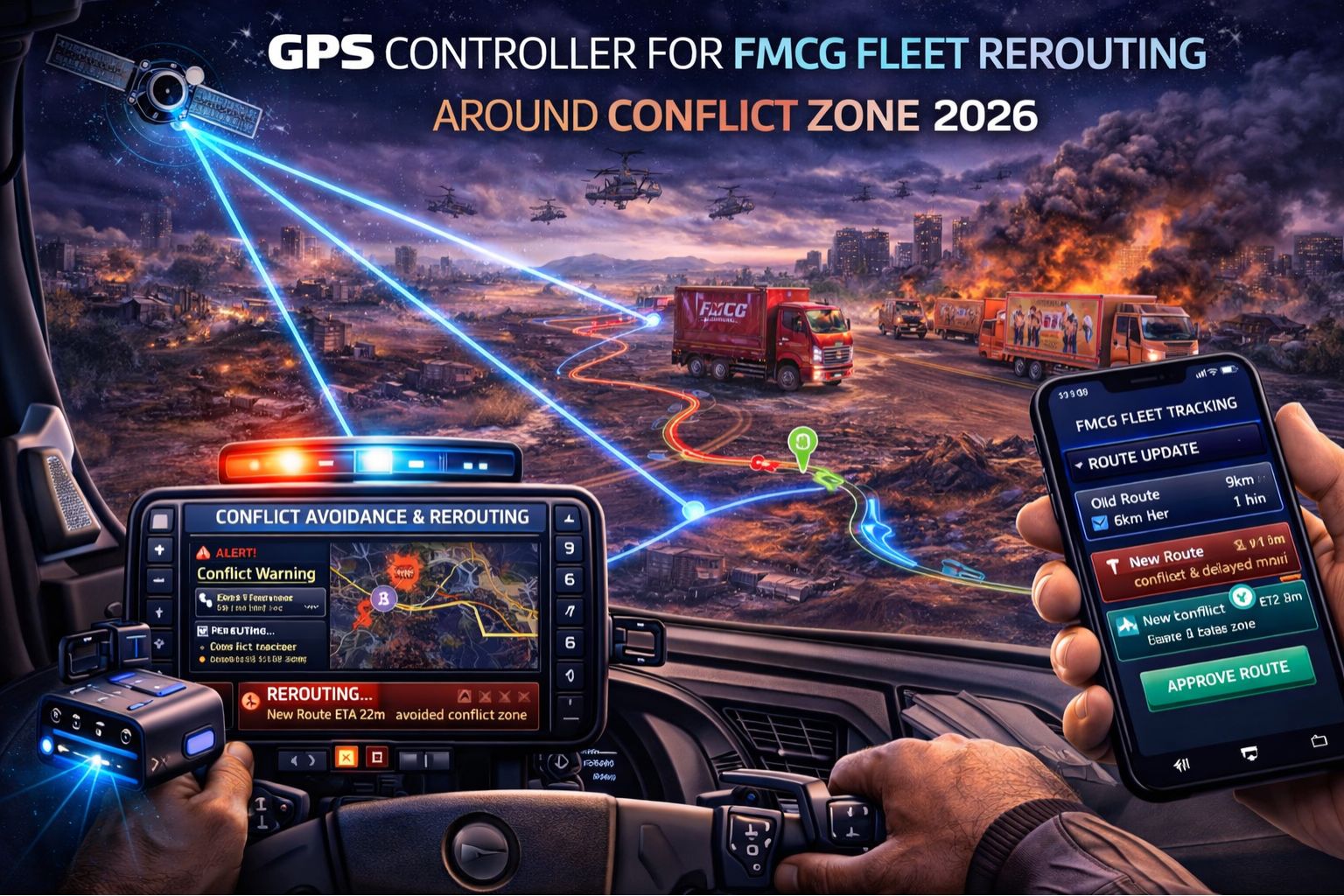
GPS Controller for FMCG fleet rerouting around conflict zone 2026
So your FMCG fleet has to reroute around a conflict zone in 2026. Suddenly, that GPS controller isn't just a tool—it's the single point of failure for everything: your perishable goods, driver safety, and regulatory compliance. It's not just finding another road. It's the cascade that starts the second you abandon the plan: geofence alerts pinging, temperature logs not matching up, delivery windows blown. The real failure? It's when the telematics shows a truck "on time" on a new path, but the backend compliance engine is still red-flagging it for deviating from the original, now-blockaded, route. They're both right, and both wrong.
What Dynamic Rerouting Actually Means for FMCG Logistics
In a conflict scenario, "dynamic rerouting" means your GPS controller is trying to process live geopolitical alerts, road closure feeds, and driver safety pings, all while recalculating ETAs for refrigerated units. But here's the non-obvious bit—the signal jitter in unstable regions. It can cause the controller to "snap" a vehicle back to the theoretical centerline of a road that doesn't exist anymore. Then you get false "stoppage" or "off-route" alerts in your fleet management software. We've literally seen trucks flagged for excessive idling because the GPS placed them 200 meters into a field, when they were actually just crawling on a secure bypass.
The Reality of Rerouting Under Operational Pressure
Try this at scale. With 50-plus refrigerated trucks carrying short-shelf-life goods, a single rerouting command doesn't just happen. It propagates. Older telematics units lag, sometimes by minutes. So you get a split fleet: half the vehicles take what we'll call Risk Zone A, and the other half get stuck in Delay Zone B. The real boundary condition is bandwidth. When satellite and cellular networks are clogged with other fleeing traffic, your controller's reroute instructions can be delayed 15, 20 minutes. By the time they come through, your lead vehicle is already committed to a choke point. And the perishable clock is ticking, with no accurate temperature logs for this new, unplanned route.
Common Mistakes That Escalate a Rerouting Crisis
The most dangerous assumption? That all "conflict zone" geofences are the same. Teams often just draw one big circular zone to avoid. But that forces the routing engine to suggest paths skirting the edge—which are often just as dangerous. The failure escalates when dispatchers, staring at delayed position updates, panic. They manually override, sending drivers onto "clear" roads based on hour-old social media reports. That severs the digital tether—the live tracking and compliance link. Now you have a gap where the geofencing alerts are silent, but the physical risk is at its highest.
When to Tune, Reconfigure, or Replace Your Rerouting Logic
Here's your decision boundary. If your system can't maintain a coherent audit trail—proof of why a truck entered a zone, how long it stayed, what the temperature variance was—then you're past tuning. You need to reconfigure, specifically the integration between your real-time alert feeds and the routing engine itself. And if rerouting consistently breaks the chain of custody for your temperature-sensitive goods, or fails to give drivers turn-by-turn that accounts for their vehicle height and load... you're in redesign territory. A GPS controller that can handle this has to fuse multiple, messy data streams into one actionable, and legally defensible, reroute.
FAQ
Question: How does GPS rerouting work in areas with poor signal?
Answer: In poor signal areas, the controller falls back on dead reckoning and cached map data. The problem is, that cache never knows about the roadblock that went up an hour ago. It can navigate a truck straight into an unsafe area. Location updates only sync once the signal returns, leaving a dangerous blackout period where you have no compliance data.
Question: Can rerouting affect cold chain compliance for FMCG?
Answer: Absolutely, and in a subtle way. Rerouting adds time. If your telematics doesn't automatically adjust the expected temperature log for that new, longer ETA, then the extra hours on the road show up as a compliance violation. Even if the fridge unit ran perfectly the whole time.
Question: What's the biggest risk with automated conflict zone rerouting?
Answer: Over-reliance. These systems use publicly available incident data, which is almost always delayed. So the algorithm might route your fleet *away* from a zone that was just cleared, and *into* a newly developing hotspot, simply because it's prioritizing historical zone data over fragmented, real-time driver reports.
Question: When should we abandon automated rerouting and go manual?
Answer: The threshold is a loss of coherent data. If your system can't reconcile the vehicle's actual path with the condition report of the delivered goods, you need human oversight. A decent GPS controller should flag this discrepancy and push the decision to a person, instead of just failing silently.


Comments
Post a Comment