GPS Controller for fleet operations under active GPS jamming zones 2026
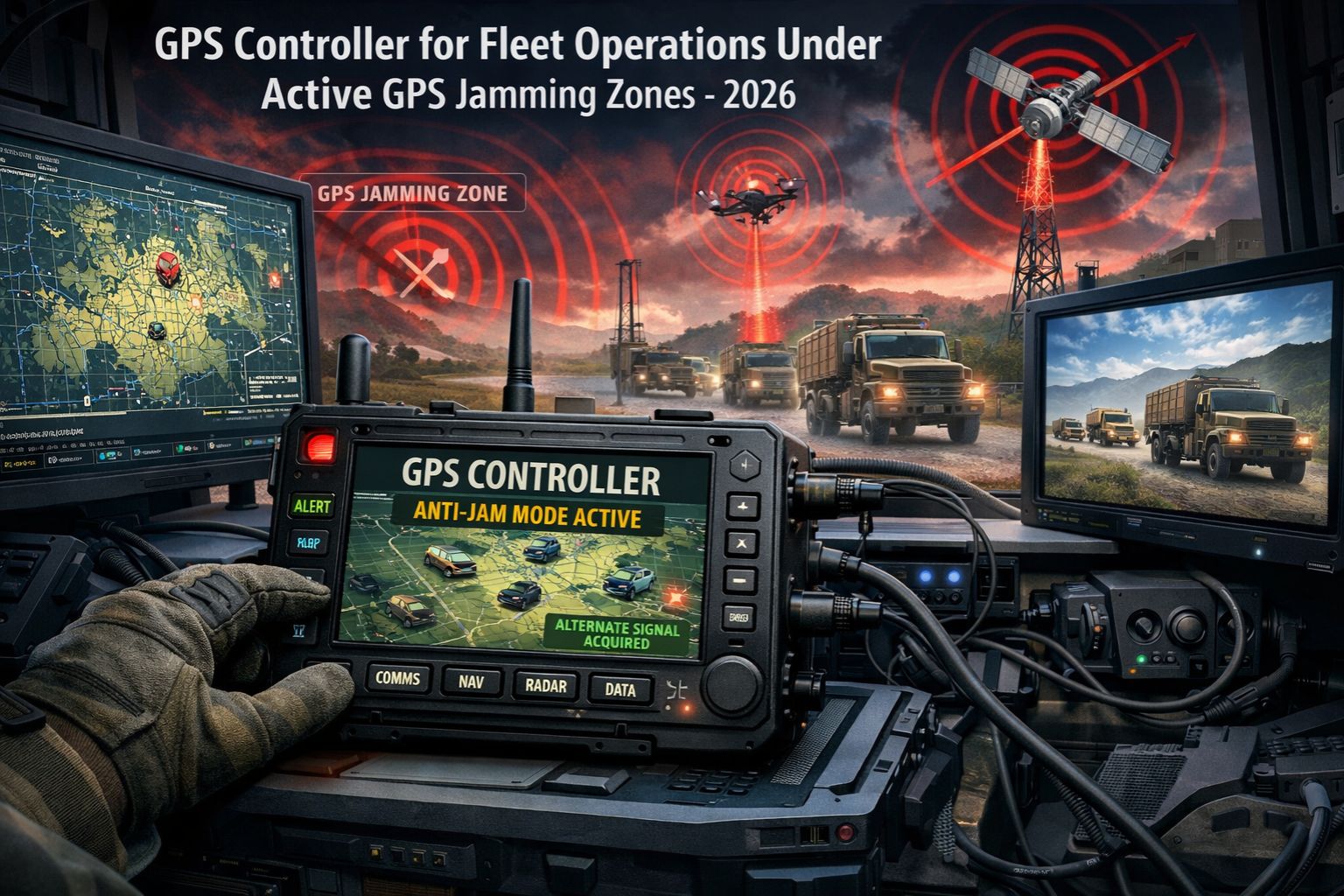
GPS Controller for fleet operations under active GPS jamming zones 2026
When your fleet hits an active GPS jamming zone, your tracking screen doesn't just show delayed data—it starts showing vehicles teleporting, engines idling while the trucks are clearly moving, and geofence alerts firing hours late. It creates this total operational blind spot where your compliance logs just go dark.
What GPS jamming means for your live tracking map
Jamming isn't a simple "no signal" icon. It creates phantom data. We've seen trucks reporting a steady 55 mph on a straight highway while also triggering "engine idle" alerts, because the jamming corrupts both the location and how the system interprets the CAN bus data. It makes your real-time vehicle tracking dashboard show these impossible contradictions that dispatchers have to manually figure out.
The reality of operating at scale in a jammed corridor
When multiple vehicles get jammed, the problem multiplies. One logistics manager told us about a convoy where the lead truck's jamming-induced "stop" event automatically rerouted the five following trucks down a closed road, because the routing algorithm just accepted that corrupted GPS point as valid. At scale, the system's trust in bad data cascades. You get wasted fuel, missed windows, and confused drivers, which completely erases any route optimization benefits you had.
The critical mistake: treating jamming as a weak signal
The most common error is applying weak-signal protocols—like just increasing GPS poll rates—to a jamming scenario. That actually floods your network with corrupted data points, overwhelming your filters and baking false positions into your logs. The misunderstanding that "more data is better" leads straight to compliance failures, because your audit trails end up showing impossible routes your own system didn't flag as invalid.
Your decision: filter, augment, or redesign
You're left with a clear choice: tune your existing GPS controller filters to catch jamming signatures, reconfigure with extra hardware like inertial measurement units (IMUs), or redesign the whole tracking stack for signal-agnostic dead reckoning. The line is cost versus certainty. Internal filtering can work for rare, short jamming. If your routes regularly go near known jammers—think ports or borders—then a hardware-augmented gps controller approach is the bare minimum fix. For persistent, unpredictable jamming, you're looking at a full architectural shift.
FAQ
Question: How can I tell if my fleet is experiencing GPS jamming versus just bad signal?
Answer: Jamming has a signature. Look for multiple vehicles in the same area all reporting impossible data at once—like high speed with zero RPM, or location fixes that jump around erratically. A weak signal usually just shows as a gradual drop to "no data." Check your system for those correlated anomalies across units.
Question: What's the biggest compliance risk with jammed GPS data?
Answer: It's tampered or uncorroborated logs. If a vehicle's GPS shows it was at a warehouse during a theft, but jamming created that false point, your entire electronic logging device (ELD) audit trail is compromised. You need a way to flag and annotate periods of suspected jamming in your reports.
Question: Can't we just use cellular triangulation when GPS is jammed?
Answer: Often, no. A lot of jamming zones target those specific L1/L5 GPS frequencies, but cellular triangulation is too imprecise for lane-level tracking or geofencing anyway. The accuracy drops to hundreds of meters, which is useless for something like dock arrival alerts or checking precise route adherence.
Question: When is it time to upgrade hardware versus update software?
Answer: If jamming events are predictable and over quickly, software filters that recognize the jamming patterns and suspend unreliable data logging might be enough. If the jamming is frequent or lasts a long time, you'll need hardware with integrated IMUs or dual-frequency GNSS receivers just to keep basic operational awareness. That's the decision point where standard tracking solutions really fall short.


Comments
Post a Comment