GPS Controller for fleet operating near Red Sea Houthi attack zone 2026
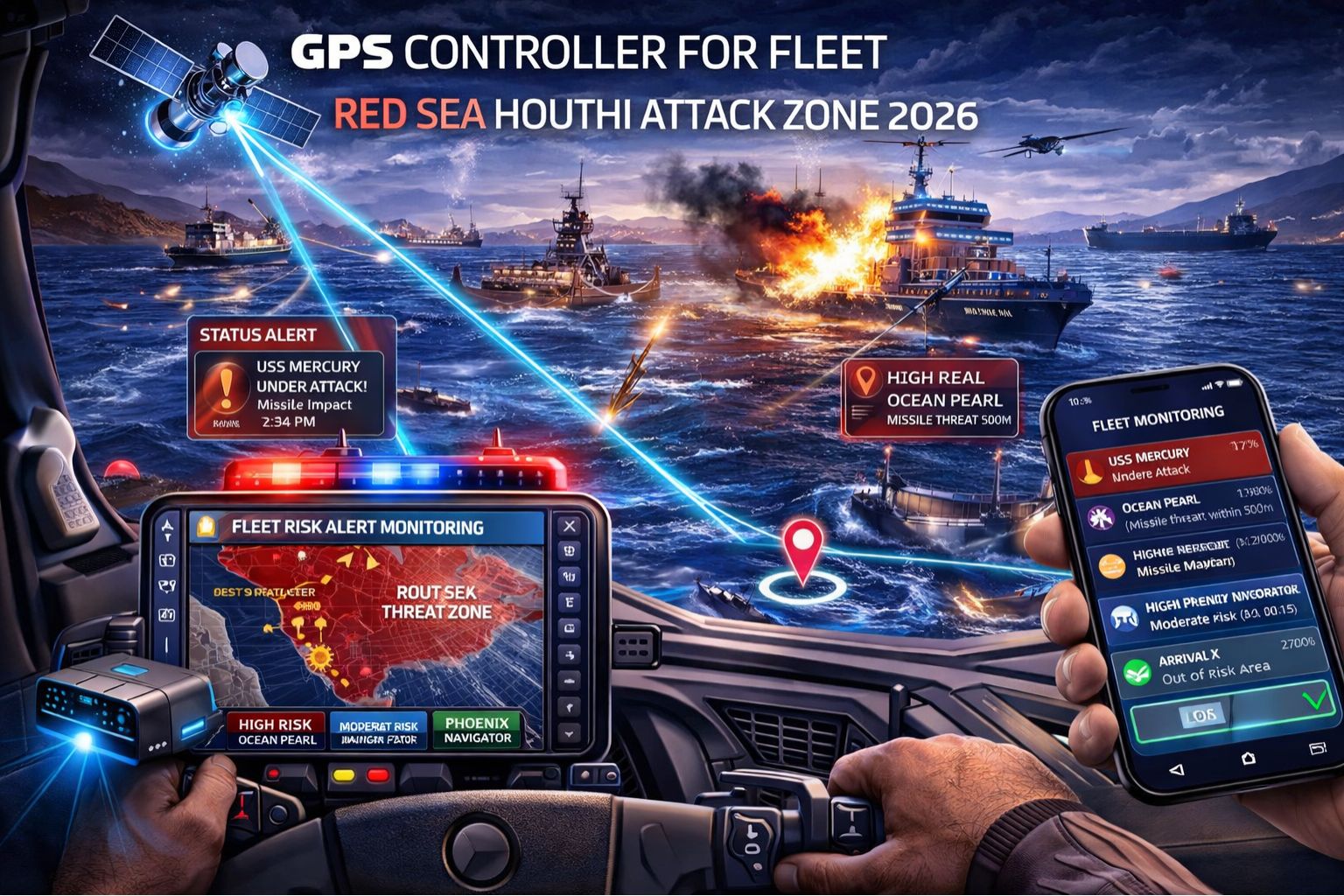
GPS Controller for fleet operating near Red Sea Houthi attack zone 2026
Running a commercial fleet near the Red Sea in 2026—it's not just a telematics challenge. Your GPS controller isn't just managing location data anymore; honestly, it's your primary sensor for threat evasion and crew safety. Think about it: that standard 30-second ping cycle becomes a dangerous latency when a vessel's position near a known Houthi attack corridor is 90 seconds old. This isn't a simple tracking delay; it's an operational blind spot. Geofence alerts for exclusion zones arrive too late, and compliance logs just fail to prove due diligence when you're in the middle of an incident audit.
What Real-Time Tracking Means in a Threat Zone
Here, "real-time" shifts from a convenience to a tactical requirement. A standard GPS tracker might report a vessel holding course, but a controller set up for high-risk zones needs to analyze the raw NMEA data stream for anomalies. Things like a sudden, uncommanded course deviation or a complete AIS transponder shutoff—those are early indicators of a boarding event. We've seen cases where a delayed "drifting" status alert was actually a ship being commandeered, a fact only pieced together hours later from the historical playback. The controller has to prioritize threat-signal data packets over routine telemetry, and most fleet software doesn't even enable that by default.
The Scale Problem: When Network Jitter Creates Security Gaps
At scale, with multiple assets in the region, the problem gets worse. Network congestion over satellite links—VSAT, Iridium—during a crisis can cause data packet loss or jitter. A controller managing this fleet has to have local buffering and smart retry logic to make sure critical location pings aren't just dropped. A common mistake is assuming your fleet management platform's standard refresh rate is enough. Under pressure, the I/O queue gets flooded. You end up transmitting non-critical data, like engine temperature, while the vital "rapid evasive maneuver" coordinate is delayed or lost. That creates a completely false narrative in the post-event timeline.
The Costly Mistake: Treating It as a Simple Coverage Issue
The most dangerous assumption? Thinking this is just a "GPS signal problem" you can fix with a better antenna. The threat is multi-layered. GPS jamming and spoofing are known tactics now, which can cause the controller to receive and log false coordinates—showing the ship safely in port while it's actually adrift. Relying only on GNSS, without the controller having integrated, cross-verified inputs from the vessel's inertial navigation system and radar plot, leads to a catastrophic data integrity failure. A lot of operators escalate by adding more devices, not realizing the core issue is the logic and priority of the data aggregation point. It's the controller itself.
Decision Help: Reconfigure the Controller or Redesign the Stack?
Your decision boundary is pretty clear. You can *reconfigure* your existing GPS controller, but only if it allows for a few key things: custom ping rates under specific geofences (like 5-second intervals in high-risk polygons), dual-path data transmission (satellite plus a terrestrial backup when near coast), and immutable logging for audit. If it can't do that, you have to *redesign* the telematics stack with a controller built for contested environments. That means a hardware/software layer that handles signal denial, provides cryptographic verification of location data, and integrates directly with onboard security systems. The internal fix stops when your controller can't cryptographically sign and timestamp each location datum for legal and insurance forensics. That's non-negotiable for 2026 operations near the Red Sea.
FAQ
Question: Can't I just use a standard satellite tracker for my Red Sea fleet?
Answer: Standard trackers report location, sure, but they often lack the processing logic to detect spoofing or prioritize emergency pings. In a threat zone, you need a controller that acts as a security sensor, not just a beacon.
Question: How does GPS jamming affect my existing fleet data?
Answer: Jamming creates null data or wild inaccuracies. A robust controller should identify the jamming signature, switch to dead reckoning using other sensors, and flag the log. Instead of just recording and trusting the corrupted GPS signal.
Question: What's the minimum viable ping rate for safe operation in high-risk areas?
Answer: It's situational, but a sub-10-second reporting interval for position and speed-over-ground is a decent baseline for threat response. The catch is the controller has to ensure this high frequency doesn't saturate the comms link during critical moments.
Answer: The legal boundary comes down to evidence. If your system can't produce an immutable, verifiable track log proving your vessel's position and actions during an incident, you carry significant liability. A purpose-built gps controller for high-risk zones is designed to meet this forensic standard.


Comments
Post a Comment