GPS Controller for EV electric vehicle fleet charging schedule management 2026
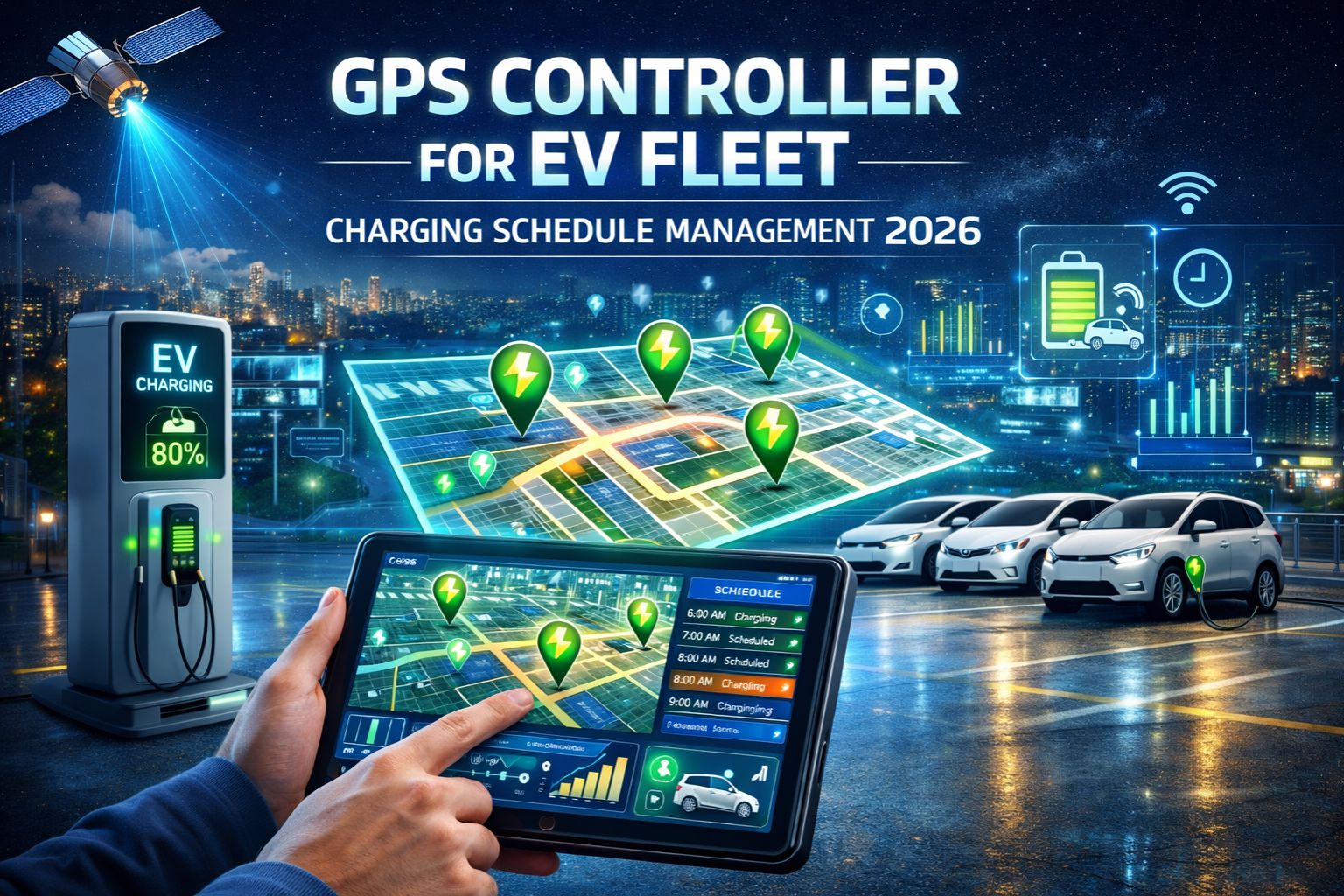
GPS Controller for EV electric vehicle fleet charging schedule management 2026
When your EV fleet's charging schedule depends on GPS location data, a 30-second signal delay isn't just a blip—it's a vehicle that misses its charging window, a driver stuck with a dead battery, and a compliance log that shows a vehicle was "plugged in" at a depot it never reached. Honestly, this is the core failure mode for 2026 operations. Telematics commands and energy management have to be in perfect sync, and the fleet management software is only as good as the real-time location feed it gets. If that feed is late, everything else is wrong.
What Charging Schedule Management Really Means for EV Fleets
It's not just sending a "charge now" command. It's a dynamic system that cross-references a vehicle's real-time location with live energy grid pricing, depot charger availability, and the next scheduled route's distance. A common misunderstanding is treating it like a simple timer, but the moment a vehicle is rerouted around traffic, the entire energy plan needs to recalculate based on its new ETA and remaining charge. And if the GPS signal is stale, the system does something frustrating: it allocates a charger to a vehicle that's still 20 minutes away. That's how you create a cascade of idle assets and missed slots.
The Real-World Domino Effect of Stale Location Data
At real operational scale, the failure isn't isolated. You'll probably see the first warning as a delayed geofence alert for depot arrival, but the critical failure is in the telematics handshake. Think about it: the vehicle's modem might report battery state-of-charge accurately, but without a confirmed location inside the geofence, the charging management system just holds the command. The result? Drivers start manually overriding schedules, which destroys the audit trail for sustainability reports and makes energy cost forecasting useless. Suddenly, you're managing chaos, not a fleet.
The Critical Mistake: Assuming Network Latency is Constant
The wrong assumption that causes escalation is believing 4G/5G latency is uniform. It's not. In dense urban corridors or during network handoffs between cells, location pings can buffer. The controller might then receive a batch of outdated coordinates all at once, making it look like three vehicles have arrived simultaneously. The system then tries to assign three chargers where only one is physically available, locking out other vehicles legitimately on-site. So you're not really dealing with a pure GPS error here, but a network jitter problem that your software misreads as a major fleet logistics event.
Decision Help: Tune, Reconfigure, or Redesign the Data Pipeline
Your decision boundary is pretty clear. If delays are under 10 seconds and sporadic, you can probably tune heartbeat intervals and add redundant location verification from the vehicle's onboard diagnostics. If delays are consistent—say, 15-30 seconds—and cause daily schedule failures, you have to reconfigure the entire data pipeline, prioritizing charging commands over less critical telemetry. But, if your operation depends on second-accurate scheduling across 50+ vehicles and you're already seeing compliance gaps, internal fixes just won't cut it. That's when you need a system redesign that treats location and energy data as a single, fused stream. That's a core principle for a robust gps controller architecture in 2026.
FAQ
Question: How does GPS delay actually break an EV charging schedule?
Answer: The schedule is location-triggered. So if the system thinks the vehicle is still 5 minutes away due to signal lag, it won't release the reserved charger. Another vehicle gets assigned, and when the first EV finally arrives, its spot is taken. That causes a cascade of missed appointments and, frankly, stranded assets.
Question: Can better GPS devices alone solve charging management failures?
Answer: No. Premium devices might reduce some error, but the core failure is usually in the data integration layer. If the charging software polls for location every 30 seconds but the network adds a 10-second latency, you're always acting on 40-second-old data. The real fix requires synchronizing the software's request cycle with the network's typical response time.
Question: What's the compliance risk with faulty EV charging logs?
Answer: It's significant. Sustainability and emissions reporting for electric fleets often requires verified "clean" charging logs. If your system shows a vehicle charging at Grid Rate A, but signal delay meant it actually charged at higher-cost, carbon-intensive Rate B, your environmental reporting is inaccurate. That creates real regulatory and financial audit risk.
Question: When should we consider replacing our current fleet tracking system for EV management?
Answer: Look for the boundary of operational truth. If dispatchers no longer trust the automated schedule and are constantly overriding it, or if your total energy costs are unpredictable due to missed low-rate windows, your system has become a cost center, not a tool. When tuning and reconfiguration fail to restore that trust, replacement with a platform built for synchronized telemetry and energy data is really the only path forward.


Comments
Post a Comment