GPS Controller for electrical contractor field service fleet 2026
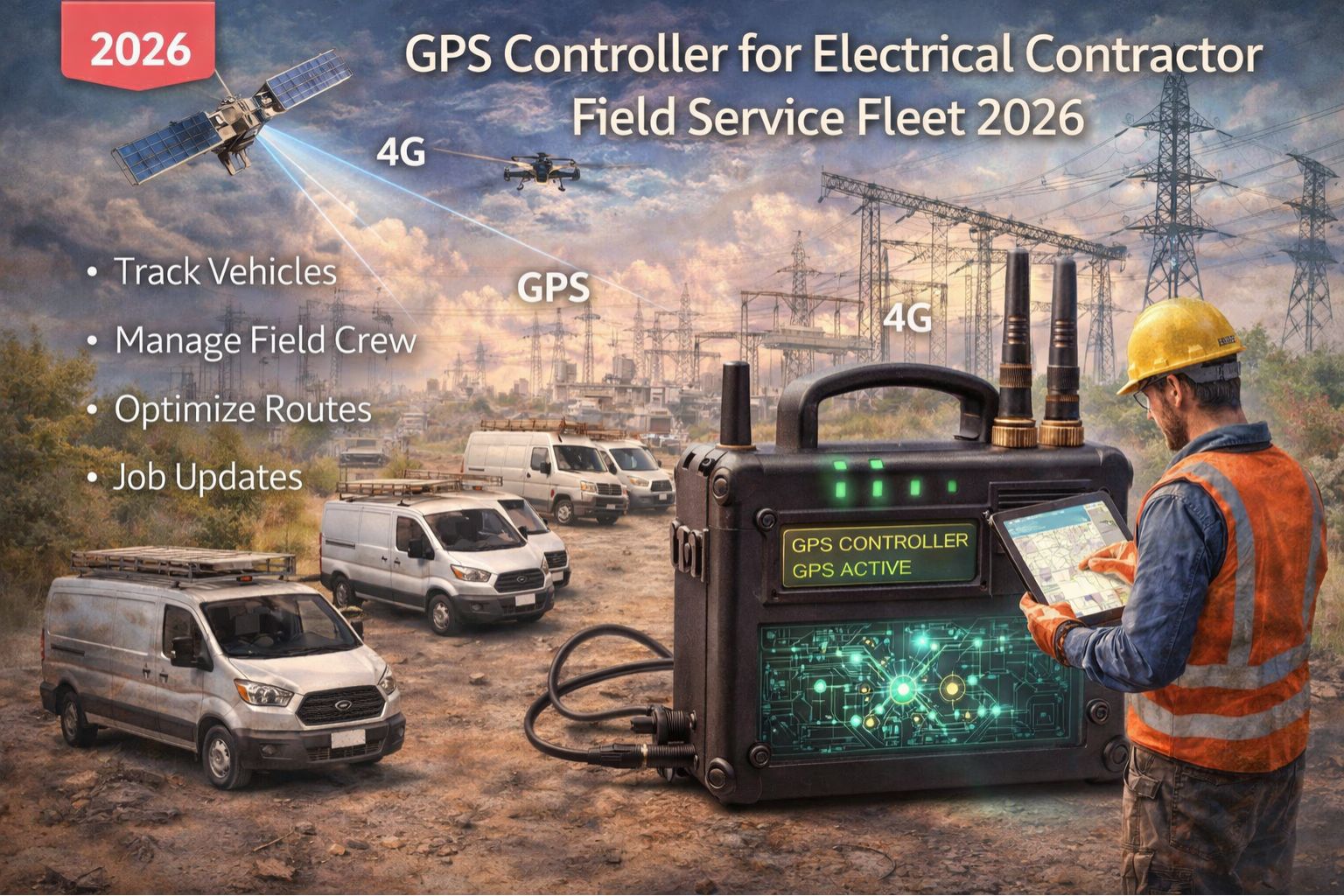
GPS Controller for electrical contractor field service fleet 2026
For an electrical contractor in 2026, a GPS controller isn't just about dots on a map. Honestly, it's become the central nervous system for everything—dispatching technicians, managing those tight SLA windows, and proving job-site presence for utility audits. Because a single delayed location ping can cascade into missed appointments and billing disputes before you know it.
What a GPS Controller Actually Manages for Field Electricians
Getting clarity here means understanding it handles more than just where the van is. It has to correlate engine-on time at a service address with work order completion reports, trigger alerts when someone enters a geofenced work zone, and log idle time that might mean waiting for site access or a parts delay. That last bit directly hits your job costing, which is easy to overlook.
The Reality of Signal and Data Gaps at Scale
When you have 30+ trucks rolling across urban canyons and rural substations, the reality check hits hard. GPS signal loss in underground garages or inside big industrial plants creates data holes. The controller might try to interpolate location, but then the timestamped log for the inspector shows a tech "arriving" 10 minutes late. Suddenly it's not just a glitch; it's a compliance risk for mandated response-time reporting.
Common Mistakes in Deployment and Expectation
The major risk is assuming all GPS data is equally actionable. There's a common misunderstanding that a "live" map view means real-time. In practice, a lot of systems batch data every 2-3 minutes to save on cellular data. That's fine for general routing, but it's fatal for dynamic re-dispatch when a priority outage call comes in. Then you're back to manually calling drivers, which defeats the whole purpose of the automation.
When to Tune, Reconfigure, or Replace Your System
The decision boundary gets clearer if you break it down. If signal jitter and delays are just in specific dead zones, you tune with external antennas. If the issue is workflow—like alerts not reaching dispatchers—you reconfigure the integrations. But if the core architecture can't handle simultaneous data from vehicles, generator trailers, and asset trackers on the expensive tooling, and you're constantly working around its limitations? That's when a redesign or replacement is necessary. It's where evaluating a platform built for complex telemetry, like gps controller, shifts from being a tech upgrade to an operational necessity.
FAQ
Question: How accurate does GPS need to be for electrical service fleet tracking?
Answer: For street-level routing, standard 5-10 meter accuracy is usually fine. But for proving on-site presence at a specific utility pole or building meter—and for geofencing small work zones—you really need 2-3 meter accuracy. That requires modern devices with multi-constellation (GPS, GLONASS, Galileo) support to cut down on signal blockage.
Question: Can delayed location data affect our compliance with utility contracts?
Answer: Absolutely. A lot of utility service agreements require timestamped proof of arrival within a strict window. If your GPS controller's data is delayed or batched, the digital log for an audit might show a violation. That can lead to financial penalties or even put a contract renewal at risk.
Question: We have mix of vans and pickup trucks. Do we need different trackers?
Answer: Not necessarily different hardware, but the configuration definitely matters. Pickups often have more aftermarket electrical interference. The critical thing is making sure the GPS controller platform can normalize data from varied OBD-II, hardwired, and battery-powered asset monitors into one single fleet view, without creating data silos.
Question: At what fleet size do basic tracking systems typically fail?
Answer: The breakpoint is often around 25-40 vehicles, especially once you add non-vehicle assets. Basic systems tend to buckle under the concurrent data load, leading to map lag, alert delays, and report timeouts. You know you've hit the limit when dispatchers start to distrust the system's real-time view. That's when a more robust telematics controller becomes required.


Comments
Post a Comment